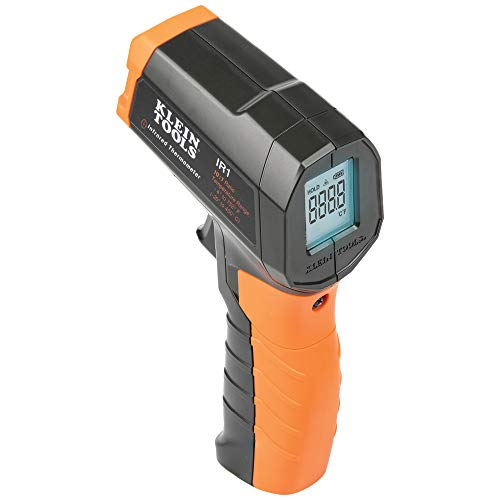
Klein Tools IR1
$29.98 at Amazon
Check it on AmazonPrice as of Oct 24, 2026, 5:30 AM EDT

Find the ice, warm it gently, check for leaks.
As an Amazon Associate I earn from qualifying purchases.
Open the faucet, find the cold section and warm it with a hair dryer, heating pad or hot towels. No flame. Heat until full pressure returns. Can’t find it or reach it? Shut the main and call a plumber.
Turn on every faucet in the house, hot and cold, then answer.
The finder follows Lakeway MUD’s method. If some taps flow and others don’t, the problem is local, not the whole house. Trace the line from the dead faucet back toward where the water comes in, and the ice is most likely in an uninsulated stretch.
The Red Cross names the usual places: along outside walls, where the water service comes through the foundation, and in unheated basements, crawl spaces, attics, garages and kitchen cabinets.
Low flow on a cold morning isn’t proof. These signs together are.
| Sign | Frozen pipe | Something else |
|---|---|---|
| Outside temperature | Below 32 °F; a yard service line mostly below 20 °F (Lakeway MUD) | Above freezing |
| Which taps | Some work, some don’t | Every tap, and your neighbors too: likely the supply |
| Flow | A trickle or nothing | Low at one faucet all year: an aerator or valve |
| The pipe | Cold to the touch, maybe frost on it | Room temperature |
| Drains | Rare; a smell from a drain can mean ice (Lakeway MUD) | Slow drain in warm weather: a clog |
Lakeway MUD’s check is the quickest: if your neighbors have water and you don’t, it’s your pipes. If they’re out too, the provider may have shut the water off for the area, so call them before you start heating anything.
The two most-quoted sources give different first steps. They fit different cases.
| Source | Says | Fits when |
|---|---|---|
| American Red Cross | Keep the faucet open; running water helps melt the ice | The pipe is in sight, not split, and you’re there watching it |
| Lakeway MUD | Shut the main and open all faucets while pipes thaw | You can’t see the frozen spot, or a split is possible |
Both open the faucet, so pressure has somewhere to go as the ice lets go. Lakeway MUD explains why that matters: pressure builds in the line, and that’s what bursts it.
My call: if the frozen stretch is in a wall, ceiling or crawl space you can’t see, shut the main first. A split you can’t see turns into a flood the minute it thaws.
If you can see the whole frozen run and it looks sound, leave the water on with the faucet open, so you know right away when it flows. Not sure where the main is? Find it now: how to shut off your water main.
Heat on the wrong stretch of pipe wastes time. A few minutes of looking saves an hour.
Turn it to full, hot and cold, so water can move the moment the ice gives.
The ice sits between that tap and the dead one, on the same line.
Look where it runs along an outside wall, through a cold cabinet or into a crawl space.
Frost or a pipe much colder than the rest marks the spot.
Look for a split, a bulge or a wet spot before you warm it.
Put a piece of tape on the cold section so you heat the right place.
An infrared thermometer speeds up the feel test. You aim along the pipe and watch for the stretch that reads coldest. Klein’s IR1 manual adds a catch for plumbers: shiny surfaces can read cooler than they are. My call: on bare copper, compare readings from the same kind of surface, or read a piece of tape on the pipe.
The IR1’s 10:1 ratio means a 1 in. spot from 10 in. away, so get close to a 1/2 in. pipe. Further back, it averages the wall behind it.
The Red Cross lists four. Each one has a place it works and a place it doesn’t.
| Method | Best for | Limit |
|---|---|---|
| Hair dryer | A pipe you can reach, in a cabinet or along a wall | Keep it away from water; keep it moving |
| Electric heating pad | A short exposed run you can wrap | Follow the pad’s own instructions |
| Towels soaked in hot water | Any pipe you can reach, including plastic | Slow; swap towels as they cool |
| Portable space heater | A whole cold space: cabinet, garage, basement | 3 ft from anything that burns; dry floor; never unattended |
| Raise the house heat | A freeze you can’t find or reach | Open cabinets and closets; above 55 °F (Lakeway MUD) |
| Electric pipe thawer (pro tool) | Metal pipe, even in a wall | RIDGID’s units are for metal pipe only |
Heat until full water pressure comes back, the Red Cross says. Lakeway MUD adds why to go easy: heat a pipe too fast and it can crack or melt. Start at the faucet end and work back toward the ice, so the melt has an open path out.
These are the ones that start fires or melt pipe. The Red Cross names most of them.
| Don’t use | Why |
|---|---|
| Blowtorch or any open flame | Fire inside the wall; it melts plastic pipe; the Red Cross rules it out |
| Kerosene or propane heater | Fuel-burning heaters indoors; the Red Cross rules them out |
| Charcoal stove | Carbon monoxide and fire; the Red Cross rules it out |
| A space heater on a wet floor or in a wet room | Lasko’s manual: not for wet or damp locations |
| An extension cord on a space heater | Lasko’s manual: plug straight into a wall outlet |
| Heat cable as a thawing tool | Frost King sells it to prevent freezing on water-filled pipe; install it after |
The U.S. Fire Administration’s numbers explain the space heater rules. Portable heaters were only 3% of home heating fires in 2017–2019, but 41% of the deadly ones. Keep anything that burns 3 ft away and turn the heater off when you leave the room or go to bed.
The most common freeze. The pipe is close to the cold and far from the furnace.
Open the doors under the sink so room heat reaches the pipe; move cleaners out of reach of kids.
Hot and cold, so the melt can flow.
Hair dryer or heating pad on the pipe where it comes out of the wall.
If the ice is inside the wall, warm the room and the wall surface; don’t cut in yet.
A spit of water, then a steady stream, means it’s through.
Look for drips at the valve and supply line once it flows.
If the faucet stays dry after a while of gentle heat and the ice is deeper in the wall, that’s the Red Cross’s “not accessible” case. Shut the main and call a plumber. A pro with a metal-pipe thawer can thaw copper or steel inside a wall by clamping either side of the frozen section, per RIDGID.
Here you’re warming the space as much as the pipe.
| Space | What works | Watch out for |
|---|---|---|
| Garage | Close the door; space heater on a dry, level spot | Lasko: 3 ft clear in front, 1 ft at the sides and back |
| Basement | Space heater near the cold wall; heating pad on the pipe | Damp floors; Lasko says not for damp locations |
| Crawl space | Hair dryer or hot towels on the frozen stretch; close vents | Wet ground and wiring; Lakeway and the Red Cross both say call a plumber if you can’t reach it |
| Attic or ceiling | Raise the house heat; open the attic hatch if safe | Insulation burns; no heater in the attic |
My call: I don’t put a space heater in a crawl space. The ground is often damp, the cords run through dirt, and nobody sits there watching it. Warm the stretch you can reach by hand, and if you can’t reach it, that’s a plumber’s job.
The freeze is at or before the point where water enters the house.
| Where | What to do |
|---|---|
| Neighbors out too | Call the water provider; it may be their line or a shutoff |
| Your main inside, by the foundation | Warm the pipe and the space where it comes in; open a faucet |
| The service line in the yard | Call the provider or a plumber; it’s buried, so it needs a pro |
| A well pump or pressure tank | Warm the pump house or tank space; check the pressure switch line |
Lakeway MUD notes the yard line from the meter usually freezes only in extreme cold, typically below 20 °F. Where the service comes through the foundation is the Red Cross’s other likely spot, and it’s one you can often reach from the basement.
Outdoor hose bibs are first on the Red Cross list of pipes most at risk.
Open the spigot and warm the pipe just inside the wall with a hair dryer. Check for a split before you call it done: run it and look inside, where the pipe passes through the rim joist. My call: a frost-free spigot that froze usually had a hose left on it.
To keep it from happening again, the Red Cross says to remove and drain hoses, close the inside valve to the spigot and leave the outside one open. Covers are in the outdoor faucet cover guide.
Copper, PEX and CPVC all freeze. They don’t all take the same heat.
| Pipe | Gentle heat | Electric thawer | Note |
|---|---|---|---|
| Copper | Yes | Yes, by a pro (metal pipe) | Check for splits once it flows |
| Galvanized steel | Yes | Yes, by a pro (metal pipe) | Check the joints once it flows |
| PEX | Yes: hot water, towels, heater, hair dryer (Uponor) | No (not metal) | Uponor: 1/2 in. PEX and fittings passed a freeze/thaw test |
| CPVC | Yes, slowly | No (not metal) | Read the CPVC guide first |
| Drain lines | Warm the space they run through | No | Rare (Lakeway MUD) |
Uponor’s freeze/thaw test covers its pipe and fittings, not the valves and fixtures they feed, so check those too. Uponor lists the same safe thaw methods as the Red Cross, and no open flame. More in Uponor PEX. For CPVC, read frozen CPVC pipe before you warm it.
No source gives a number in hours. What it depends on is easier to list.
| Faster | Slower |
|---|---|
| Ice close to the faucet | Ice deep in a wall or ceiling |
| Heat right on the pipe | Warming the room only |
| Faucet open, water able to move | Faucet closed |
| A short frozen stretch | A long run in a crawl space |
| Metal pipe with a pro thawer | Waiting for the weather |
Will it thaw on its own? Lakeway MUD says pipes start to thaw once outside temperatures rise above freezing, and you may hear gurgling or banging as the ice moves. Waiting is a gamble, though: the damage happens while it’s frozen, and you find out when it thaws.
Most leaks show up in the first minutes of flow.
If you shut the main, open it a little at a time (Lakeway MUD).
Look and listen at the stretch you warmed, and at nearby fittings.
The Red Cross: if one pipe froze, others may have too.
A stain or soft spot below a wall run means a hidden split.
If anything leaks, close the main right away.
Lakeway MUD: document times and steps for your insurance.
Found a leak? Stop it first with how to stop a leaking pipe, then see the cost to fix a burst pipe. Lakeway MUD adds that not every insurance policy covers frozen pipes, and some want proof you kept the heat on.
One to find the ice, one to warm the space, and two to stop the next freeze. I’ve used every one.


Product prices and availability are accurate as of the date/time indicated and are subject to change. Any price and availability information displayed on Amazon.com at the time of purchase will apply to the purchase of this product.
| Tool | Key specs | Pick it if | Skip it if |
|---|---|---|---|
| Klein Tools IR1 | 10:1 distance to spot; −4 to 752 °F; laser; data hold; 9V battery | You need to find which stretch froze without opening walls. | You can see frost on the pipe already. |
| Lasko 754201 | 1500 W ceramic; tip-over switch; overheat shutoff; 3-year limited warranty | You’re warming a dry garage, basement corner or room with the cabinets open. | The floor is wet, a pipe is leaking, or it’s a crawl space or outdoors. |
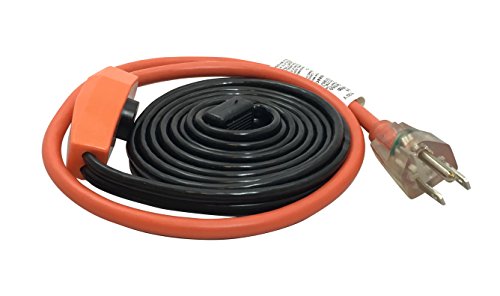
| Frost King HC6A | 6 ft; 7 W/ft, 120 V; built-in thermostat; metal or plastic water pipe; 12-month warranty | A 6 ft stretch that froze once will freeze again. | It’s a drain line or buried pipe. Frost King says no to both. |
| Frost King SP41X | 3 in. x 1/2 in. fiberglass x 25 ft, plus a plastic vapor barrier overwrap | You’re covering heat cable, the 1/2 in. fiberglass its sheet calls for. | It’s a short run you can cover with slip-on foam tubes. |
Heat cable comes sized to the pipe length, and Frost King says not to oversize it. Use the 3 ft HC3A or 9 ft HC9A for other runs. Lay it flat along the pipe, never spiraled, tape it with tape rated 176 °F and wrap it in 1/2 in. fiberglass insulation, per its sheet. Other cables compared: the heat tape guide.
The pipe that froze once is the one most likely to freeze next. The Red Cross list, in order of effort.
| Step | Effort | Red Cross note |
|---|---|---|
| Drip the cold tap on very cold nights | None | Even a trickle helps prevent freezing |
| Open sink cabinet doors | None | Lets warm air reach the pipes |
| Same thermostat day and night | None | Costs some heat; saves a repair |
| Away from home: heat at 55 °F or higher | None | Leave the heat on |
| Insulate pipes in cold spaces | An afternoon | Hot and cold lines both |
| UL-listed heat cable on exposed pipe | An afternoon | With insulation over it |
For the full list before winter, use the winterizing checklist. Insulation sizes are in the pipe insulation guide, and a freeze alarm warns you before a cabin or rental freezes.
| What you find | Why it’s a plumber’s job |
|---|---|
| You can’t find the frozen section | The Red Cross says call a licensed plumber |
| The ice is inside a wall, floor or ceiling | Not reachable; a pro thawer works on metal pipe |
| You heated it and nothing flows | The ice may be long, or the pipe may be damaged |
| A split, bulge or leak | Shut the main; it needs a repair, not more heat |
| The yard service line | Buried; the provider or a plumber |
My call: when nothing flows after a reasonable try, stop and shut the main. Most of the damage from frozen pipes is water running for hours after a hidden split thaws.
Open the faucet, find the cold section and warm it with a hair dryer, electric heating pad, hot towels or a space heater kept away from anything that burns. Heat until full pressure returns.
Yes, once temperatures rise above freezing, but waiting is risky. A split shows up as a leak when it thaws, so warm it while you can watch it.
There’s no set time. Ice near the faucet with heat right on the pipe goes fastest; ice deep in a wall with only room heat goes slowest.
For metal pipe, an electric pipe thawer such as RIDGID’s KT-200, clamped on each side of the frozen section. It doesn’t work on PEX or CPVC.
Frozen drains are rare, Lakeway MUD says; a smell from a drain can be the sign. My call: skip chemicals, warm the space the drain runs through, and call a plumber if it stays blocked.
If you can’t see the frozen stretch or it could be split, shut the main and open the faucets. If it’s in sight and sound, keep the faucet open so you see when it flows.
Yes, in a dry space, 3 ft from anything that burns, plugged into a wall outlet and never left unattended. Not in a wet area or a crawl space.
Heat cable is made to prevent freezing on water-filled pipe. Thaw the pipe first, then install the cable with insulation over it.
I’m Isaac Daniels, a licensed journeyman plumber in Georgia (license #JP507711). I’ve used every tool in the kit. The steps, methods and warnings come from the American Red Cross, a water utility, the U.S. Fire Administration and Klein, Lasko, Frost King, RIDGID and Uponor documents, read on Oct 22, 2026. My own opinions are marked “My call.”