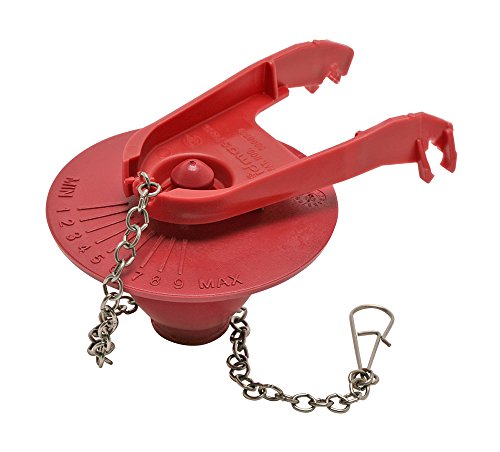
Fluidmaster 502P21 flapper
$6.48 at Amazon
Check it on AmazonPrice as of Oct 24, 2026, 5:30 AM EDT
Read the fit details
Find the leak before choosing the part.
As an Amazon Associate I earn from qualifying purchases.
The flapper seals the outlet; the fill valve controls incoming water. Overflow points to the inlet; tank-to-bowl leakage points to the outlet seal or refill tube. Choose Fluidmaster 502P21 for a confirmed, matching 2-inch flapper fault, or 400H for an inlet fault.
A running sound does not identify the failed part. Use the checks below before choosing a replacement. All three were genuine Fluidmaster, new and in stock on Oct 22, 2026, 11:55 AM EDT.


Product prices and availability are accurate as of the date/time indicated and are subject to change. Any price and availability information displayed on Amazon.com at the time of purchase will apply to the purchase of this product.
| Part | Key specs | Pick it if | Skip it if |
|---|---|---|---|
| Fluidmaster 502P21 flapper | 502P21 listing, 502 instructions, 2-inch flush valve, Adjustable setting, Solid frame | Your toilet has the matching 2-inch hinged flapper arrangement and the outlet still leaks after checking the chain and seat. | Water spills over the overflow rim, the toilet uses a tower seal, or the flush-valve opening and mounting do not match. |
| Fluidmaster 400H fill valve | 400H, 1-pack listing, 9 to 14 in., 1.28 to 3.5 GPF, Tank screw and bowl dial | The inlet does not shut off after correct setup and maker troubleshooting, and the toilet matches the 400H application. | The inlet stops correctly but restarts because water leaks out, or the toilet requires a different valve arrangement. |
| Fluidmaster K-400H-039 kit | K-400H-039, PerforMAX fill valve, 502 flapper, 2-inch application, No flush-valve body | Both wear parts need replacement and the tank accepts the included fill valve and 2-inch flapper. | Only one part has failed, the outlet is 3 inches or a canister, or the seat itself needs repair. |
The fill valve is the upright assembly connected to the water supply beneath the tank. Its float follows the tank level and tells the inlet when to stop. The flapper is the hinged seal over the outlet at the tank bottom. The handle lifts that seal to start a flush.
The overflow tube stands beside the flapper. The small refill hose carries water into that tube during a normal refill so the bowl can recover its water level. Do not mistake that intended stream for tank water spilling over the tube’s top. Watch what happens after the tank should have stopped filling.
A flapper, a fill valve and a kit of both: the fault decides, so none of the three is scored.
The 502P21 is the part to consider after the outlet checks point to a worn flapper on a matching 2-inch flush valve. Fluidmaster’s 502 instructions describe a solid-frame, adjustable seal for most valves of that size. The word universal still leaves exclusions. It is not a seal for every toilet.
Start with the chain before opening a replacement. A chain pulled tight can lift a good flapper off the seat. In the K-400H-039 instructions, Fluidmaster specifies roughly half an inch of slack with a small J shape. That setting applies to the supplied 502 arrangement; follow another flapper’s own instructions.
The adjustment changes how long the 502 remains open during a flush. In the kit instructions, a higher dial number keeps it open longer and sends more water out. Set the tank water level first. Do not use the flapper adjustment to compensate for a fill valve that keeps overflowing.
The maker’s separate 502 instruction sheet identifies 1.6 or 1.28 gallons per flush in its selection graphic. It directs older brass flush-valve toilets to a different model. If your tank uses another flush volume or mounting arrangement, confirm the toilet’s specified part before treating this as a match.
A positive dye result does not prove that new rubber will solve every outlet leak. Water can pass a damaged seating surface, and a displaced refill tube can create a separate loss path. Check those conditions first. A replacement that cannot lie flat on the seat will not correct the underlying fit problem.
My call: use the 502P21 for the confirmed flapper branch, after checking its size and exclusions. Keep the existing fill valve when it stops correctly and the tank inlet has no separate fault. If a new, correctly fitted seal still leaks, move to flush-valve inspection rather than repeatedly changing flappers.
The 400H is the inlet-side choice when the fill valve itself cannot stop or deliver water correctly after setup and troubleshooting. Fluidmaster lists it for 2-inch and 3-inch flush-valve toilets using 1.28 to 3.5 gallons per flush. Its adjustable body ranges from 9 to 14 inches in height.
The two adjustments have different jobs. The tank screw moves the float setting, while the bowl dial controls refill water sent through the small hose. On the 400H, turning the tank screw counterclockwise lowers the float. The instructions call for a flush after an adjustment to check the resulting shutoff level.
That distinction matters when water spills over the overflow rim. Lowering the tank setting may solve a setup fault without replacing the valve. Turning only the bowl dial does not set the tank shutoff level. Identify the correct adjustment rather than changing both controls and losing track of what helped.
Fluidmaster’s troubleshooting sequence checks for debris when the valve will not turn on, shut off or refill the tank. The water supply must be turned off before the cap comes off. Follow the exact valve instructions if you attempt that service. An unfamiliar cap or a failed shutoff is a reason to stop.
A new 400H still needs its refill tube fitted correctly. Use the clip and the connection specified for the flush mechanism. The manufacturer shows special connections for some canister designs. A tube shoved into an ordinary overflow can waste water, so copying the old hose position is not enough.
My call: choose the 400H only after you have separated an inlet fault from water escaping the tank. Keep the flapper when it seals correctly. If the toilet has both a matching 2-inch outlet leak and a failed inlet, compare the two-part kit below rather than assuming every running toilet needs both replacements.
The K-400H-039 combines the PerforMAX fill valve with a 502 adjustable 2-inch flapper. Its parts overview also shows the inlet washer and locknut, refill tube and clip. This is the combined option for matching inlet and flapper faults. It is not the same repair as replacing the complete flush-valve assembly.
Check the contents against the leak location. The kit does not supply a new outlet seating body or tank-to-bowl repair hardware in that parts overview. If the existing seat is damaged, replacing the included flapper cannot provide a new seating surface. Keep that limitation separate from the convenience of the paired parts.
The installation order gives each adjustment a clear role. After installing the matching components, establish the tank level, tune the flapper and check bowl refill. A higher flapper setting leaves the outlet open longer, while the bowl dial changes the refill stream. Neither is permission to let water rise over the overflow rim.
Do not choose this kit just because two parts came in the box. If the original fill valve stops at the correct level and the problem is a worn outlet seal, a matching flapper addresses that fault. If the outlet holds water and the inlet will not close, a fill-valve replacement addresses the other branch.
The 2-inch label describes the included flapper application. It does not mean the included inlet valve becomes a 2-inch water-supply connection. A toilet with a 3-inch flush valve needs its own matching outlet seal, while a canister uses a different arrangement again. Identify the tank mechanism before selecting this package.
My call: use this kit when the diagnosis supports both included parts and the tank fit is confirmed. After installation, repeat the same water-level and leak observations used before repair. A tank that continues to lose water needs a fresh look at the seat and refill routing, not an assumption that every kit part was defective.
| Question | Flapper | Fill valve | Ahead |
|---|---|---|---|
| What does it control? | Water leaving the tank through the flush outlet | Supply water entering the tank and the bowl refill stream | Even: different jobs |
| What moves it? | Handle, lever and chain lift the seal | Float position operates the inlet | Even: identify the mechanism |
| Tank water spills over the overflow rim | Cannot stop incoming water | Check float setting, free movement and shutoff | Fill-valve branch |
| Tank loses water below overflow with supply off | Check seal, chain and seat | Cannot refill once water supply is isolated | Outlet or refill-tube branch |
| Short refill between flushes | May be letting tank water escape | May be replacing water lost elsewhere | Even: observe before buying |
| Dye reaches bowl without flushing | An outlet leak is possible | Overfilling can also send dyed water into bowl | Even: exclude overflow first |
| Water on floor | Internal seal is not a complete diagnosis | Connector or inlet joint may be involved | Neither: isolate supply and inspect |
| Repair pick | Photo | Use | Key fit | Pros / limits | Buy |
|---|---|---|---|---|---|
| Fluidmaster 502P21 | | Matching outlet leak | Most 2-inch hinged flush valves; maker exclusions apply | Adjustable closure / Does not repair the seat | Check it on Amazon |
| Fluidmaster 400H | | Confirmed inlet fault | 9–14 in. height; 1.28–3.5 GPF application | Tank and bowl controls / Does not seal the outlet | Check it on Amazon |
| K-400H-039 | | Both faults confirmed | Matching fill-valve fit and 2-inch outlet | Two wear parts / No flush-valve seating body | Check it on Amazon |
Compare these repair scopes by the fault and fit checks below; none has a measured durability score.
Use a completed refill as the starting point. Keep the tank lid on a secure surface and look before moving any part.
A hissing sound tells you water is moving, but it does not identify why. A functioning inlet can hiss while it replaces water leaking past a flapper. An inlet that fails to close can make a similar sound. The tank water level and the route into the bowl give you better evidence than the noise.
Start with the toilet at rest. If the tank level reaches the top of the overflow and spills over, work on the fill setting or inlet shutoff. If the level stays below that rim but the inlet starts again later, water is leaving through another route. Check the outlet and small refill hose next.
| Observation | Next check | What it establishes | What it does not prove |
|---|---|---|---|
| Water crosses the overflow rim after refill | Check float clearance and the maker’s tank setting | The tank is overfilling | That a new flapper will help |
| Level drops with supply safely shut off | Check refill-hose position and outlet sealing | The tank is losing stored water | That the inlet is the loss path |
| Dye enters bowl while level is below overflow | Check hose routing, chain, flapper and seat | An internal tank-to-bowl path remains | That the flapper rubber alone is defective |
| Tank holds water but inlet will not refill after flushing | Follow that inlet’s debris and float checks | The refill system needs attention | That a flapper replacement restores supply |
| Outside of tank, connector or floor becomes wet | Shut supply off and find the external leak | There may be a separate external leak | That these internal replacements cover it |
For the isolation check, turn the toilet supply off before touching a connector or opening a valve. Do not force a stuck stop. If it will not stop the water, or the valve starts leaking, leave the repair to a plumber. A shutoff you cannot rely on is not a safe starting point for part removal.
With water isolated and the toilet unflushed, note whether the stored tank level falls. Correct an ordinary refill hose that has been pushed into the overflow before blaming the flapper. Fluidmaster’s 401LGR instructions explicitly warn against that hose position. Some canister systems use a different manufacturer-specified connection, so identify the mechanism first.
The worksheet is a sequence, not a one-symptom diagnosis. Exclude overflow, check the hose, then assess the outlet seal. Keep the same starting conditions when you repeat a check.
Wait for refill to finish. Look for tank water crossing the overflow rim. If it is overflowing, correct the inlet setting or arrange repair before interpreting a dye result as a flapper fault.
On an ordinary open overflow, the refill hose belongs on its clip rather than pushed down the pipe. Follow the flush mechanism’s own connection instructions if it uses a canister or special fitting.
EPA WaterSense recommends a few drops in the tank and a 10-minute wait without flushing. Use food coloring as directed; do not add a cleaning chemical or mix cleaners for this check.
Color in the bowl indicates an internal leak path. Flush promptly after the test to avoid staining. Check the flapper arrangement and its seating surface before deciding which part to replace.
A negative dye check means you did not observe colored water crossing during that check. If the toilet only runs occasionally, repeat the observations when the symptom occurs. Avoid turning a single quiet interval into a claim that every component is sound. Record whether the tank level was below the overflow rim.
A positive result is useful because it shows water moving from tank to bowl without a flush. Its route still matters. An overfull tank can send colored water down the overflow, and the refill hose can provide another path. That is why the water-level and hose checks come before a flapper recommendation.
| Dye result | Tank condition | Decision |
|---|---|---|
| Color reaches bowl | Below overflow; correct hose routing | Inspect the chain, flapper fit and flush-valve seat |
| Color reaches bowl | Tank spilling over rim | Resolve inlet setting or shutoff first |
| No color seen | Symptom absent during check | Repeat when running occurs; do not buy by sound alone |
For the 400H, Fluidmaster’s instruction sheet sets the filled tank roughly half an inch below the top of the overflow pipe. Use the toilet’s own instructions where its setup differs. The figure belongs to the tank water level, not the bowl level and not the height of the fill-valve cap.
The same 400H sheet places the cap roughly 3 inches above the overflow top and the overflow at least 1 inch below the lever hole. These dimensions answer different questions. A correct water line does not establish correct valve-body height. Do not shorten an overflow simply to copy a diagram without checking the tank’s requirements.
Make sure the float is free to move without rubbing the tank wall or handle mechanism. A blocked float can upset shutoff even when the valve body is usable. The manufacturer’s hand-tightening and clearance instructions matter as much as choosing a valve with a familiar brand name.
| 400H control or reference | Maker guidance | Use it for |
|---|---|---|
| Tank level screw | Counterclockwise lowers float; flush to reset and check | Tank overfill or an incorrect tank level |
| Bowl refill dial | Clockwise reduces bowl refill; counterclockwise increases it | Matching bowl refill to its settled level |
| Filled tank water line | Roughly ½ in. below overflow top in 400H instructions | Checking the final shutoff level |
| Cap height | Roughly 3 in. above overflow top | Setting fill-valve body height |
| Overflow top to lever hole | At least 1 in. below the hole | Checking overflow placement before installation |
The 400H’s bowl adjustment uses a separate reference. Fluidmaster tells you to add a gallon to the bowl, wait one minute for it to settle and mark that level with a pencil. Then compare the level after a flush. Follow that procedure on a clear, normally draining bowl, not one that is blocked or rising.
If the tank setting is correct but the inlet still will not close, follow its maker’s debris checks or arrange service. Do not tighten fittings harder to fix an internal shutoff fault. The inlet locknut and supply connector are sealing joints, while the float and internal valve control the water flow.
The tank screw, bowl dial and flapper dial are separate controls. Change the control related to the symptom, then flush and observe the result before changing another setting.
| Description | Maker record | How to use the information |
|---|---|---|
| 400H stand-alone height | 400H product page: 9 to 14 inches | This range is for the separate 400H listing |
| K-400H-039 kit height | Kit product page: 10 to 15 inches, although it names a 400H | Keep the kit page’s 10 to 15 inch figure separate; confirm the delivered valve and instructions before installation |
| 502 flush-volume scope | Amazon title calls it universal; maker sheet highlights 1.6 or 1.28 GPF and excludes older brass flush valves | Use the maker’s stated limits rather than inferring every flush volume from universal |
The 400H and kit pages publish different height ranges. Do not assign the stand-alone range to the kit. Confirm the exact package and tank clearance; both guides still require the specified cap-to-overflow setup.
A 502 is a candidate when the toilet uses its documented 2-inch hinged-flapper arrangement. Check the tank model and maker exclusions before ordering.
A canister seal has a different shape and connection. A fill valve may still be serviceable, but the 502 flapper is not a substitute for the canister’s seal.
Stop this gravity-tank procedure if the tank contains a pressure vessel. Follow that system’s maker instructions or use a plumber; do not open the vessel.
Shut off the supply if you can do so safely and stop. Cracks, a leaking stop or a supply that cannot be isolated need a plumber before internal parts are removed.
Check both fit requirements in a combined kit: the inlet’s height and clearance, plus the outlet seal’s size and mounting. The K-400H-039 includes only a 2-inch flapper, even though its fill valve has broader toilet compatibility.
Use the tank’s model identification and maker’s parts information to settle the outlet fit. A flapper color or the age of the house cannot establish the correct seal. The separate sizing decision belongs in the toilet flapper replacement guide; finish the leak diagnosis before comparing replacement shapes.
| Tank finding | What to verify before a repair |
|---|---|
| Hinged seal over outlet | Flush-valve size, mounting points and specified flapper |
| Tower or canister assembly | Exact seal and refill connection for that mechanism |
| Pressure vessel inside tank | System-specific instructions; do not use an open gravity-tank repair sequence |
| Older brass flush valve | 502 instruction-sheet exclusion; do not assume universal fit |
Fluidmaster begins both the 400H and paired-kit installation by turning off the supply, flushing the tank and soaking up the remaining water. Put a bucket and towel below any connector you will remove. Stop if the supply cannot be isolated. A small internal repair is not a reason to work around uncontrolled water.
Keep the exact Fluidmaster instructions for the part and the toilet beside you during installation. Do not remove the tank from the bowl for a flapper or inlet change just because a larger tank-to-bowl kit includes deeper repair hardware.
With supply off and tank drained, disconnect the chain and release the flapper arms as the maker directs. Inspect the outlet seating surface. Stop for a damaged seat or cracked porcelain rather than forcing a new seal into place.
The kit’s 502 instructions remove the packing cardboard, snap the arms onto the mounting posts and connect the chain above the flapper. Leave roughly ½ inch of slack with a small J shape. Check that the seal can lie flat.
Remove the supply connector and inlet locknut with water off and residual tank water caught below. Stop if the supply connector is worn or its age is unknown. Do not reconnect it: replacement is required before reuse. Ask a plumber if its condition is uncertain.
For the 400H, establish the cap height from its instructions before final installation. Position the refill port toward the outlet and keep the float clear of the wall and lever. Do not move the locking ring while adjusting the body.
Use the supplied washer and specified connection arrangement. Hand-tighten the 400H locknut and supply connector; overtightening can crack components or the tank. Attach the refill hose using the correct clip or the maker’s special canister connection.
Turn water on while watching the joints. Check the final tank level, the bowl refill and the flapper closure. If an external joint leaks, shut water off before correcting it. Repeat the internal leak check after the settings are stable.
| After repair | Pass observation | If it fails |
|---|---|---|
| Supply and inlet joints | No visible water at the repaired connections | Shut off and inspect; stop if a part or porcelain is damaged |
| Tank shutoff | Water stops at the instructed level below overflow | Check float clearance, height and inlet troubleshooting |
| Flapper seating | Seal lies flat with the instructed chain slack | Correct mounting and chain; inspect the seat |
| Between flushes | No observed loss or unexplained restart during checks | Repeat the hose and outlet diagnosis |
A toilet still running after a flapper replacement needs another observation before another purchase. Check that the new seal is the specified size, lies flat and has the instructed chain slack. Then check whether water crosses the overflow rim. A correctly fitted outlet seal cannot stop an inlet that continues to overfill.
If the tank level falls with the supply off and the hose correctly connected, inspect the outlet seating surface. EPA’s WaterSense at Work toilet guidance identifies the seat and overflow assembly as further checks when replacing a flapper does not stop the leak. That is a different repair scope from changing the rubber again.
If running began after a fill-valve change, compare the hose connection with the actual flush mechanism. Do not assume the old hose position was correct. Verify the new float clears the tank and lever. The checks after replacing a flapper cover the outlet-side follow-up in more detail.
| What changed? | First check | Avoid this assumption |
|---|---|---|
| New flapper, same periodic refill | Chain, fit, seat and hose position | Every refill means a faulty inlet |
| New inlet, tank now overfills | Tank screw, float clearance and body height | The bowl dial sets tank shutoff |
| Both replaced, water on floor | Isolate supply and inspect external joints | An internal dye test clears an external leak |
| Correct setup, unresolved internal leak | Have the flush-valve assembly assessed | Another identical flapper repairs a damaged seat |
Check access to the inlet nut, operation of the shutoff and the existing connector’s condition before allowing time for this repair. Do the isolation check first. If the stop is stuck, the toilet is cracked or the leak location remains uncertain, call a plumber before removing parts.
Do not use in-tank bleach or chlorine drop-in cleaners with these Fluidmaster parts. The maker warns that they can damage components and lead to flooding, and void its warranty. A chlorine-resistant material claim does not cancel that restriction. No chemical treatment is needed for the observations described here.
For a wider repair sequence, use the running-toilet repair hub. For a brand choice after diagnosis, compare Korky and Fluidmaster parts. Keep part selection tied to the tank and fault.
Watch the tank after refill. Water spilling over the overflow rim directs you to the inlet setting or shutoff. A falling level below that rim directs you to the outlet seal and refill-tube route. Use those checks together; the sound of running water alone cannot identify the part.
Yes. Water escaping through the outlet lowers the tank level, and the inlet opens to replace it. The fill valve can therefore be working normally while you hear it refill between flushes. Check the leak path before replacing the inlet.
No. An inlet makes noise while supplying water, including water lost through a leaking outlet. Check whether it shuts off after refill and whether the tank then loses water. An inlet that keeps overfilling despite correct setup needs its own troubleshooting.
Color reaching the bowl without flushing shows an internal tank-to-bowl leak path. EPA recommends checking after 10 minutes and flushing afterward to prevent staining. Exclude overflow and incorrect refill-hose routing before concluding that the flapper itself needs replacement.
A small refill stream from the hose is normal during refill. Tank water spilling over the overflow rim after refill is an overfill problem. A hose pushed into an ordinary overflow also needs correction according to the maker’s connection instructions. Distinguish the stream from the tank water level.
Replace both when both faults are established and the included parts match the toilet. A combined kit is not required for every running toilet. The K-400H-039 includes a fill valve and 2-inch flapper; it does not provide a new flush-valve seating body.
Check the new seal’s fit and chain slack, then the refill-hose route and overflow level. A damaged outlet seat or an inlet that keeps overfilling can remain after the flapper changes. Stop and get help for cracked porcelain, uncontrolled supply water or an unresolved leak.
The 2-inch flapper is not the matching seal for a 3-inch flush valve. A broadly compatible inlet in the same kit does not change the flapper’s size. Identify the tank model and outlet mechanism before choosing the package.
A tower or canister uses its specified seal and refill connection. A hinged 502 flapper is not a substitute for that seal. The inlet can still be a separate repair decision, but its compatibility and hose connection must match the toilet.
Stop if the shutoff cannot isolate the water, a connector or stop leaks, porcelain is cracked or the diagnosis remains uncertain. A damaged flush-valve seat can require a deeper repair than these wear parts. Pressure-assisted systems also need their own maker’s procedure.
Isaac Daniels is a licensed journeyman plumber in Georgia. The repair decisions here follow the named Fluidmaster instructions and EPA leak guidance. The recommendations depend on the observed leak path and the toilet’s required parts.
We read the maker’s installation sheets and compared their repair scope with the available Amazon listings. Fit comes before replacing a working part. The photos are Amazon product photos.
We re-read the Amazon Creators API offers on Oct 22, 2026, 11:55 AM EDT: all three were genuine Fluidmaster, new and in stock. CPSC lists no recall for Fluidmaster. These are document-based recommendations; no product performance measurements or durability scores are claimed.
| Decision rule | How it is applied |
|---|---|
| Fault first | Separate incoming overflow, outlet leakage and incorrect refill routing |
| Documented fit | Check the tank model, flush mechanism and each part’s stated exclusions |
| Exact branded offer | Use the identified Fluidmaster listing with a New, in-stock offer at the dated read |
| Repair scope | Select one wear part or the pair according to the faults; do not call the pair a full tank rebuild |
| No overall score | These assemblies perform different jobs, so no weighted ranking is calculated |