
Product photo from Amazon listing
Crescent C79H monkey wrench
$29.95 at Amazon
Check Crescent C79H monkey on AmazonPrice as of Nov 22, 2026, 9:30 AM EST
Read the fit notes
Monkey wrench vs pipe wrench comes down to the gripping surface. I pick the RIDGID 814 for suitable round steel pipe, Crescent C79H for large finished nuts, and Crescent AC210BK for ordinary fastener flats.
As an Amazon Associate I earn from qualifying purchases. How this site earns

Updated November 15, 2026
A monkey wrench has smooth jaws for flats; a pipe wrench has teeth for suitable round pipe. Choose RIDGID 814 for steel pipe, Crescent C79H for big finished nuts and Crescent AC210BK for ordinary nuts. [1] [2] [3] [4] [5]
I start with the surface, then check fit and access. This guide cannot replace an in-person assessment or the connection maker's instructions.
Product photo from Amazon listing
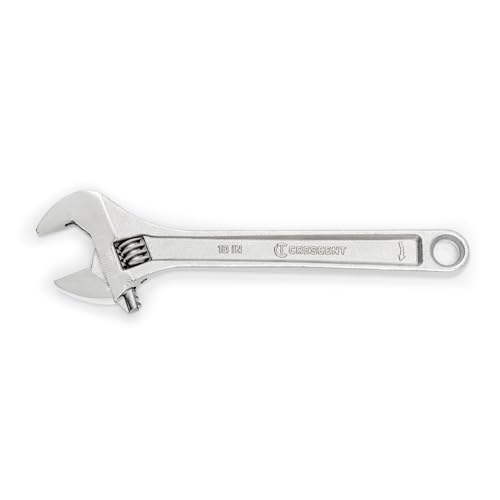

I checked all three linked models on November 15, 2026. Each had a New, in-stock Amazon offer; the AC210BK offer was sold by Pattern Professional. Availability can change.
Product prices and availability are accurate as of the date/time indicated and are subject to change. Any price and availability information displayed on Amazon.com at the time of purchase will apply to the purchase of this product.
| Tool | Key specs | Pick it if | Skip it if |
|---|---|---|---|
| Crescent C79H monkey wrench | C79H, 9-inch length, 0–2-3/4-inch opening, smooth jaws, full lifetime warranty [2] | You have a large nut with sound flats and a chrome or brass finish you don’t want to mark. [2] | You need teeth on round pipe, or the connection maker calls for a strap or special tool. [2] |
| Crescent AC210BK adjustable wrench | AC210BK, 10-inch length, 1-5/16-inch stated opening, Boxed, Smooth fastener jaws [1] | You have sound, accessible nut or bolt flats that fit the opening, and the connection maker permits an adjustable wrench. [1] | You need teeth to turn round steel pipe, a larger fastener opening, or a tool specified for a delicate plastic connection. [1] |
| RIDGID 814 aluminum pipe wrench | 814, catalog 31095, 14-inch nominal size, 2-inch maximum nominal pipe, 2-1/4 lb maker weight [3] | You have suitable round steel pipe, tooth marks are acceptable, and both the tool size and safe working space fit the job. [3] | The gripping point is a hex nut, polished finish, plastic fitting, thin-wall material at risk of crushing, or a hazardous system you cannot safely isolate. [3] |
These tools are not scored against each other. A wider opening or longer handle cannot make the wrong jaw shape suitable for your fitting.
These three do different jobs, so none is scored: the surface you have to turn decides. Every figure comes from the maker’s own page or guide. [2]
The Crescent C79H is the one wrench here that its maker calls a monkey wrench: an adjustable, smooth-jaw wrench for geometric fasteners with a cosmetic finish. Crescent says the smooth jaws prevent the damage toothed jaws do to fittings. [2]
Its jaws open from 0 to 2-3/4 inches (70 mm), a little over twice the AC210BK’s 1-5/16 inch. That makes it the smooth-jaw tool for a big chrome or brass nut with sound flats, where the AC210BK runs out of opening. [2] [1]
Crescent lists it at 9 inches long and 1.01 pounds, in heat-treated forged alloy steel with an I-beam handle and a slim head for tight spots. The warranty is full lifetime. [2]
Smooth jaws lower the risk of marking chrome or brass; they don’t remove it. Crescent’s own words are that the jaws “won’t mar easily-damaged fastener surfaces”, so seat the jaws fully on the flats and snug them with the knurl before you pull. [2]
Like the AC210BK, it isn’t a round-pipe tool. RIDGID’s guide gives that job to toothed pipe wrenches, and Charlotte’s plastic connections call for a strap wrench whatever the jaw shape. [2] [1]
My call: get the C79H when the nut is big, finished and has sound flats. For everyday nuts under 1-5/16 inch, the AC210BK is the handier size. [2] [1]
My call: choose the AC210BK when the part you need to turn has ordinary, sound flats. Crescent calls this model a 10-inch adjustable wrench. Its fastener jaw design and adjustment knurl make it a useful example of the smooth-jaw route, without calling it a traditional monkey wrench. [1]
Crescent advertises a 1-5/16-inch jaw capacity and lists the inch range as 0 to 1.312 inches. Measure across the nut’s parallel flats, then check head clearance beside any nearby wall. A nut within the opening limit can still be difficult to reach squarely. [1]
Crescent gives this model SAE and metric scales, a chrome finish and heat-treated forged alloy steel construction. The scales help identify fastener size. They do not replace checking that the jaws sit fully on the flats before force is applied, particularly when a nut’s corners are already damaged. [1]
There is a capacity-label wrinkle. Crescent’s feature text pairs 1-5/16 inch with 34 mm, while its specification table ends at 1.312 inches. Those labels are not exact equivalents. For a fastener near the opening limit, confirm physical fit instead of treating the larger metric label as guaranteed clearance. [1]
This is the boxed AC210BK, not the carded AC210VS mentioned in some wrench discussions. The Amazon listing identifies AC210BK. Keep that model name in view when checking the listing, because a similar photograph or the word Crescent alone does not establish the exact wrench. [1]
Smooth jaws avoid the deliberate tooth bite of a pipe wrench, but they cannot promise an untouched finish under every condition. Debris, damaged flats or a poor fit still matter. A finished fitting’s own tool instructions take priority over a general preference for a smooth adjustable wrench. [1]
Skip this pick for round steel pipe that needs a pipe wrench’s gripping action. Also skip the assumption that smooth jaws make every plastic nut suitable. Charlotte’s instructions for the plastic connections discussed below specify a strap wrench; the AC210BK’s jaw shape does not override those directions. [1]
My call: choose the RIDGID 814 for suitable round steel pipe when the teeth can mark the gripping surface. Model 814 is catalog number 31095. RIDGID’s current US ordering table identifies it as a 14-inch aluminum straight pipe wrench with a 2-inch maximum nominal steel-pipe capacity. [3] [4]
The same table lists its weight as 2-1/4 pounds. A wrench’s weight can matter when comparing models, but it does not establish grip strength, working torque or how much force a particular installed joint can safely take. [3] [4]
The 14-inch size also has a suggested pipe range. RIDGID’s use guide lists 1/2 through 1-1/2 inches as the suggested range for a 14-inch pipe wrench, with 2 inches as the maximum. Treat the maximum as a limit, rather than a reason to select the smallest possible wrench. [3] [4]
The hook jaw needs room to do its job. RIDGID requires a gap between the hook-jaw shank and the workpiece, with the two toothed contact areas doing the gripping. If the back of the hook jaw rests against the pipe, the setup can slip instead of gripping properly. [3] [4]
The limitation is just as useful as the capacity. RIDGID warns that these teeth mar surfaces and that the force can crush or oval thin-wall pipe. It also excludes hard, square and hexagonal material. A large hexagonal union nut does not become suitable simply because this wrench opens around it. [3] [4]
Use RIDGID’s eye-protection and support precautions before tool work. This is a hand tool: no handle extension, hammer blow or powered assistance. A pipe that starts moving elsewhere, or a joint that requires force beyond a controlled hand pull, needs reassessment rather than another leverage trick. [3] [4]
The aluminum handle does not make this an insulated tool or authorize work on live gas piping. The 814 belongs in a safe, correctly identified pipe-work setup. If the system, isolation or condition is uncertain, a qualified professional is the next step before any wrench is loaded. [3] [4]
| Question | Smooth-jaw route | Toothed pipe-wrench route | Ahead |
|---|---|---|---|
| Buyable example | Crescent C79H Check it on Amazon Crescent AC210BKCheck it on Amazon [1] [2] [3] [4] | RIDGID 814, catalog 31095 Check it on Amazon [1] [2] [3] [4] | Depends on workpiece [1] [2] [3] [4] |
| What bears on the work? | Flat jaw faces on fastener flats [1] [2] [3] [4] | Hook and heel teeth on round material [1] [2] [3] [4] | Depends on shape [1] [2] [3] [4] |
| Ordinary sound hex nut | Adjustable wrench, if it fits [1] [2] [3] [4] | RIDGID excludes hex stock [1] [2] [3] [4] | Smooth jaws [1] [2] [3] [4] |
| Suitable round steel pipe | Not the AC210BK’s fastener job [1] [2] [3] [4] | Purpose of the pipe-wrench pattern [1] [2] [3] [4] | Pipe wrench [1] [2] [3] [4] |
| Polished round surface | Flats may be absent [1] [2] [3] [4] | Teeth deliberately mar the surface [1] [2] [3] [4] | Neither; assess strap route [1] [2] [3] [4] |
| Plastic connection | Smooth jaws do not establish approval [1] [2] [3] [4] | Metal-pipe teeth do not establish approval [1] [2] [3] [4] | Connection maker’s tool [1] [2] [3] [4] |
| Capacity label | AC210BK: 1-5/16-inch fastener opening [1] [2] [3] [4] | 814: 2-inch maximum nominal steel pipe [1] [2] [3] [4] | Neither number is interchangeable [1] [2] [3] [4] |
| Traditional monkey example | Crescent C79H: smooth jaws, 2-3/4-inch opening [1] [2] [3] [4] | 814 is a pipe wrench, not that pattern [1] [2] [3] [4] | Different designs [1] [2] [3] [4] |
| Measured grip or torque | No comparative test score shown [1] [2] [3] [4] | No comparative test score shown [1] [2] [3] [4] | Unranked [1] [2] [3] [4] |
Start with the surface where the tool must sit. A round pipe beside a hexagonal nut gives you two different possible contact shapes. The connection instructions decide which piece should turn; the nearest available gripping surface is not automatically the correct one. [1] [2] [3] [4]
The word plumbing does not settle the choice. The same room can contain flat-sided metal fasteners, finished round parts and plastic connectors. Calling every one a pipe fitting can hide the tool difference that prevents damaged corners or tooth marks. [1] [2] [3] [4]
| Workpiece | Shape and finish | Measure or identify | Tool route | Restriction and source |
|---|---|---|---|---|
| Ordinary metal nut | Sound flats [1] [2] [4] [5] [6] | Across parallel flats [1] [2] [4] [5] [6] | Smooth adjustable; AC210BK if it fits [1] [2] [4] [5] [6] | Check exact opening and connection permission; Crescent AC210BK [1] [2] [4] [5] [6] |
| Threaded steel pipe | Round; tooth marks acceptable [1] [2] [4] [5] [6] | Nominal pipe size [1] [2] [4] [5] [6] | Toothed pipe wrench; 814 within its limits [1] [2] [4] [5] [6] [3] | Suggested range differs from maximum; RIDGID guide, chart 1 [1] [2] [4] [5] [6] |
| Chrome-plated nut | Finished flats [1] [2] [4] [5] [6] | Fastener size and permitted jaw contact [1] [2] [4] [5] [6] | Maker-approved smooth-jaw route [1] [2] [4] [5] [6] | No universal no-mark guarantee; Crescent and RIDGID finish guidance [1] [2] [4] [5] [6] |
| Polished round part | Round; finish must remain intact [1] [2] [4] [5] [6] | Outside diameter and part instructions [1] [2] [4] [5] [6] | Assess a strap-wrench method [1] [2] [4] [5] [6] | A strap needs its own rated fit; RIDGID strap guidance [1] [2] [4] [5] [6] |
| Charlotte threaded plastic | Identify exact connection [1] [2] [4] [5] [6] | System and sealing design [1] [2] [4] [5] [6] | Strap route specified by Charlotte [1] [2] [4] [5] [6] | Ordinary threads and O-ring plugs have different turn limits; TM-PL pp. 33, 66 [1] [2] [4] [5] [6] |
| Cracked, moving or hazardous piping | Safety overrides shape [1] [2] [4] [5] [6] | System condition and safe isolation [1] [2] [4] [5] [6] | Stop and qualified help [1] [2] [4] [5] [6] | No jaw choice repairs a damaged system; editorial stop rule [1] [2] [4] [5] [6] |
Read this matrix from left to right before choosing a model. For a nut with usable flats, the first measurement is across those flats. For nominal steel pipe, the first question is its nominal size. For a plastic connector, identifying the connection comes before either measurement. [1] [2] [4] [5] [6]
The restrictions column can rule out both displayed picks. A polished round part has no useful flats for the AC210BK, while the 814’s teeth can leave marks. That is a reason to change the tool route, not a reason to squeeze either wrench harder. [1] [2] [4] [5] [6] [3]
| Name | Recognizable feature | Current example | What the name cannot tell you |
|---|---|---|---|
| Smooth-jaw monkey wrench | Opposing smooth faces in the monkey pattern [1] [2] [4] | Crescent C79H automotive wrench [1] [2] [4] | Whether its opening or head clears your installation [1] [2] [4] |
| Modern adjustable wrench | Adjustable fastener jaw at the wrench head [1] [2] [4] | Crescent AC210BK [1] [2] [4] | Whether a polished or plastic connection permits it [1] [2] [4] |
| Straight pipe wrench | Toothed hook and heel gripping arrangement [1] [2] [4] | RIDGID 814 [1] [2] [4] [3] | Whether tooth marks and radial force are acceptable [1] [2] [4] |
Crescent describes the C79H as an adjustable smooth-jaw monkey wrench for geometric fasteners with a cosmetic finish. Its current listing gives a 9-inch overall length and a 2-3/4-inch jaw opening. That is a real design example, so the traditional smooth-jaw category has not simply disappeared. [1] [2] [4]
Crescent calls the AC210BK an adjustable wrench. It gives the model a hex-jaw fastener design, SAE and metric scales, and a 10-inch overall length. The two Crescent tools share adjustable smooth-jaw work, but their names and dimensions should not be merged into one specification. [1] [2] [4]
If somebody asks you to pass a monkey wrench, check the intended contact surface. Everyday speech can blur the names. For a shopping decision or a repair instruction, a model number plus a jaw description is clearer than relying on the nickname alone. [1] [2] [4]
| Number | Meaning | Correct comparison | Wrong shortcut |
|---|---|---|---|
| 10 inches on AC210BK | Overall wrench length [1] [2] [3] | Check reach and head access separately [1] [2] [3] | Assume it fits a 10-inch nut [1] [2] [3] |
| 1-5/16 inches on AC210BK | Advertised fastener-jaw opening [1] [2] [3] | Compare with distance across flats [1] [2] [3] | Use it as nominal pipe capacity [1] [2] [3] |
| 14 inches on RIDGID 814 | Nominal handle length [1] [2] [3] | Use the guide’s corresponding size row [1] [2] [3] | Read it as jaw opening [1] [2] [3] |
| 2 inches on RIDGID 814 | Maximum nominal steel-pipe diameter [1] [2] [3] | Compare the pipe’s nominal designation [1] [2] [3] | Assume every 2-inch-wide object is suitable [1] [2] [3] |
| 1/2 to 1-1/2 inches | Suggested pipe range for a 14-inch wrench [1] [2] [3] | Choose within the published working guidance [1] [2] [3] | Treat the maximum as the only sizing information [1] [2] [3] |
RIDGID defines nominal wrench size by handle length and nominal pipe capacity by maximum nominal steel-pipe diameter. The 814’s 2-inch pipe rating uses that nominal designation; it does not establish suitability for a nut measured 2 inches across its flats. [1] [2] [3]
Access is another check. A tool that can open far enough still needs room for its head and a controlled handle stroke. This is particularly relevant beside a wall or under a fixture. If you cannot position the jaws squarely, capacity on paper has not established a usable setup. [1] [2] [3]
Measure the gripping feature, then check access. Neither a handle length nor an opening figure proves that an installed joint can safely take more force. [1] [2] [3]
| RIDGID wrench size | Suggested nominal pipe range | Maximum nominal pipe size |
|---|---|---|
| 10 inches | 1/4 to 1 inch [4] | 1-1/2 inches [4] |
| 12 inches | 1/2 to 1-1/4 inches [4] | 2 inches [4] |
| 14 inches | 1/2 to 1-1/2 inches [4] | 2 inches [4] |
| 18 inches | 1 to 2 inches [4] | 2-1/2 inches [4] |
Source: RIDGID Pipe Wrench Use Guide, 999-888-101.10 Rev B, page 3, chart 1. These are maker selection ranges, not measured torque results. [4]
Notice that the 12-inch and 14-inch rows share a 2-inch maximum, while their suggested ranges differ. The maximum alone would hide that difference. Use the complete row for the wrench you are considering instead of selecting solely from a large capacity figure in a listing. [4]
A longer handle is not permission to force a distressed joint. RIDGID’s guide separately prohibits extensions and excessive force. If changing tool size is really an attempt to overcome a moving pipe, damaged threads or an uncertain installation, stop and have the connection assessed. [4]
| Surface | What teeth do | What smooth jaws change | What still needs checking |
|---|---|---|---|
| Bare suitable steel pipe | Bite into the gripping surface [1] [2] [4] [6] | Do not supply the same pipe-wrench action [1] [2] [4] [6] | Pipe suitability, size and support [1] [2] [4] [6] |
| Plated flats | Can damage the finish and corners [1] [2] [4] [6] | Avoid deliberate toothed contact [1] [2] [4] [6] | Maker’s approved tool, clean faces and full fit [1] [2] [4] [6] |
| Polished round surface | Can leave visible tooth marks [1] [2] [4] [6] | May have no flats to bear on [1] [2] [4] [6] | A properly rated strap method [1] [2] [4] [6] |
| Thin-wall material | High forces can crush or oval it [1] [2] [4] [6] | Smooth faces alone do not establish safety [1] [2] [4] [6] | Part-specific method and support [1] [2] [4] [6] |
A chrome finish changes the decision even when the part is metal. RIDGID states that pipe-wrench teeth mar the surface they grip. If the visible finish must remain intact, those teeth are a known drawback before the wrench is ever loaded. [1] [2] [4] [6]
A clean smooth jaw removes that deliberate tooth bite, but a no-mark promise would go too far. A tool can still sit on a corner, carry grit or bear on an unsuitable part. Check the fitting maker’s instructions rather than treating the word smooth as a guarantee. [1] [2] [4] [6]
For a finished round part, identify whether there are designated wrench flats elsewhere on the part. If there are none, the adjustable fastener route may not apply. RIDGID’s strap-wrench guidance provides a different gripping approach for polished surfaces, subject to that tool’s capacity and the part’s instructions. [1] [2] [4] [6]
| Charlotte connection covered by TM-PL | Tool direction | Maximum beyond finger-tight | Keep the scope |
|---|---|---|---|
| Threaded connections in the p. 33 do/don’t list | Strap wrench only [5] | Two turns [5] | Not a universal plastic-fitting rule [5] |
| Plugs supplied with an O-ring, p. 66 | Strap wrench or similar tool [5] | 1/2 turn [5] | Applies to the stated O-ring plug procedure [5] |
| An unidentified plastic connector | Identify its own maker procedure [5] | Not established by this table [5] | Do not copy another connection’s count [5] |
Charlotte’s ordinary threaded-connection list and its O-ring plug procedure are different instructions. The first permits a maximum of two turns past finger-tight. The O-ring procedure permits a maximum of 1/2 turn. Copying the first number onto the second connection would exceed that procedure’s limit. [5]
Both examples reject common wrenches intended for metallic piping. That makes this a case where choosing between the two metal-jaw picks misses the first question. Identify the plastic connection and follow its specified tool and sealing method before you decide how to apply force. [5]
Do not use the table as a direction to tighten a leaking unknown connector another half turn or two turns. A maximum is not a diagnosis. If the fitting is cracked, distorted or still leaks under its specified assembly method, stop and have a plumber identify the fault. [5]
The pipe should contact the toothed gripping areas without bottoming against the hook-jaw shank. RIDGID explains that the gap lets those two gripping points work together. A pipe pressed against the shank can reduce grip and can damage the hook jaw. [4]
Keep the wrench square to the pipe. An angled setup is a different problem from insufficient handle length. If the surrounding installation prevents a square, supported grip, change the access plan or obtain professional help rather than using side load to make the wrench reach. [4]
Before any pipe work with the 814, follow the system and equipment maker’s isolation, pressure-release and cooling instructions. If you cannot identify or verify those conditions, stop and call a qualified plumber. [4] [3]
Wear eye protection as RIDGID requires. Check for worn teeth, cracks, heat damage and bent handles. Remove a damaged wrench from service. [4]
Identify suitable round pipe, check the published size range and support the workpiece. Do not use the toothed pipe-wrench pattern on square or hexagonal stock. [4]
Keep clearance behind the hook jaw and hold the wrench square. Keep the handle and gripping surfaces free of oil or grease. [4]
RIDGID generally favors pulling over pushing for control. Keep stable footing. Do not add an extension, strike the wrench or use powered assistance; stop if the setup cannot remain controlled. [4]
| What you observe | What to check | Safer next step |
|---|---|---|
| Teeth look rounded or packed | Wear and contamination [4] [8] | Clean and inspect as the maker directs; worn jaws need service [4] [8] |
| Pipe touches the hook-jaw shank | Missing clearance behind the pipe [4] [8] | Reset the engagement with the required gap [4] [8] |
| Wrench leans across the pipe | Off-square setup or blocked access [4] [8] | Correct access before applying force [4] [8] |
| Grip is on a hexagonal nut | Wrong material shape [4] [8] | Use the connection’s proper fastener tool [4] [8] |
| Handle is bent or twisted | Overload damage [4] [8] | Remove the wrench from service; do not straighten it [4] [8] |
| The fitting and nearby piping move together | Uncontrolled installation movement [4] [8] | Stop; have a plumber assess support and the joint [4] [8] |
A slipping wrench needs a diagnosis before another attempt. RIDGID’s inspection list includes tooth wear and free movement of the hook jaw. The working surfaces should be clean and dry; oil on the grip is not a way to improve engagement. [4] [8]
Do not try to solve worn jaws with a longer handle. OSHA’s construction hand-tool rule specifically prohibits using wrenches whose sprung jaws cause slipping. That is a workplace requirement, not a residential plumbing code, but it reinforces the practical stop point for a tool that cannot hold safely. [4] [8]
A sound wrench can also slip because it is on the wrong shape. RIDGID excludes hard, square and hexagonal stock from this pipe-wrench pattern. If the tool is gripping a nut, moving to a suitable smooth fastener tool addresses the cause more directly than more pull. [4] [8]
My call: buy for the gripping surface you actually have, after checking the connection instructions. A wrench collection does not make a round polished part suitable for teeth, and a smooth adjustable wrench does not become a pipe wrench just because it is the only tool nearby. [1] [2] [4] [5] [6]
If this job only involves one accessible flat-sided fastener, there is no automatic reason to add the 814. If it involves suitable round steel pipe, the AC210BK cannot replace the pipe-wrench contact arrangement. A job that needs neither route should not turn into a purchase of both. [1] [2] [4] [5] [6] [3]
| Item | Label to check | Maker specifications | Decision |
|---|---|---|---|
| Crescent AC210BK opening | Amazon title: 1-5/16 inch [1] [3] [4] | Features pair 1-5/16 inch with 34 mm; specs give 1.312 inch [1] [3] [4] | Use stated inch limit; confirm fit near capacity [1] [3] [4] |
| Crescent model identity | Similar model name: AC210VS [1] [3] [4] | AC210BK listing names the boxed version [1] [3] [4] | Use the exact offered model and its own maker page [1] [3] [4] |
| Monkey-wrench name | Loose use of the name for adjustables [1] [3] [4] | C79H is maker-described monkey; AC210BK is adjustable [1] [3] [4] [2] | Keep terminology separate [1] [3] [4] |
The Amazon title agrees with the maker on the AC210BK’s inch opening and the RIDGID model number. Crescent’s feature text pairs 1-5/16 inch with 34 mm, while its specification table ends at 1.312 inches. Confirm physical fit near the opening limit. [1] [3] [4]
A monkey wrench has smooth jaws for flat-sided fasteners. A pipe wrench uses a toothed gripping arrangement on suitable round material. Crescent’s C79H and RIDGID’s 814 illustrate those different jobs. [2] [1] [4] [3]
The names can blur in everyday speech, so inspect the actual jaws and the intended contact surface. A pipe wrench’s teeth are a poor substitute for the right fastener tool on a hexagonal nut. RIDGID explicitly excludes hexagonal stock from this toothed pattern. [2] [1] [4]
A monkey wrench can have adjustable jaws, but not every adjustable wrench is the traditional monkey pattern. Crescent separately describes the C79H as a smooth-jaw monkey wrench and the AC210BK as an adjustable wrench. [2] [1] [4]
For a purchase, use the exact model, opening and jaw description. The C79H’s 2-3/4-inch opening does not carry over to the AC210BK, whose advertised inch opening is 1-5/16. The shared adjustable feature does not make their capacities interchangeable. [2] [1] [4]
The AC210BK is a fastener tool; it is not a direct replacement for the 814 on suitable round steel pipe. Smooth jaws need useful flats, while the pipe wrench’s teeth and hook-jaw arrangement are designed for its round-pipe job. [2] [1] [4] [3]
The reverse substitution is also a problem. Do not place the toothed pipe wrench on a nut merely because it opens far enough. Select the tool by the part’s approved gripping feature and instructions, rather than trying to make one jaw pattern cover every connection. [2] [1] [4]
RIDGID describes its pipe wrenches as hand tools for turning pipe and tightening or loosening threaded connections with round threaded fittings. Its instructions restrict the material and require suitable support and engagement. [5]
That description does not include every plumbing nut or every pipe material. Teeth mark surfaces, and high forces can crush thin-wall material. The 814’s published capacity is maximum nominal steel-pipe diameter, not approval for plastic, finished surfaces or energized equipment. [5] [3]
The precise origin of the name is not established by the maker documents used here. I do not attach an inventor story or a disputed etymology to the tool as a settled fact. [2] [1] [4]
For choosing a wrench, the useful distinction is visible: smooth jaws for appropriate flats versus a toothed arrangement for suitable round pipe. Crescent still uses monkey wrench in its C79H description, so the term can identify a current design as well as appear in older tool discussions. [2] [1] [4]
A basin wrench is a different access tool associated with faucet mounting nuts under a sink. It should not be treated as a straight pipe wrench simply because both tools appear in plumbing work. [2] [1] [4]
If the real problem is reaching a faucet mounting nut, identify that nut and the available clearance first. A 14-inch straight pipe wrench’s nominal length does not prove it can reach or safely engage the nut. The related basin-wrench guide covers that separate tool choice. [2] [1] [4]
Do not assume the 814 is suitable because a plastic part is round or has a large head. Identify the cleanout’s maker, plug type and removal instructions. Charlotte’s cited threaded-plastic procedures reject common metallic-piping wrenches. [5] [3]
Those procedures also distinguish ordinary threads from plugs supplied with O-rings. Do not copy a tightening count onto an unidentified cleanout or use it as a removal instruction. A stuck, cracked or distorted plug needs its own repair assessment. [5]
First determine whether the chrome part has designated flats or a round finished gripping surface. Pipe-wrench teeth mar the surface. An approved smooth-jaw tool may fit flats; a polished round part may need a properly rated strap method. [4]
No universal no-mark guarantee follows from a smooth jaw or a strap. Check the part’s instructions and the tool’s condition. Avoid making tooth marks an acceptable surprise after the tool has already slipped across a visible finish. [4]
Check jaw wear, contamination, tool damage, material shape and engagement. RIDGID requires clearance behind the hook jaw and warns against using this pattern on hexagonal or hard stock. [4]
Remove a damaged wrench from service rather than adding force. If the tool is sound but you cannot get square access or keep the pipe supported, stop and reassess the job. A longer handle cannot correct the wrong contact geometry. [4]
Use the maker’s suggested pipe range as well as its maximum. RIDGID’s chart gives a 14-inch wrench a suggested 1/2 to 1-1/2-inch nominal pipe range and a 2-inch maximum. [4]
Then confirm the wrench can sit squarely and move under controlled hand force. A published size limit does not establish the condition of an installed joint. If the piping moves elsewhere or the job needs an extension bar, stop before applying more leverage. [4]
Isaac Daniels is the responsible editor for PlumbingPicks and a licensed journeyman plumber in Georgia. This comparison separates the maker-described C79H monkey wrench from the AC210BK adjustable wrench and the RIDGID 814 pipe wrench. [1] [2] [3] [4] [5]
The recommendations rest on documented jaw function, fit limits and safety restrictions. The contact diagrams explain jaw function. They are schematics, and the tool choices are based on the published specifications and instructions.
I read Crescent’s exact model pages, RIDGID’s ordering information and Pipe Wrench Use Guide, and Charlotte’s connection-specific plastic instructions. I compare the intended contact shape before capacity or handle length.
All three linked offers were new and in stock on Nov 15, 2026. Offer status can change. Product photos come from Amazon. I compare published specifications and instructions rather than assign a grip-strength score.
| Selection check | Rule applied to every pick |
|---|---|
| Identity | Exact branded model in the offer and maker page |
| Gripping job | Fastener flats or suitable round pipe; never an invented universal winner |
| Fit | Published capacity, physical access and connection-specific permission |
| Safety | Material exclusions, finish damage and controlled hand use |
| Offer | New and in stock in my offer check, Nov 15, 2026 |
| Score | No weighted score; different workpiece jobs are compared categorically |