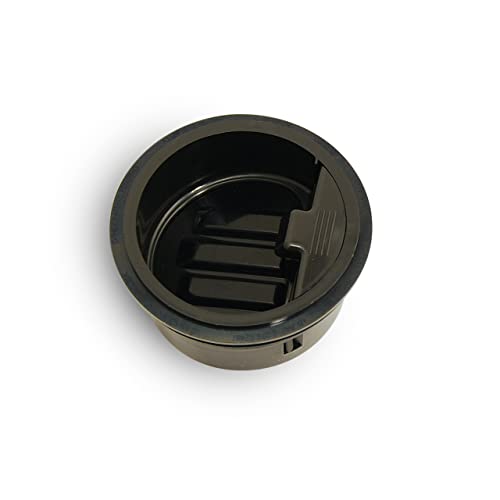
RectorSeal SureSeal 3 in.
$54.44 at Amazon
Check it on AmazonPrice as of Oct 24, 2026, 5:30 AM EDT

Find the spot the drain air is getting in, and close it.
As an Amazon Associate I earn from qualifying purchases.
Most sewer smells come from a trap that dried out. Run water in every sink, tub and floor drain. Smell at the toilet base means a failed wax ring. A sharp rotten-egg smell near a gas appliance could be gas: leave first.
Natural gas and propane are given a smell on purpose, and it’s close to rotten eggs.
Rheem’s water heater manual explains why the two get confused: gas suppliers add an odorant to natural gas and propane that most people recognize as a sulfur or rotten-egg smell. Sewer air smells of rot too, so a nose alone can’t always tell them apart.
Where the smell is gives the best clue. Near a furnace, water heater, range, dryer or gas meter, treat it as gas. At a drain, toilet or floor drain, with no gas appliance nearby, it’s almost always the drain system.
Atlanta Gas Light lists other leak signs that have nothing to do with smell: a hissing or roaring sound, dirt blowing from the ground, dead or discolored plants over a gas line, and bubbles in standing water. Any of those outside the house means call the gas company, even if you can’t smell anything.
The smell is near a gas appliance or meter, you hear hissing, or it’s strong and sudden. Atlanta Gas Light says to act on even a small amount of the odor.
It’s strongest at a drain, toilet base or floor drain, comes and goes with water use, or started after a room sat unused.
Atlanta Gas Light’s first step is to leave the area and get a safe distance from the possible leak.
Don’t flip light switches, use a phone, flashlight or other device, or start a car near the smell.
Once you’re clear, call the gas company or 911. Atlanta Gas Light’s line is 877-427-4321.
Don’t look for the leak yourself, and don’t go back in until the gas company or responders say it’s safe.
One more reason not to trust your nose: hydrogen sulfide, the gas behind the rotten-egg smell, dulls the sense of smell after a short exposure. Penn State Extension calls it deceptive for that reason. Atlanta Gas Light warns about the same thing with gas odorant, which it calls olfactory fatigue.
If the smell comes from the water itself, only when a hot tap runs, that’s a water heater or well issue, not a drain. The rotten egg water guide covers it.
Walk the house and find the room where it’s strongest, then answer three questions.
Drain pipes are supposed to be full of sewer air. What keeps it out of the house is water: every fixture has a trap, a bend that holds a plug of water between the room and the pipe. The plumbing codes set that plug at 2 to 4 inches deep. Lose the water, or open a gap anywhere above it, and the smell comes in.
| Room | Most likely opening | First thing to try |
|---|---|---|
| Bathroom, at the toilet | Failed wax ring or cracked flange | Push the toilet side to side; any movement means reseal it |
| Bathroom, at the sink or shower | Dry trap, or an AAV under the sink | Run water a minute; sniff inside the vanity |
| Basement | Floor drain trap evaporated | Pour about a gallon in the floor drain |
| Laundry room | Washer standpipe trap or floor drain | Run a short rinse cycle; refill the floor drain |
| Kitchen | AAV under the sink, or a dishwasher drain loop | Sniff inside the sink cabinet with the doors closed for a while |
| Whole house | Several dry traps, a cleanout cap or the vent | Refill every trap, then check cleanout caps |
Water in a trap that nobody uses slowly evaporates. Once it’s gone, there’s an open pipe to the sewer.
| Fixture | Why it dries out | What to do |
|---|---|---|
| Guest bath sink, tub or shower | Nobody runs it for weeks | Run each one for a minute every few weeks |
| Basement or laundry floor drain | Only gets water in a flood or a spill | About a gallon every few weeks, or a trap seal insert |
| Toilet in an unused bathroom | The bowl water evaporates | Flush it every few weeks |
| Mechanical room floor drain | Hot, dry air speeds evaporation | Code calls for a primer or seal device on traps subject to evaporation |
| Whole house after a long trip | Every trap loses water | Run every fixture once when you get home |
Oatey puts the time at about 2 to 4 weeks: a basement sink, tub, laundry tub or floor drain left that long can lose its trap water completely.
The fix costs nothing. Run the water for a minute and the trap refills. If the smell is gone by the next day, you’ve found it.
If it comes back within a day or two, the trap isn’t just drying out. Something is pulling the water out, which is a vent problem, or air is getting around the trap, which points to the toilet seal, an air admittance valve or a cleanout.
RectorSeal puts it plainly: the water in a floor drain’s P-trap evaporates, which lets unpleasant gases seep up. Its advice is to pour about a gallon of water down the drain every few weeks.
If you’d rather not keep up with that, the codes allow two permanent fixes. A trap primer adds water to the trap automatically. A barrier-type trap seal device sits in the drain and closes when no water is flowing. The IPC and IRC both name these for traps subject to evaporation, and the UPC requires protection on floor drains that see little use.
| Fix | How it works | Standard | Best for |
|---|---|---|---|
| Pour water in | Refills the trap by hand | None | A drain you’ll remember to check |
| Trap seal insert | Rubber seal opens for water, closes against air | ASSE 1072 | Retrofits; no plumbing work |
| Trap primer valve | Sends a little water to the trap automatically | ASSE 1018 | New work or a remodel |
The insert is the homeowner fix. RectorSeal’s install is three steps: take off the drain cover, press the SureSeal into the opening until it fits snugly, and put the cover back. RectorSeal says the SureSeal is ASSE 1072 tested and comes in 2, 3, 3-1/2 and 4 in. sizes, and it also keeps bugs out.
New floor drains in many areas come with protection already, because the codes require it where a trap is likely to dry out. Here’s what the IPC allows:
| IPC section | Method | How it keeps water in the trap |
|---|---|---|
| 1002.4.1.1 | Potable water trap primer valve (ASSE 1018) | Sends a little supply water to the trap, connected above the seal on the inlet side |
| 1002.4.1.2 | Reclaimed or graywater primer valve (ASSE 1018) | Same, fed from a reclaimed or graywater line |
| 1002.4.1.3 | Wastewater-supplied primer device (ASSE 1044) | Uses drain water from another fixture |
| 1002.4.1.4 | Barrier-type trap seal device (ASSE 1072) | A seal in the drain that blocks evaporation |
| 1002.4.1.5 | Fixture drain connection | A hand sink or drinking fountain drain in the same room feeds the floor drain |
Measure the drain opening under the cover before you buy. The trap primer guide covers when code calls for a primer and how they’re plumbed.
The toilet’s own water seal sits in the bowl. Below it, a wax ring seals the toilet to the drain.
The wax ring sits between the bottom of the toilet and the flange, the fitting on top of the drain pipe. Oatey describes the standard install: the wax ring goes on the flange and seals directly to the toilet. If that seal breaks, drain air comes out around the base even while the bowl is full.
Two signs point to it. The smell is strongest at the floor around the toilet, and the toilet moves when you push it side to side. Water on the floor after a flush is the third, and the toilet leaking at the base guide walks through that test.
Close the supply stop, flush and sponge out what’s left in the bowl and tank.
Disconnect the supply line, take the nuts off the floor bolts and lift the toilet straight up.
Scrape off the old wax. A cracked or broken flange won’t hold a new ring tight.
Oatey’s Fix-it Repair Ring goes over a broken, cracked or worn flange without replacing it.
Press a new wax ring onto the flange, lower the toilet straight down and tighten the nuts evenly.
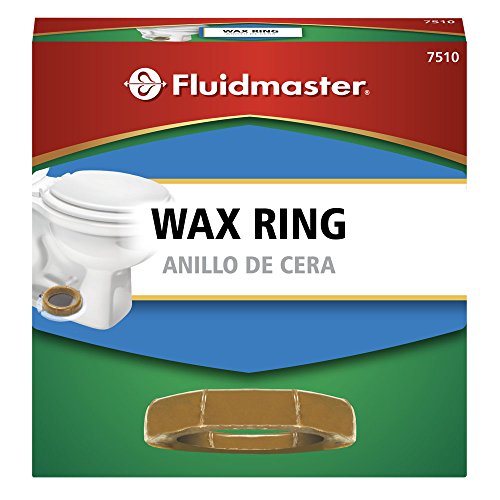
A wax ring is single-use in practice: once the toilet compresses it, lifting the toilet breaks the shape. Have a new one before you start. Fluidmaster’s 7510 wax ring fits 3 and 4 in. waste lines; for a flange set below the floor, Fluidmaster makes thicker rings.
The full job, with bolt and flange-height details, is in the how to replace a toilet wax ring guide.
Every trap needs air behind it. Without it, draining water pulls the trap empty.
The IRC says trap seals must be protected from siphonage and back pressure by venting. When a vent is blocked, water rushing down the pipe pulls air through the nearest trap instead. You hear it as a gurgle, and the trap ends up partly empty.
Many sinks are vented with an air admittance valve, a plastic cap on a short pipe under the sink. Studor’s valves open at a slight vacuum, −0.01 psi, to let air in, and use gravity to close and seal at zero pressure and above. A valve that sticks open lets drain air straight into the cabinet.
No smell in the cabinet. The drain runs quietly. The valve sits upright and above the drain branch.
Smell strongest inside the sink cabinet, or the drain gurgles. Studor rates its valves for indoor use from −40 to 150°F.
Replacing a threaded AAV is a hand-tight job. Studor’s Mini-Vent instructions call for thread seal tape only, no pipe dope, and hand tightening. The valve must stand vertical, at least 4 in. above the branch it vents, and stay accessible. The Studor 20341 Mini-Vent fits 1-1/2 and 2 in. pipe.
If drains gurgle all over the house, the roof vent or the main drain is the more likely culprit. That’s a plumber’s job. The AAV vs vent guide explains where each is allowed.
Distance matters too. IPC Table 909.1 limits how far a trap can sit from its vent, by pipe size and slope. A trap installed too far from the vent fitting can siphon itself, so a sink that smells right after every use, even with a new trap, may have been plumbed past that limit. That’s a fix inside the wall and a job for a plumber.
A washing machine drains into a standpipe, an open pipe behind the washer with its own trap below it. The IPC sets the standpipe’s height above that trap in section 802.4.3, because a standpipe that’s too short or too tall can lose its seal or overflow. If the laundry room smells and the washer sits unused for weeks, run a short rinse cycle to refill that trap.
Many laundry rooms also have a floor drain. It dries out like a basement drain, so give it the same gallon of water or an insert.
In the kitchen, the usual opening is under the sink. Island sinks are often vented with an air admittance valve in the cabinet. Close the cabinet doors for an hour, then open them and sniff: a smell trapped inside the cabinet points at the AAV or a loose slip nut on the trap.
Sinks and tubs have one more hiding place: the overflow, the small opening near the rim. Its channel collects soap and grime that can smell on its own. Oatey’s monthly routine:
Pour 1/2 cup into the overflow opening.
Follow it with 1 cup of vinegar.
Let it sit for 15 minutes.
Rinse the overflow with hot water.
Each fixture gets its own trap. IPC 1002.1 also bans double trapping, two traps in a row on one fixture, because the air between them keeps either from sealing properly.
Each sink, tub and shower for about a minute, and flush every toilet.
About a gallon in each basement, laundry and garage floor drain.
A short rinse cycle refills the standpipe trap and the dishwasher’s drain path.
A smell that’s back within a day isn’t evaporation. Use the finder above.
Fit trap seal inserts in floor drains you can’t ask anyone to check. Oatey also suggests 1–2 tablespoons of mineral oil in a trap before a long absence; it floats on the water and slows evaporation.
Fill a glass at the tap and walk it to another room. If the glass smells, the problem is the water, not the drains. The Minnesota Department of Health says a rotten-egg smell in well water usually comes from hydrogen sulfide made by sulfur bacteria or natural reactions with soil and rock, and rarely from sewage.
MDH still suggests testing a well for coliform bacteria and nitrate to be safe. If only hot water smells, the water heater’s anode rod is the usual suspect. The rotten egg water guide covers both.
Older homes sometimes have traps the codes now ban. The IPC lists S-traps, bell traps, crown-vented traps and drum traps among them. An S-trap drops straight down after the bend, so a full sink of water can siphon it dry on its way out.
If a sink smells right after it drains, look under it. A pipe that bends and then turns straight down into the floor, with no vent, is the classic S-trap. The S-trap vs P-trap guide shows how to tell and how to convert one.
Refill every trap first, including floor drains and the toilet in any room nobody uses. That clears most whole-house smells within a day.
Next, find the cleanouts. They’re capped openings into the drain, often in the basement, a crawl space, outside near the foundation, or behind an access panel. A missing, cracked or loose cap is an open hole to the sewer. The cleanout locations guide shows where to look.
Check each cap you find:
It’s a round plug, usually with a square or hex head, on a short pipe or flush with the floor.
A missing cap, or one cracked across the top, is an open path for drain air.
Turn it by hand or with a wrench. It should be snug, not loose enough to rock.
Drain air near a sound, tight cap means the opening is somewhere else.
A blocked or broken sewer line is the other whole-house cause. Oatey lists tree roots, debris and old pipe as the usual culprits, with the smell strongest on the lowest floor, in the basement or crawl space. Slow drains on that level are the clue.
If the smell stays after that, a plumber can trace it through the pipes. Oatey describes the method: plug the drain system and fill it with smoke, then watch where the smoke comes out. A cracked drain inside a wall or under a slab won’t show up any other way.
Four parts cover the fixes above. Each was new and in stock on the day of the update. Prices come from Amazon with the time they were read.


Product prices and availability are accurate as of the date/time indicated and are subject to change. Any price and availability information displayed on Amazon.com at the time of purchase will apply to the purchase of this product.
| Part | Key specs | Pick it if | Skip it if |
|---|---|---|---|
| RectorSeal SureSeal 97042 | 3 in. press-in inline trap seal, rubber membrane, ASSE 1072 per RectorSeal | A basement or laundry floor drain keeps drying out. | Your drain opening isn’t 3 in. RectorSeal makes 2, 3-1/2 and 4. |
| Fluidmaster 7510 | Standard wax ring, fits 3 and 4 in. waste lines | The smell is at the toilet base and the toilet rocks. | The flange sits below the floor. Use a thicker ring. |
| Oatey Fix-it ring | Steel repair ring over a broken, cracked or worn flange; 1/4 and 5/16 in. bolts | You lifted the toilet and the flange is cracked. | The flange is sound. The wax ring alone is enough. |
| Studor 20341 Mini-Vent | AAV with PVC adapter, 1-1/2 and 2 in., 160 DFU on a branch | An existing AAV under the sink smells or the sink gurgles. | There’s no AAV now. Adding one is a code question for your area. |
I’ve used each of these. The SureSeal and a gallon of water fix the most common call, a basement that smells after a dry spell. The wax ring and repair ring go together: buy both before you pull a toilet, because you won’t know the flange’s condition until it’s off.
| What people try | What actually happens |
|---|---|
| Air fresheners or candles | They cover the smell while drain air keeps coming in. Find the open path instead. |
| Pouring bleach down a dry drain | The trap still needs water to seal. Plain water does the job. |
| Caulking around a rocking toilet | Caulk hides the movement but not a broken wax seal under it. |
| Taping over a floor drain | It blocks the drain for the day you need it. A trap seal insert lets water through. |
| Ignoring a rotten-egg smell near the furnace | That can be gas. Leave and call the gas company. |
A blocked roof vent or a slow main drain needs tracing and often roof access.
A cracked pipe in a wall or slab, or a broken cleanout, needs a plumber to find.
Not a plumbing call. Leave and call the gas company or 911 from outside.
Most often a trap dried out, usually a floor drain or a fixture nobody uses. Run water in every drain. If it’s near a gas appliance, leave and call the gas company first.
It can be. Sewer gas contains hydrogen sulfide, which dulls your sense of smell after a short exposure. Find and close the opening rather than getting used to it.
Location is the best clue. Gas odorant smells like rotten eggs too, so near a gas appliance or meter, treat it as gas and leave. At a drain or toilet base, it’s the drain.
Check the toilet first: a rocking toilet or smell at its base means the wax ring failed. Then run the sink and shower to refill their traps, and look for an air admittance valve under the sink.
The floor drain trap has most likely evaporated. RectorSeal suggests about a gallon of water every few weeks, or a trap seal insert that closes when no water flows.
A smell that shows up when water drains, then fades, usually means a trap is being pulled partly dry by poor venting. One that builds over weeks in a quiet room is evaporation.
Don’t get used to it. Hydrogen sulfide dulls your sense of smell, so a fading smell doesn’t mean it’s gone. Air the room out, refill the traps, and sleep elsewhere until the source is fixed if it stays strong.
The washer standpipe trap or the floor drain has dried out. Run a short rinse cycle and pour a gallon of water in the floor drain.
Check under the sink for an air admittance valve that no longer closes, and for a loose slip nut on the trap. Run water to refill the trap first.
Yes. The water in the trap is what blocks drain air. Codes require 2 to 4 inches of it. Running water for a minute refills it.
I’m Isaac Daniels, a licensed journeyman plumber in Georgia (license #JP507711). I’ve used every part listed here. The rules and steps come from the IPC, IRC and UPC, and from Studor, RectorSeal, Fluidmaster, Oatey, Rheem and Atlanta Gas Light documents read Oct 21–23, 2026.