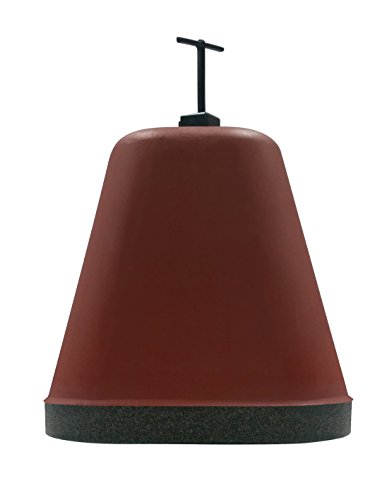
Frost King FC2 hard cover
$6.79 at Amazon
Check it on AmazonPrice as of Oct 24, 2026, 5:30 AM EDT
See fit and limits
Shut, drain, open, cover, before the first hard freeze.
As an Amazon Associate I earn from qualifying purchases.
Take the hose off, close the shutoff valve inside, then open the outdoor faucet and leave it open so the line drains. Add a cover before the first hard freeze. A frost-free sillcock only needs the hose off, though Drip Depot still advises a cover.
Each does a different job, so they aren’t scored against each other. All three were new and in stock on Amazon on Oct 24, 2026.


Product prices and availability are accurate as of the date/time indicated and are subject to change. Any price and availability information displayed on Amazon.com at the time of purchase will apply to the purchase of this product.
Pick your faucet and whether it has its own shutoff inside. The steps follow the Red Cross list and Woodford’s frost-free rules.
| Faucet | Inside valve | Drain it | Cover |
|---|---|---|---|
| Standard hose bib | Close it | Open the faucet and leave it open | Yes |
| Standard, no inside valve | None | Not without shutting off the house | Yes, plus wrap reachable pipe |
| Frost-free sillcock | Not needed | It drains itself when the hose is off | Optional (Drip Depot advises one) |
The “leave it open” step is the one people skip. The Red Cross says to keep the outside valve open so any water left in the pipe can expand without breaking it. Closing it again traps that water. Our sillcock vs hose bibb guide shows how to tell the two kinds apart.
Water expands when it freezes. A pipe full of water has nowhere for that to go.
| Where (Red Cross list, in its order) | Examples |
|---|---|
| Pipes exposed to severe cold | Outdoor hose bibs, swimming pool supply lines, sprinkler lines |
| Supply pipes in unheated areas | Basements, crawl spaces, attics, garages, kitchen cabinets |
| Pipes on exterior walls | Runs with little or no insulation |
The Red Cross puts it plainly: water expands as it freezes, and no matter how strong the container, the expansion can break pipes. An outdoor hose bib is first on its list because it sits outside the warm house.
The pipe feeding it often runs through a rim joist or crawl space too, which is why the inside shutoff and draining matter as much as the cover.
Both the Red Cross and Woodford put this first.
Unscrew the hose from every outdoor faucet.
Stretch it out downhill and let the water run out.
Coil it and store it inside, per the Red Cross.
Drip Depot says to take off splitters, manifolds and drip irrigation heads and drain them, so the spout stands alone.
On a frost-free sillcock, a hose left on is how they burst. Woodford’s Model 17 sheet warns that the hose “must be removed in freezing weather or faucet may freeze and burst.”
The hose holds water in the long body, so it can’t drain back out of the spout. My call: the same goes for any hose fitting, so take everything off the spout.
A standard hose bib needs its own shutoff inside the heated house.
Follow the pipe from the outside wall inward: a basement ceiling, a utility room or a crawl space.
OCWA, a New York water utility, says turn a gate valve clockwise until it stops, or give a ball valve a quarter turn.
Drip Depot says some shutoffs have a bleed valve; open it with a bucket under it and under the spout to let the last water out.
My call: tag the valve so you find it again in the spring.
The Red Cross says to close inside valves supplying outdoor hose bibs. If you can’t find one, the faucet may be a frost-free sillcock, which doesn’t need it, or a standard bib with no separate shutoff. That last case is worth fixing. Our frost-free spigot guide covers the replacement.
With the inside valve closed, open the outdoor faucet so the water between the two can drain out.
Turn the outdoor handle on all the way.
A little water will drain, then it stops.
Keep it open all winter, so leftover water has room to expand.
If water keeps dripping, the inside valve isn’t fully closed.
That third step comes straight from the Red Cross: keep the outside valve open so any water remaining in the pipe can expand without breaking it. Drip Depot gives the same rule and says to leave the spigot open all winter. OCWA, the water utility, says to shut the outside faucet after it drains instead; I follow the Red Cross and Drip Depot here.
My call: a steady drip from the open spout after a few minutes means the inside valve is leaking through, and it needs repair before it gets cold. Our outdoor faucet leak guide covers the drip from the faucet itself.
A cover keeps wind off the faucet body. It works best on a faucet that’s already drained.
Frost King says its faucet protectors insulate outdoor faucets through the winter and keep outside air from leaking into the house; its FC2 adds a hard plastic shell over a foam liner. My call: a cover buys time on a cold night, but it isn’t a heater.
On a standard bib it works with the shutoff and drain steps, not instead of them. Our outdoor faucet cover guide compares covers side by side.
A frost-free sillcock puts its valve inside the warm wall. It’s freeze-proof only if two things are true.
| Rule | Woodford Model 17 sheet |
|---|---|
| Hose off | Won’t rupture from freezing when the valve is shut off and the hose is removed |
| Pitch | Must be installed with downward pitch toward the nozzle |
| Backflow | Built-in ASSE 1019 Type C anti-siphon device, up to 125 psi backpressure |
| Pressure and heat | 125 psi max; 120°F max |
| Use | Not to be under continuous water pressure for more than 12 hours |
The pitch rule matters for older installs. If a frost-free sillcock slopes back toward the house, water sits in the body and can still freeze. Woodford’s Model 17 has an integral anti-siphon device, so it doesn’t need an add-on vacuum breaker.
Its 8 in. version fits walls up to that thickness, and Woodford says to specify model, inlet and wall thickness when ordering. Our sillcock key guide covers the keys for tee-handle versions.
The pipe inside a crawl space or garage can freeze even when the faucet is covered.
Check the garage, crawl space, basement rim and any cabinet on an outside wall.
My call: wipe the pipe dry first so the adhesive tape sticks.
Frost King’s FV15 is a self-adhesive foam and foil tape, 2 in. by 1/8 in. by 15 ft.
My call: spiral it on with overlap so no pipe shows.
The Red Cross suggests UL-listed heat tape or heat cable on exposed pipes.
The Red Cross recommends insulating attics, basements and crawl spaces, and insulating both hot and cold pipes in unheated areas, using pipe sleeves or UL-listed heat tape. Frost King sells FV15H (15 ft) and FV30 (30 ft) rolls of its foam and foil wrap. Our heat tape guide covers the powered option for a pipe that freezes every year.
The Red Cross adds a few habits for the coldest nights.
| Habit | Why (Red Cross) |
|---|---|
| Drip the cold water at faucets on exposed pipes | Running water, even a trickle, helps prevent freezing |
| Open sink cabinet doors on outside walls | Lets warmer air reach the plumbing |
| Keep the garage door closed | If water lines run through the garage |
| Keep the thermostat steady day and night | A higher bill costs less than a burst pipe |
| Away from home: heat no lower than 55°F | Keeps pipes in the walls above freezing |
The Red Cross notes that opening cabinets means moving cleaners and chemicals up out of children’s reach. If you’ll be gone for a long stretch, the steady heat matters more than anything you do outside. My call: a freeze alarm that texts you when the house gets cold is worth it for a second home.
If you turn on a faucet and only a trickle comes out, the Red Cross says to suspect a frozen pipe.
Water will start to flow as the ice melts, and running water helps melt the rest.
Use an electric heating pad, a hair dryer, a space heater kept away from anything flammable, or towels soaked in hot water.
No blowtorch, kerosene or propane heater, or charcoal stove.
Keep going until full water pressure is back.
If one pipe froze, others may have too.
If you can’t find, reach or thaw the frozen spot.
Those steps are the Red Cross’s. It says frozen pipes are most likely along exterior walls or where the water service enters through the foundation. My call: if a frost-free sillcock froze and split, the crack is usually inside the wall, so it may only leak when you turn it on in spring.
Watch the inside wall the first time you use it.
From Frost King’s product pages and Woodford’s Model 17 sheet.
| Part | Key specs (maker) | Job | Pick it if | Skip it if |
|---|---|---|---|---|
| Frost King FC2 | Hard plastic shell, poly foam inner cover, rectangular (Frost King); fits regular and stand faucets, per the Amazon listing | Cover | The faucet faces the wind or gets bumped | You want a soft cover; see the cover guide |
| Frost King FV15 | Self-adhesive foam and foil tape, 2 in. × 1/8 in. × 15 ft; the listing photo shows Frost King’s FV15H code | Pipe insulation | A short run of pipe is exposed indoors | The run is long; FV30 is 30 ft |
| Woodford 17P‑8‑MH | Freezeless, ASSE 1019 anti-siphon, 8 in. wall, 1/2 in. FIP × 3/4 in. MIP inlet, 125 psi | Replacement | A standard bib froze or has no inside shutoff | Your wall is thicker than 8 in.; order the right length |
Woodford makes the Model 17 in several wall thicknesses and inlets, from copper sweat to PEX. The P inlet on this one is a combination: 1/2 in. female pipe thread inside, 3/4 in. male pipe thread outside. Measure the wall and check the pipe before you order, since the length has to reach the warm side.
Hoses, inside valve, draining, covers and pipe wrap.
Swapping a standard bib for a frost-free sillcock on an accessible pipe.
No inside shutoff, or a frozen pipe you can’t find or reach (Red Cross).
A pipe split inside a finished wall or ceiling.
My call: the four winterizing steps take a few minutes a faucet and need no tools. Replacing a faucet that froze is different. If the pipe is copper or PEX you can reach from a basement, it’s a reasonable DIY job; inside a finished wall, it isn’t. Our whole-house winterizing checklist covers the rest of the house.
Open, after you close the inside shutoff. The Red Cross says to keep the outside valve open so leftover water can expand without breaking the pipe.
Take the hose off. Woodford says its Model 17 won’t rupture when the valve is shut and the hose is removed, but may freeze and burst with the hose on.
Before the first hard freeze, per the Red Cross’s “before the onset of cold weather.”
You can’t drain it without shutting off the house. Cover it, wrap reachable pipe, and plan a frost-free sillcock or a shutoff valve.
Keep the faucet open and warm the pipe with a heating pad, hair dryer or hot towels; never an open flame (Red Cross).
Woodford’s sheet names two causes: a hose left on, and a faucet that doesn’t pitch down toward the spout so it can drain.
No, unless the maker directs it. The Red Cross says antifreeze is harmful to people, pets, wildlife and landscaping.
I’m Isaac Daniels, a licensed journeyman plumber in Georgia (license #JP507711). I’ve used every part on this page. The steps come from the American Red Cross’s frozen pipe guidance and Woodford’s Model 17 sheet; the part facts from Frost King’s and Woodford’s pages; my own advice is marked “my call.”