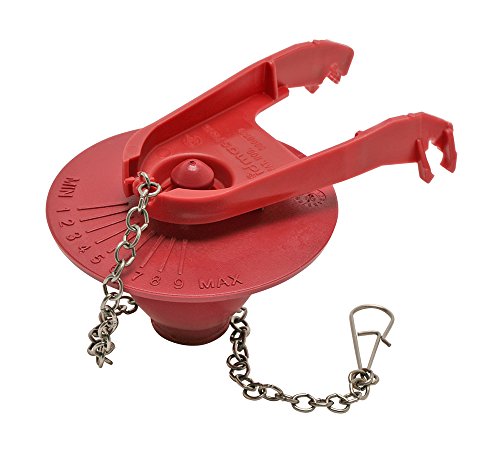
Your Kohler Does Not Take a Flapper: Canister Flush Valve Seals Explained
I match the Kohler canister flush valve seal to the tank first. GP1059291 fits the matching single-flush canister; a hinged flapper needs a different part.
As an Amazon Associate I earn from qualifying purchases. How this site earns
Written by: Isaac Daniels, Licensed Journeyman Plumber (JP507711)
In my 7 years of experience, these are the products I'd install.
I check what moves inside the tank before buying a replacement. A hinged rubber flap and a lifting canister need different parts. If the tank has a tower instead of a flap, another universal flapper will not solve a leaking canister seal.
The part to inspect is the flat ring at the bottom of the canister. I match the tank number to the parts diagram, then check the seal and the surface it closes against. That separates a small seal replacement from a damaged guide or a different running-toilet fault. [1]
Ten seconds with the tank lid off tells you which one you have
Take the lid off, set it flat on a towel, and flush while you watch.
1
Flapper. A rubber flap hinged on two ears at the base of the overflow tube. The chain pulls one edge up, the flap swings on the hinge, water dumps, the flap drops back onto a seat. Most of the tank stays still.
2
Canister. A tall cylinder , usually three or four inches across , standing in the center of the tank. When you flush, the entire cylinder lifts straight up like a piston and sets back down. Nothing swings, nothing hinges.
If the whole tower rises, you have a canister. Put the universal flapper back in the bag.
This guide covers Kohler single-flush canister seals. Other tower-style valves can look similar, so I do not choose a seal by appearance alone. I check the maker and tank number before ordering.
What actually fails on a canister
I inspect the seal before replacing the whole cylinder. Kohler’s service-parts brochure identifies GP1059291 as the seal to check first on the listed single-flush canisters. I also inspect the guide and cap for broken tabs; a fresh ring cannot repair broken plastic. [1]
I look for a seal that has hardened, distorted or collected debris, then inspect the valve seat for deposits or damage. A ring must sit flat against a clean seat to hold water. I check the chain too: a tight chain can keep the valve from closing. [4]
The symptoms are exactly the ones people blame on a flapper:
1
The toilet refills on its own every ten or twenty minutes with nobody near it.
2
The tank is noticeably low in the morning.
3
You hear a faint trickle inside the bowl in a quiet house.
4
The flush has gone weak or does not finish, because the tank never fully charged.
Kohler’s canister troubleshooting covers leaks, self-flushing and incomplete flushing. Those symptoms are a reason to diagnose the flush system, not proof that every toilet needs a new seal. I also check water level, chain tension and refill-hose position before blaming the ring. [3][4]
The part you actually need
Kohler lists the single-flush canister seal as 1059291; the GP1059291 packaged part is the replacement named in its service-parts brochure. I check that number against the tank’s parts list, especially if the valve has been changed before. Kohler also provides a dedicated seal-replacement guide. [1][2]
The genuine seal’s Amazon listing describes chemical resistance and says it replaces the older red seal. I use the part number, not color alone, to establish compatibility. A red ring is a useful clue, but the tank diagram is the deciding reference.
I prefer the genuine part when the tank calls for it. The repair depends on a flat, correctly fitted sealing surface. An aftermarket listing is an alternative only after the same fit check, and I do not treat a seller’s durability claim as a measured service-life advantage.
If you maintain a row of identical toilets, spares can be useful. I confirm that the tanks actually share the same seal before buying a multi-pack. A spare that fits one Kohler tank should not be assumed to fit every Kohler toilet.
Picks by need
Seal close-up from the exact Amazon listing.
Genuine replacement for a matching single-flush canister
Kohler GP1059291 canister seal
Buy it if your tank parts list calls for GP1059291. I would start with the genuine replacement.
Skip it if you have a hinged flapper, a dual-flush valve or a damaged guide.
The tradeoff I still check the tank number before ordering; a Kohler name on the lid alone is not a fit check.
Kohler identifies GP1059291 as the single-flush canister seal. The listing says it replaces the red seal. [1]
I close the supply stop gently and flush to drain the tank. I sponge out remaining water and set the lid flat on a towel. If the stop will not shut off, I stop the repair rather than force it.
2
I note the chain and refill-hose positions, then follow Kohler’s seal-replacement guide for the installed canister. I release the center guide using the method shown for that valve. I do not wrench on the outer tower or force a different design to turn.
3
I lift out the released canister and peel the old seal from its groove. I inspect the guide, locking tabs and canister before fitting a new ring. Broken tabs call for the correct repair part, not extra force.
4
I wipe the valve seat and groove with a soft cloth. I remove loose debris without scratching the surface. A nicked seat or leakage around the valve base needs a separate repair.
5
I fit the replacement ring evenly into its groove. I check its entire circumference for a rolled edge or twist before lowering the canister back into place.
6
I align and lock the guide as shown in the matching instructions, restore the chain and refill hose, and make sure the canister moves freely and settles fully. I leave enough chain slack for it to close.
7
I reopen the supply slowly, inspect for external leaks and flush several times. With the tank full, I add a few drops of food coloring and leave it without flushing for half an hour. Color in the bowl indicates a leak path still needs diagnosis.
I use Kohler’s model-matched replacement instructions for removal and reassembly. [2]
I verify the repair rather than stopping after the first refill. After the water settles, I watch for a falling tank level, dye entering the bowl and another unexplained refill. If the leak persists, I return to the seat, chain and refill hose before buying more parts. [4]
Why it failed, so it does not fail again in a year
I avoid in-tank cleaning tablets and follow the tank’s care instructions. A chemical-resistant seal is not permission to expose every tank component to a concentrated cleaner. For routine cleaning, I keep the cleaner in the bowl rather than leave a tablet against the tank parts.
I wipe away deposits and loose debris from the seat with a soft cloth. I do not scrape a sealing surface with metal or abrasive paper. If deposits remain, I check the toilet’s care instructions before choosing a cleaner; a nicked seat is a separate repair problem. [4]
I inspect the replacement ring all the way around its groove before reassembly. A rolled edge, a twist or a section sitting high can prevent even contact. I also make sure the guide locks and the chain allows the canister to settle fully.
If it turns out you do have a flapper after all
I check the flapper fit next. Two things to sort out first. You need to know whether your flush valve is two-inch or three-inch, which my guide on two-inch vs three-inch toilet flappers settles in about a minute. And you need to be sure the flapper is the actual fault and not the fill valve, which is what flapper vs fill valve diagnosis is for. If it turns out to be the fill valve, my Kohler fill valve guide matches the part to the toilet.
I match a hinged flapper by the exact tank and flush-valve model. Kohler uses different flapper sizes and designs across its ranges; the seal for a single-flush canister is a separate part. The Kohler flapper guide covers that branch of the repair.
And if you replaced the flapper already and the toilet is still running, that is its own diagnosis , see still running after replacing the flapper. If the toilet only runs for a few seconds at random intervals, start with toilet phantom flushing. When the tank has more than one tired part, a complete tank repair kit is usually the better buy than three individual pieces.
FAQ
Does a Kohler toilet have a flapper or a canister
Many Kohler tanks use a canister flush valve rather than a flapper. Take the tank lid off and flush: if a tall cylinder in the middle of the tank lifts straight up as one piece, it is a canister and there is no flapper in it. If a hinged rubber flap swings up off a seat at the base of the overflow tube, it is a flapper.
What is the seal on the bottom of a Kohler canister called
Kohler lists it as Seal (Canister Single Flush), part number 1059291, sold at retail as GP1059291. It is a flat rubber ring that seats in a groove on the underside of the canister and presses against the flush valve seat to hold the tank full between flushes.
Can I put a universal flapper on a canister flush valve
No. A hinged flapper needs the correct mounting points and seat. I replace the ring on a compatible canister rather than try to attach a universal flapper to it. Check the tank diagram before ordering, and follow the removal method for that valve. [1][2]
Will this seal fit every Kohler toilet
No. I match GP1059291 to the tank’s parts diagram. A Kohler toilet may use a hinged flapper, a single-flush canister or a different flushing system. I do not substitute this ring for a dual-flush seal.
What if a new seal still leaks
I check for a twisted ring, debris or a nicked seat, then check chain tension and refill-hose position. If the tank overfills, I diagnose the fill valve. If water appears outside the toilet or the tank is cracked, I stop and arrange a repair.
Bottom line
If the tank has a cylinder that lifts as a unit, I start with the canister’s parts diagram rather than a universal-flapper listing. A compatible seal can fix leakage at that sealing surface. It cannot fix a cracked tank, damaged guide, nicked seat or a fill valve that overfills. Look inside, confirm the part number and verify the repair before closing the lid. [1][4]
How I chose
I compared four existing listings using Kohler’s single-flush service-parts brochure and seal-replacement guide, Korky’s Ultra flapper information, and Fluidmaster’s 502 installation instructions. I checked brand, quantity and fit, and kept the hinged-flapper options separate because they solve a different repair. The genuine Kohler ring is my starting point for a tank that specifies it; the HZMM pack is an aftermarket alternative, with compatibility stated by its seller.
I checked recall records for Kohler, HZMM, Korky and Fluidmaster on November 15, 2026. The brand search returned no matching recall for these seals or flappers. A brand search does not establish the safety of a different flush system.
When I would call a plumber
I stop if the supply stop will not close, the tank is cracked, water appears outside the toilet, locking tabs are broken or the valve seat is damaged. A new seal is not a repair for those faults. I also stop rather than force an unfamiliar canister to turn.