
Best Home Water Filters

Choosing from the best home water filters starts with what your water needs, then with what your home lets you install. Pick the type here, then open its guide for the exact model.

As an Amazon Associate I earn from qualifying purchases. How this site earns

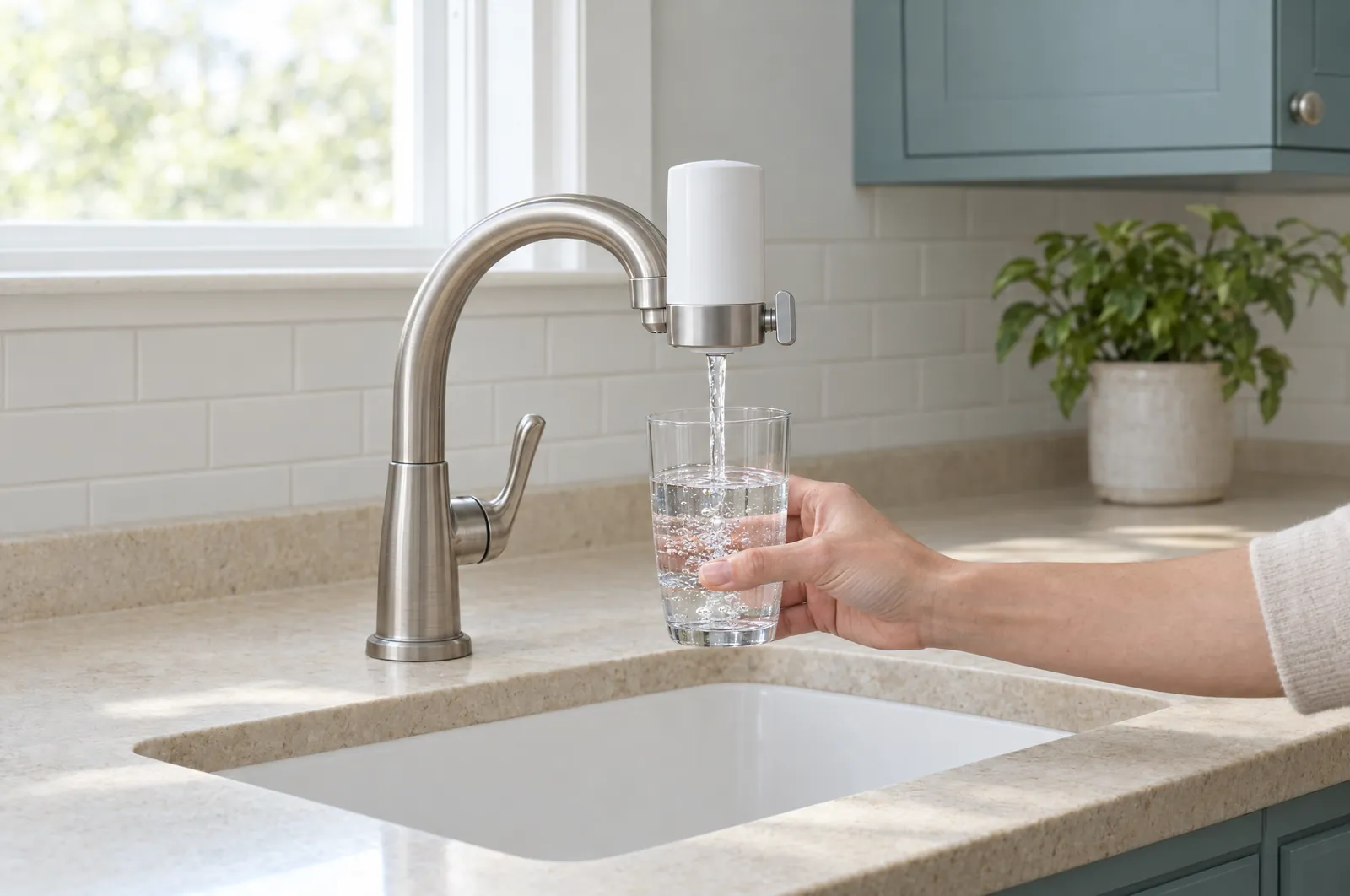
Illustration of a hand filling a glass from a plain, unbranded water filter mounted on a kitchen faucet. A room scene, not a product photo and not a test.
Disclaimer: Illustration for visual purposes

The short answer

First know your water. City water comes with a yearly report from the supplier (EPA); a private well needs its own test (EPA). Then buy a model whose certification listing names what you want reduced (CDC).

You rent
Pitcher, faucet mount or a plug-in countertop RO unit. None of them changes the plumbing.
You own, one kitchen tap
Under-sink filter, or under-sink RO for reverse osmosis on tap.
You own, every tap
Whole house, on the main water line.
Private well
Test the well first. For every tap, start with the well-water guide. For one tap, the rows above still apply.
Not sure? Answer four questions

Find your filter type

Start with what your water needs. The type comes last.

A guide helps you choose. Main-line work and permit questions belong with a licensed plumber.

1What do you want the filter to fix?
2Where is your water from?
3Where do you want filtered water?
4Do you rent or own?

Start with question 1: what you want the filter to fix.

Picks by need

Six filter types, from no install to the main water line. Each one opens the PlumbingPicks guide that lists its exact picks.

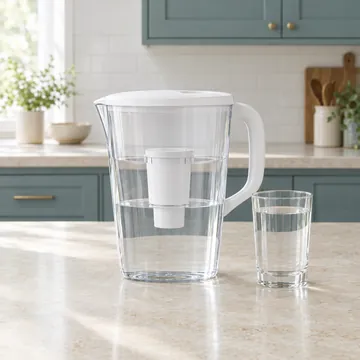
  1. Illustration of a plain filter pitcher and a glass of water on a kitchen counter. A room scene, not a product photo.

    Disclaimer: Illustration for visual purposes

    Pitcher

    No install

    Best for
    Renters, and anyone who wants filtered drinking water with no tools.
    Skip it if
    You want filtered water straight from the tap.
    See the exact picks on the pitcher guide
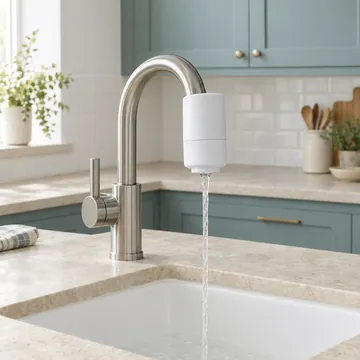
  2. Illustration of a plain white filter mounted on the spout of a kitchen faucet, with water running into the sink. A room scene, not a product photo.

    Disclaimer: Illustration for visual purposes

    Faucet mount

    On the faucet spout

    Best for
    Filtered water at the kitchen tap, with nothing under the sink.
    Skip it if
    Your faucet has a pull-out or handheld sprayer. PUR says those don’t fit its systems (PUR).
    See the exact picks on the faucet-filter guide
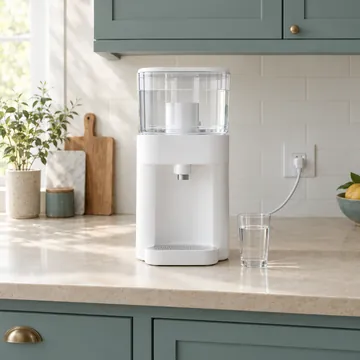
  3. Illustration of a plain white countertop reverse osmosis unit plugged into a wall outlet, with a glass of water. A room scene, not a product photo.

    Disclaimer: Illustration for visual purposes

    Countertop RO

    Plugs in on the counter

    Best for
    Reverse osmosis with no plumbing. Plug-in units such as AquaTru’s need no water line (AquaTru), so they suit a rental.
    Skip it if
    You don’t want to fill a tank by hand, or the counter is short on space.
    See the exact picks on the countertop RO guide
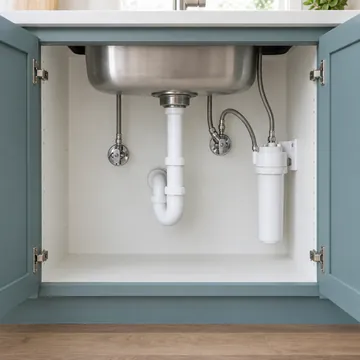
  4. Illustration of a single white under-sink filter in an open sink cabinet, fed from the cold-water shutoff. A room scene, not a product photo.

    Disclaimer: Illustration for visual purposes

    Under-sink filter

    In the sink cabinet

    Best for
    Owners who want filtered water on tap and a clear counter.
    Skip it if
    You can’t change the plumbing, or the cabinet is full.
    See the exact picks on the under-sink guide
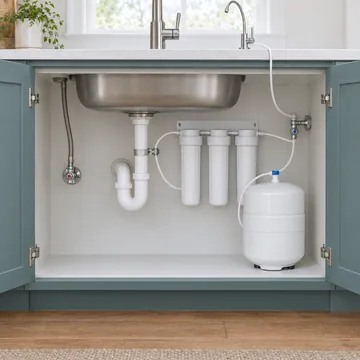
  5. Illustration of an under-sink reverse osmosis system in an open sink cabinet: three filter housings, a storage tank and its own small faucet. A room scene, not a product photo.

    Disclaimer: Illustration for visual purposes

    Under-sink RO

    Cabinet, drain and its own faucet

    Best for
    Owners who want reverse osmosis on tap and have cabinet room for it.
    Skip it if
    You can’t add a faucet or connect to the sink drain. Countertop RO needs neither.
    See the exact picks on the under-sink RO guide
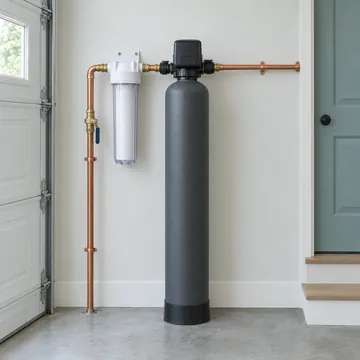
  6. Illustration of a full-size whole-house filtration system in a garage: a tall media tank and a sediment pre-filter on the copper main water line, after a shutoff valve. A room scene, not a product photo.

    Disclaimer: Illustration for visual purposes

    Whole house

    On the main water line

    Best for
    Owners who want treated water at every tap, not just the kitchen.
    Skip it if
    You only want better drinking water, or the owner won’t approve main-line work.
    See the exact picks on the whole-house guide

On a private well and want every tap filtered? Start with the well-water guide. Comparing two owner types? See under-sink vs whole-house.

See the filter types in four minutes

This Old House plumbing expert Richard Trethewey walks through pitcher, faucet-mounted, under-sink, reverse osmosis and whole-house filters.

Video: "How to Choose a Water Filter," This Old House on YouTube (2016). Not made by PlumbingPicks. It loads from YouTube when you press play.

The differences that change the choice

Where the water comes out, whether a renter can use it, and what your home needs. No prices, stars or lab scores.

How the six filter types differ
TypeFiltered water comes outRentersWhat your home needs
PitcherFrom the pitcher. You refill it by hand.YesNothing. Fill it at the tap.
Faucet mountFrom your kitchen faucet.Yes It screws on where the faucet’s aerator was (PUR).A standard faucet. PUR says pull-out and handheld faucets don’t fit its systems (PUR).
Countertop ROFrom the unit on the counter. Plug-in units such as AquaTru’s are filled by hand (AquaTru).Yes Plug-in units such as AquaTru’s need no plumbing or water line (AquaTru).For a plug-in unit, an outlet and counter space.
Under-sink filterFrom your current faucet, or from its own faucet, depending on the model (Waterdrop).Owner’s OK It changes the owner’s plumbing.The cold-water line in the sink cabinet, room for the filter, and a faucet hole if the model adds its own faucet (Waterdrop).
Under-sink ROFrom its own faucet (iSpring).Owner’s OK It changes the owner’s plumbing.The cold-water line, a sink-drain connection, a faucet hole, and room for the tank on tank models (iSpring).
Whole houseFrom every tap. It treats water as it comes into the house (CDC).Owner’s OK It goes on the owner’s main line.Work on the main water line. That belongs with a licensed plumber.

Upkeep is the same job for every type: change the cartridges on the maker’s schedule (CDC). Under-sink RO has more of them: a membrane plus several cartridges (iSpring).

Plumber’s fit check

For under-sink filters and under-sink RO, check four things before you buy. A flashlight and a tape measure will do.

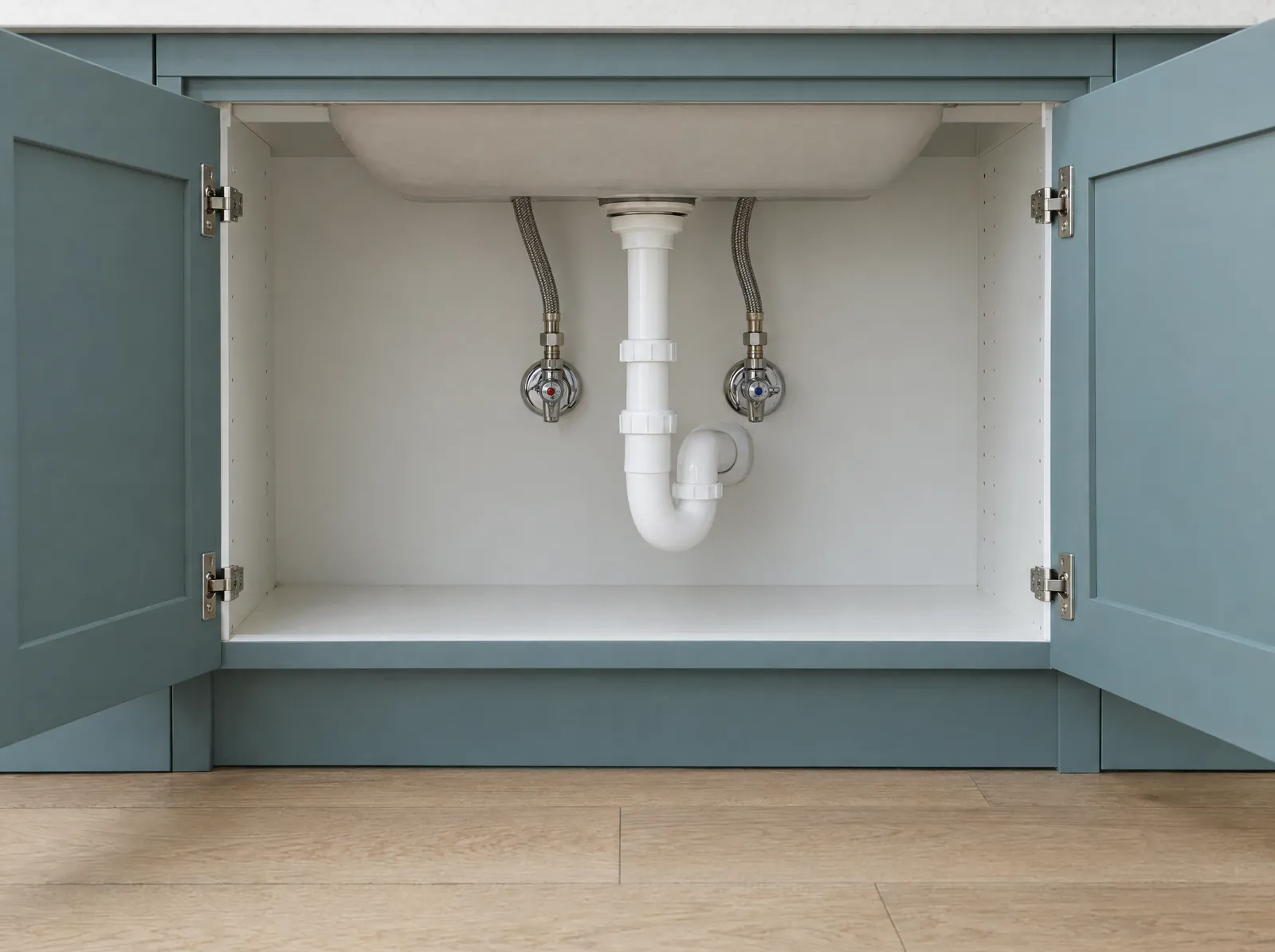
Illustration of an open kitchen sink cabinet: a white drain tailpiece and P-trap in the middle, hot and cold shutoff valves on the back wall, and open floor space beside the trap. A room scene, not a product photo and not a test.
1 is above the sink, on the deck. 2 is the cold shutoff. 3 is open space beside the trap. 4 is the drain tailpiece.Disclaimer: Illustration for visual purposes
  1. Sink-deck hole

    Under-sink RO kits can come with their own faucet and expect a hole in the counter or sink; iSpring’s kit does (iSpring). Some under-sink filters add a faucet too; others feed your current one (Waterdrop). Can’t drill? A faucet mount, a plug-in countertop RO unit or an under-sink filter that feeds your current faucet skips this step.

  2. Cold-water shutoff

    Under-sink filters connect to the cold supply under the sink (Waterdrop). Make sure that valve turns and closes all the way. Fix a stuck or leaking valve first.

  3. Filter space

    Measure the clear width, height and depth beside the drain trap. Compare it with the system’s size on its guide, and leave room to change cartridges.

  4. Drain line (under-sink RO only)

    Under-sink RO also connects to the sink drain; iSpring’s kit uses a drain saddle. Tank models also need floor space for the tank (iSpring). Countertop RO skips this.

Renting? Anything under the sink changes the owner’s plumbing. Get a written OK first, or start with a pitcher, a faucet mount or a plug-in countertop RO unit.

What a filter removes. That depends on the exact model and its certification listing (NSF). Filters cannot remove some types of harmful substances (CDC).

3-year cost calculator

Compare what two filters cost to own, not just to buy. Type in today’s prices from the product pages and the maker’s cartridge life. This page shows no prices.

3-year cost = unit price + (cartridge price × replacements per year × 3)

Filter A

Enter a unit price and one cartridge to see the 3-year cost.

Filter B

Enter a unit price and one cartridge to see the 3-year cost.

Unit price
The price of that exact model on the day you check it.
Cartridge price
The replacement cartridge made for that model.
Replacements per year
From the maker’s stated cartridge life, at the amount of water your home uses.
More than one cartridge
Multi-stage systems, such as reverse osmosis, use more than one. Add a line for each.
Not counted
Installation, fittings, shipping, tax, power for plug-in units, and the water an under-sink RO system sends to the drain.

How to choose

There is no single best water filtration system for home use. The best one matches your need and passes these checks in your home.

  1. Find out what’s in your water

    City water: your water supplier must send a report each year by July 1 (EPA). Private well: test it every year (EPA).

  2. Name the need

    Some filters make water taste better, others remove harmful chemicals, and others remove certain germs (CDC). Know which one you want.

  3. Choose one tap or every tap

    Point-of-use filters serve a single tap, such as the kitchen sink. Whole-home filters treat water as it comes into the house (CDC).

  4. Check what you can change

    Renters: a pitcher, a faucet mount or a plug-in countertop RO unit. Owners can use any type. Main-line work belongs with a licensed plumber.

  5. Check the fit

    For under-sink filters and under-sink RO, run the fit check. For a faucet mount, check the faucet: PUR says pull-out and handheld faucets don’t fit its systems (PUR).

  6. Check the exact model

    Look it up in the certifier’s listing, such as NSF’s database (NSF). That check lives on each type’s guide, and on the NSF-certified filter guide. For lead at the drinking tap, see the lead-filter guide.

Questions buyers ask

Can I use a water filter if I rent?

Yes. A pitcher, a faucet mount and a plug-in countertop RO unit leave the plumbing alone. A faucet mount screws on where the faucet’s aerator was (PUR). Plug-in countertop RO units such as AquaTru’s need no plumbing or water line (AquaTru).

Limit: under-sink and whole-house filters change the owner’s plumbing. Get a written OK first.

Do I need a whole-house filter or a drinking-water filter?

If you mostly care about the water you drink and cook with, start with a drinking-water filter at one tap. A whole-house filter is a home water filtration system that treats water as it comes into the house, so every tap gets it (CDC).

Limit: which one you need depends on what you want reduced. The exact model’s certification listing shows that.

Does reverse osmosis have to go under the sink?

No. An under-sink RO system connects to the cold-water line and the sink drain and has its own faucet. iSpring’s under-sink kit, for example, includes a drain saddle, a faucet and a storage tank (iSpring). A plug-in countertop RO unit such as AquaTru’s plugs into an outlet and is filled by hand, with no plumbing or water line (AquaTru).

Limit: install needs vary by model. Check the maker’s manual for the exact system.

I’m on a private well. Where do I start?

With a water test. Private well owners are responsible for their own drinking water (EPA). EPA suggests testing every year for total coliform bacteria, nitrates, total dissolved solids and pH (EPA). Then, for every tap, use the well-water guide. For one tap, the one-tap types above still apply.

How do I know a filter is certified?

Look up the exact model in the certifier’s own listing. CDC suggests checking the label for an NSF certification, then looking up the product in NSF’s database to see what it is certified to remove (CDC, NSF).

How we chose

Isaac Daniels
Licensed Journeyman Plumber

Research-led. Filter types are sorted by the finder’s questions: what you want the filter to fix, where your water comes from, one tap or every tap, and rent or own. Then by install and upkeep, from the maker documents in Sources.

Isaac has tested the listed filter products and has more than 6 years of experience.

It doesn’t pick a second winner for a job another PlumbingPicks guide already covers.

Links checked October 30, 2026. Source text last read October 29, 2026.

Sources

Each one is also linked next to the claim it supports.

  1. CCR Information for Consumers, US EPA. Community water systems must send a yearly drinking water quality report by July 1, naming the regulated contaminants found.
  2. Consumer Confidence Reports (CCR), US EPA. Where to find your local report.
  3. Private Drinking Water Wells, US EPA. Private well owners are responsible for safe drinking water in their homes.
  4. Protect Your Home’s Water, US EPA. Test a private well every year for total coliform bacteria, nitrates, total dissolved solids and pH.
  5. About Choosing Home Water Filters, CDC. Point-of-use and whole-home filters, what filters can and can’t remove, the NSF label and database, Standard 42 (taste and odor) and Standard 58 (reverse osmosis), and changing filters on the maker’s schedule.
  6. Certified drinking water treatment units, NSF. Look up a model by standard: 42 aesthetic effects, 53 health effects, 58 reverse osmosis, 401 emerging compounds.
  7. Faucet System Support & FAQs, PUR. Fits most standard faucets; pull-out and handheld faucets are not compatible; the original aerator comes off to attach it.
  8. Under-sink direct-connect filter (product page), Waterdrop. Cold-water line only. One version connects to your original faucet; another adds its own faucet in the original hole or a drilled 1-inch hole.
  9. Under-sink reverse osmosis kit (product page), iSpring. The kit includes an RO membrane, three pre-filter cartridges, a storage tank, an RO faucet, a feed water adapter and a drain saddle; the faucet needs a drilled hole.
  10. FAQ, AquaTru. Countertop purifiers need no plumbing or water line: plug in, fill the tap water tank.