
Moen 1222 cartridge
See today’s price on Amazon
Check it on Amazon
Find what holds your cartridge in, then follow your valve maker’s steps.
As an Amazon Associate I earn from qualifying purchases.
Shut off the water and pull the handle. What holds the cartridge names the valve: a clip is Moen, a round nut is Delta, a two-screw collar is Kohler. Swap it the maker’s way, then check the shower runs 120°F or less.
Take the handle off first. Then pick what you see and how the handle moved.
The finder covers the three single-handle families you’ll meet most in houses: Moen, Delta and Kohler. Each one locks its cartridge in a different way, and each one seats it differently. Get the family right and the rest of the job is a few steps.
Pfister and American Standard valves have their own guides: Pfister 0X8 and its replacements and American Standard pressure-balance cartridges.
A cartridge swap fixes a drip, a stiff handle or a temperature that won’t hold. It won’t fix a leak behind the wall.
| What you see | Cartridge? | What to do |
|---|---|---|
| Water keeps dripping from the head or spout long after you shut it off | Usually | Replace the cartridge for your valve |
| A drip for a minute after shutoff, then it stops | No | That’s the pipe above the valve draining |
| Handle is stiff or hard to turn | Often | Replace it soon. Moen says a stiff handle strains the brass stem until it can snap |
| Hot and cold are backwards after a repair | Seating | Turn the stem or cartridge as the maker shows. See hot and cold |
| Not hot enough at full turn | Rarely | Check the limit stop first: shower not hot enough |
| Water from the tub spout and head at once | No | That’s the diverter: fix a shower diverter |
| Weak flow everywhere in the shower | Sometimes | Check the head and restrictor first: low shower pressure |
| Water stains below the shower or in the ceiling | No | Stop. That’s a valve body, pipe or drain leak. Call a plumber |
My call: if the handle has gone stiff, don’t wait for the drip. Moen’s own article on a broken 1222 says a hard-to-turn handle puts extra stress on the brass stem, and a snapped stem leaves the shell stuck in the valve. Pulling a whole cartridge is a far easier job than pulling half of one.
Buy the genuine cartridge for your valve, the right puller if it’s a Moen, and a tube of silicone grease. I’ve used every part in this kit.



Product prices and availability are accurate as of the date/time indicated and are subject to change. Any price and availability information displayed on Amazon.com at the time of purchase will apply to the purchase of this product.
| Part | Key specs | Pick it if | Skip it if |
|---|---|---|---|
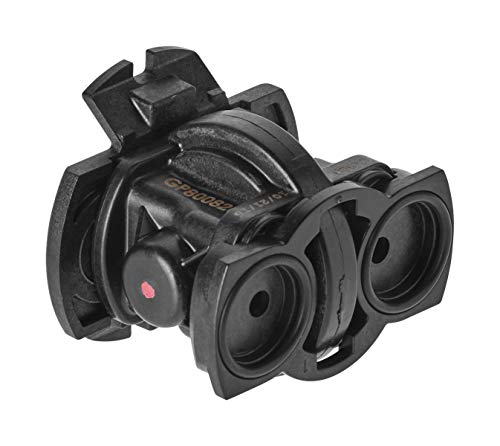
| Moen 1222 cartridge | Part 1222, brass and plastic, Moen limited lifetime warranty | Your Moen handle only turns, and a clip sits at the top of the body. | The handle pulls out to turn on. That’s a 1225. |
| Moen 1225 cartridge | Part 1225, brass, twist cap tool in the box | Your Moen has a stop tube and a D washer on the stem. | It’s a Posi-Temp. Moen’s listing excludes Posi-Temp and ExactTemp. |
| Delta RP46074 cartridge | Part RP46074, single-function pressure balance, rotational limit stop | Your Delta is a MultiChoice 13/14 made after March 2006. | Your trim says 17 or 17T, or it has two controls. |
| Kohler GP800820 | Genuine Kohler part, replaces GP500520, fits K-304 and K-11748 | You see a black cap under a two-screw collar. | Your Kohler valve is a different platform. Check the trim model. |
| Danco 86712 puller | Removes Moen 1200, 1222 and 1225, brass or plastic | A Moen cartridge won’t pull with pliers. | Your valve is Delta or Kohler. Danco says Moen only. |
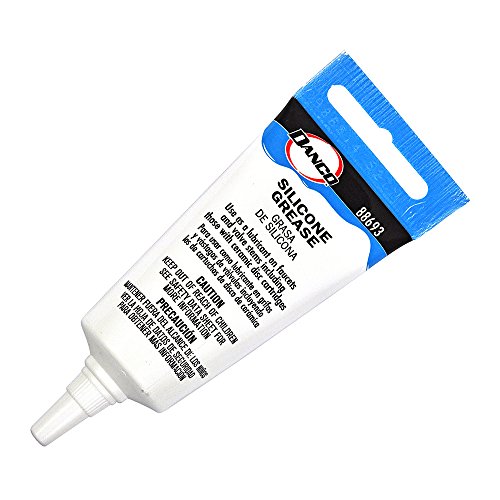
| Danco 88693 grease | 0.5 oz silicone, NSF 61 listed, −40 to 400°F | You’re greasing O-rings, grommets or PBU seals. | You have the grease packet from the cartridge box already. |
Tools: a Phillips screwdriver for the handle and plate, needle-nose pliers for a Moen clip, large pliers or channel locks to grip a stem, a nylon brush, paper towels and a thermometer. Moen lists the screwdriver, needle-nose pliers and channel locks for the 1222, and an adjustable wrench for the 1225.
Many Moen Posi-Temp handles grip the stem through a plastic adapter. If yours cracked coming off, Moen sells it as the 116653 handle adapter kit.
Skip the “compatible with” cartridges. Every listing in this kit is the maker’s own part. A look-alike that seats a hair off is how a fixed shower starts dripping again.
Use the valve’s own stops if it has them, or the main. Moen’s steps start with the supply shut-offs off.
Water should slow to nothing. A steady stream means the shutoff isn’t holding. Don’t loosen anything until it stops.
Moen recommends it. A handle screw or a clip down the drain ends the job early.
Pop off the cap if there is one, remove the screw and pull the handle straight off.
Moen says to remove the escutcheon screws and plate when you can’t reach the clip.
Shoot the cartridge, its stem and any stop or tab before it moves. Delta’s older Monitor notes tell you to mark the old cap’s position.
Lay a towel in the tub. The first time you pull a cartridge, water left in the valve will run out of the body. That’s normal and it stops.
These follow Moen’s 1222 article, updated April 15, 2025.
Use needle-nose pliers to slide the retainer clip up and out of the top of the brass body. Moen warns not to drop it behind the wall.
Fit the plastic twisting tool and turn the cartridge just past a quarter turn. Moen says the body bulges out slightly.
Take the tool off, grab the stem with pliers or channel locks and pull straight out. Moen says it may take some effort.
Moen highly recommends cleaning and flushing the body first. See flush the valve body.
Lubricate the face of the oval rubber grommets on each side of the new cartridge. They aren’t fixed on and can fall off.
Push it straight in without turning it until the H and C tab is flush with the valve body.
Slide it gently through the slot. If it binds, the cartridge isn’t flush. A broken clip means the water stays off until you replace it.
Turn the stem so its notched side faces away from the H and C mark.
The clip is the part people lose. Moen’s broken-cartridge article shows two kinds on the same valve: a U-shaped copper clip, or a silver stainless wire clip. Either one has to go back in before the water comes on.
If hot and cold come out reversed, Moen has a separate article for turning the 1222 around. Don’t force the handle past its stop to fix it.
From Moen’s 1225 article for the standard valve. The stem slides in and out as well as turning.
Grab it and pull it forward off the valve.
It comes off the cartridge stem.
Lift the tab at the top of the U-shaped clip and pull it out by hand.
Turn the cartridge a quarter turn either way with the plastic tool from the 1225 box. Pull the stem out until it stops, then pull the cartridge with pliers.
Slide it in and use the tool to line the plastic tabs up with the body slots at 12 and 6 o’clock.
Slide the copper clip back on top. Turn the stem so its small notch faces down.
Slide the D washer back on the stem, then push the stop tube back onto the valve.
Moen says the notch on the 1225 stem sets which side is hot. Most of these faucets give hot to the left and cold to the right. If yours comes out backwards, turn the stem 180 degrees. You don’t need to pull the cartridge again.
Moen’s 1222 vs 1225 question trips a lot of people at the counter. The Moen 1222 vs 1225 guide covers how to tell them apart before you take anything off.
From Delta’s installation sheets 68881 Rev. M and 107528 Rev. I. Other Delta series use other cartridges.
Delta sorts its tub and shower cartridges by valve series. RP46074 is for MultiChoice 13/14 valves made after March 2006.
With the water off and the handle and plate removed, unscrew the round bonnet nut that holds the cartridge.
Note which way its hot mark points before it comes out.
The tubes and O-rings go into the holes in the base, and the keys go into the body slots. Delta shows the normal hot mark to the left.
Delta’s sheet says to secure the bonnet nut by hand.
RP46074 has a built-in rotational limit stop. Set it so the shower runs 120°F or lower.
If your supply lines are piped backwards, Delta shows a different orientation for the cartridge. Don’t guess at it. Use the drawing for your exact valve.
Delta’s 107528 sheet also says the removable limit-stop disc has to be fully seated, and that leaving it out can cause scald injury. Delta’s 17 and 17T valves, with separate volume and temperature controls, use RP46463 and RP47201 instead. The Delta cartridge guide by series has the full list.
In October 2006 the CPSC announced a Delta recall of some bathtub and shower temperature control valves for a scald hazard (recall 07-505). If your Delta valve dates from 2006, check cpsc.gov before you rebuild it.
From Kohler’s K-304 service steps. Kohler calls the cartridge a pressure-balancing unit, or PBU.
They hold the metal collar over the black cap. Some valves have no collar.
That exposes the PBU in the brass body.
Kohler says to remove it with pliers.
Look for debris or brass burrs. Kohler says to clean with 50/50 white vinegar and water, and to take burrs off with a Scotch-Brite pad without scratching the sealing surface.
Put silicone grease on the small O-rings on the back of the new PBU. It holds them in place as it goes in.
Line up the notch on the back of the PBU with the tab inside the body. Push it in flat. Never tilt it and twist it in.
Grease the large O-ring around the cap. Press the cap in with its black top at 12 o’clock, then fit the collar and tighten its two screws.
The twist is the trap. Kohler says a PBU set in at an angle and rotated pushes its small O-rings out of place, and the valve will leak. Line it up first, then push.
Kohler’s GP800820 replaces the older GP500520 and fits the K-304 and K-11748 platforms. If your trim is a different Kohler line, the Kohler shower cartridge guide sorts them out.
Most stuck cartridges are held by scale, not by anything you missed. Go slow: a snapped stem is the worse problem.
| Problem | What to use | Watch out for |
|---|---|---|
| Moen cartridge won’t pull with pliers | A Moen-pattern puller such as the Danco 86712 | Clip out first. A puller on a clipped cartridge fights the clip |
| Moen 1222 stem snapped, shell still in | A 7/16 in. tap wrench threaded into the shell, per Moen | Pull straight. Check for pieces left in the body |
| Shell won’t come even with the tap wrench | Call Moen at 1-800-289-6636, as Moen advises | Don’t drill or pry the brass body |
| Delta bonnet nut won’t turn | A wrench on the nut, the body held still | If the valve body moves in the wall, stop |
| Kohler PBU stuck in the body | Pliers, straight out, as Kohler says | Don’t lever against the body’s sealing face |
Moen’s tap wrench method works because the broken shell is hollow where the stem used to be. The tap threads into it, grips the inside walls, and the shell pulls out with it.
Pullers are brand-specific. Danco says the 86712 fits Moen faucets only. For Moen’s own pullers, the Moen 14272 vs 104421 guide explains which one fits which valve.
Moen recommends it every time. Grit and scale left in the body can damage the new cartridge or block flow.
Use a nylon brush, like an old toothbrush, on the inside walls of the brass body.
Moen says the water can come out of the open body with real force.
Open the supply just a little. With separate hot and cold stops, do one side at a time.
Use a rolled paper towel. Moen says water left in the body can stop the cartridge going all the way in.
On a Kohler, use Kohler’s vinegar mix for scale instead. On any valve, never scratch the face where the seals press. A scratch there leaks no matter how good the new cartridge is.
Every one of these makers says the same thing: check the shower with a thermometer after the swap and keep it at 120°F or less.
| Valve | Hot and cold set by | Hot limit |
|---|---|---|
| Moen 1222 Posi-Temp | Stem notch opposite the H and C mark | Limit stop ring in the key stop; turn it clockwise into a lower notch to cut the heat |
| Moen 1225 | Small notch facing down; turn 180° if reversed | Moentrol valves have their own limit stop article |
| Delta RP46074 | Hot mark to the left in the normal set-up | Built-in rotational limit stop; the disc must be fully seated |
| Kohler K-304 Rite-Temp | Notch over the tab, cap’s black top at 12 o’clock | Red or black collar on the stem, set with the water running |
Moen says that with the handle at full hot, the shower matches whatever the water heater is set to. So a new cartridge can run hotter than the old worn one did. Run it to full hot and check it in a cup, not with your hand.
If it’s too cold instead, the stop may be set too low. The limit stop guide walks through each brand.
| Mistake | What happens |
|---|---|
| Twisting a Moen 1222 as it goes in | Moen says don’t rotate it; the loose grommets can slip and it won’t sit flush |
| Tilting a Kohler PBU in | Kohler says the small O-rings move and the valve leaks |
| Wrenching a Delta bonnet nut tight | Delta says hand-tight; extra force only strains the parts |
| Turning the water on without the clip | Moen says the water can’t go back on until the clip is in |
| Skipping the flush | Grit left in the body can damage the new seals or block flow |
| Using a look-alike cartridge | Fit and seals that don’t match the maker’s part |
| Skipping the thermometer | A shower that runs hotter than before, with nobody knowing |
Water keeps running from the open valve. Fix the shutoff first, or have the main turned off.
A body that turns in the wall, or water behind the plate, is a valve or pipe repair.
After Moen’s tap wrench method, stop. Prying the brass body ruins it.
If the limit won’t bring it down, the cause may be the heater or a mixing valve.
Delta recommends a professional plumber for its installs and repairs. Plenty of homeowners do this job anyway with the right part. If you’d rather hand it off, the plumbing cost estimator gives a range for your area.
| Brand | Where to start | Guide |
|---|---|---|
| Moen | 1222 or 1225, by how the handle moves | 1222 vs 1225 |
| Delta | The series on the trim (13/14, 17, 17T) | Delta by series |
| Kohler | The trim line and valve platform | Kohler cartridges |
| Pfister | The 8-digit model number (like F-529-7AYY) on the box or manual | Pfister 0X8 |
| American Standard | The pressure-balance valve type | American Standard |
Pfister says its parts diagrams, under each faucet’s installation and support tab, show the exact cartridge. That’s quicker than guessing from a photo.
Yes, if the shutoff holds and you have the maker’s cartridge. It takes a screwdriver, pliers and the steps for your valve. Stop and call a plumber if the valve body moves or a stem snaps off inside.
Water that keeps dripping long after you shut it off, a handle that turns hard, or a temperature that won’t hold steady all point to the cartridge. A short drip that stops on its own is just the pipe draining.
Only if the valve has no stops of its own. Moen’s steps start with the supply shut-offs off. Open the handle and make sure the water stops before you loosen anything.
The stem or the cartridge is turned the wrong way. On a Moen 1225, turn the stem 180 degrees. On a 1222, the stem’s notch faces away from the H and C mark. Delta and Kohler each show an orientation for reversed supplies.
Yes, on the seals the maker names. Moen greases the oval grommets on the 1222. Kohler greases the small O-rings on the back of the PBU and the large one around the cap. Use silicone grease.
120°F or less. Moen, Kohler and Delta all give that limit. Check it with a thermometer and set the limit stop if it runs hotter.
I’m Isaac Daniels, a licensed journeyman plumber in Georgia (license #JP507711). I’ve used every part in the kit. The steps and numbers come from Moen, Delta, Kohler and Pfister documents read on Oct 22, 2026.