
Delta RP43621 screen
$18.40 at Amazon
Check it on AmazonPrice as of Oct 24, 2026, 5:30 AM EDT

Measure the flow, find where it’s choked, and fix that part.
As an Amazon Associate I earn from qualifying purchases.
One shower weak on hot and cold? Clean its head and screen. Only hot or only cold weak means the valve’s stops or cartridge. Every tap weak means house pressure.
Run the shower on full hot, then full cold, then check a sink. Match what you see to a row.
| What you see | Most likely cause | Go to |
|---|---|---|
| This shower only, hot and cold both weak, getting worse for months | Scale in the showerhead or its inlet screen | Showerhead fixes |
| This shower only, only the hot side or only the cold side weak | Debris in the cartridge or balancing spool, or a stop half closed | Valve fixes |
| Weak right after a new showerhead | Head rated for less flow, or grit in its screen | Flow ratings |
| Weak right after plumbing or water-main work | Rust and scale knocked loose into the arm and screen | Flush the line |
| Hot water weak at every tap in the house | Water heater valves or sediment | Water heater check |
| Every tap weak, hot and cold | House pressure, the main valve or a pressure reducing valve | Whole-house check |
| Hand shower weak but the fixed head is fine | Kinked or leaking hose | Hand shower hose |
Pressure and flow get mixed up a lot, and it changes the fix. Delta puts it simply: pressure, in psi, is the force pushing water through your pipes. Flow, in gallons per minute, is how much water comes out. A showerhead can sit on 60 psi and still put out a trickle if its screen is packed with scale.
That’s why the first step isn’t a booster pump or a new head. It’s figuring out how much water the shower actually delivers, and whether the hot side, the cold side or both are short.
Time how long the shower takes to fill a 1-gallon container, pick the head’s rating, and answer three questions.
The bucket test is Delta’s method, and it’s the one number that settles most arguments about a shower. Delta’s example: if a 1-gallon container fills in 30 seconds, the head flows 2.0 gpm. Use two people, one holding the jug and one on the timer.
If the result matches the number printed on the head, nothing is clogged. The head is doing what it was built to do, and the fix is a different head, not a cleaning. If it’s well under the rating, something between the main and the spray face is choking it, and the table above tells you where to look first.
| 1 gallon fills in | Flow | What it fits |
|---|---|---|
| 24 seconds | 2.5 gpm | Full 2.5 gpm head |
| 27 seconds | 2.2 gpm | Full 2.0 gpm WaterSense head |
| 30 seconds | 2.0 gpm | Full 2.0 gpm WaterSense head |
| 33 seconds | 1.8 gpm | Full 1.8 gpm head, or a slightly slow 2.0 |
| 35 seconds | 1.7 gpm | Full 1.8 gpm head, or a slightly slow 2.0 |
| 40 seconds | 1.5 gpm | Slow for a 2.0 or 2.5 head; normal for a 1.5 |
| 45 seconds | 1.3 gpm | Low for any head sold today |
| 50 seconds | 1.2 gpm | Low for any head sold today |
| 60 seconds | 1.0 gpm | Low for any head sold today |
| 75 seconds | 0.8 gpm | Very low: something is choked |
| 90 seconds | 0.7 gpm | Very low: something is choked |
The math is 60 divided by your seconds. A 40-second fill is 1.5 gpm, which is a normal result for a 1.5 gpm head and a clogged result for a 2.5 gpm one. Run the test twice and use the average, because the first few seconds of a shower often spit air and run a little light.
Delta’s next step is the useful part. If the flow is slower than the rating, look for debris. If the flow is right and you still don’t like the shower, the head is the issue, and a different model is the fix.
Every head sold in the US has a flow cap. Knowing yours stops you chasing a clog that isn’t there.
| Rule | Flow limit | Tested at | Source |
|---|---|---|---|
| Federal maximum (heads made after Jan 1, 1994) | 2.5 gpm | 80 psi flowing | 10 CFR 430.32(p) |
| WaterSense label, maximum | 2.0 gpm | 20, 45 and 80 psi | EPA WaterSense spec, 3.1.1 |
| WaterSense label, minimum at 45 and 80 psi | 75% of rated flow | 45 and 80 psi | WaterSense spec, 3.1.4 |
| WaterSense label, minimum at low pressure | 60% of rated flow | 20 psi | WaterSense spec, 3.1.3 |
| Local rules | Often 1.5 or 1.8 gpm | Varies | Delta |
| Flow restrictor retention | 8.0 lbf or more to remove | At manufacture | 10 CFR 430.32(p) |
So a 2.0 gpm WaterSense head should still put out at least 1.5 gpm at an ordinary 45 psi. If yours tests well under that on a house with normal pressure, it’s choked. That 75% line is what the checker above uses.
WaterSense also tests spray force and coverage, so a labeled head is supposed to feel like a satisfying shower at its lower flow. EPA says WaterSense heads must provide a shower equal to or better than conventional ones, which is why a new 2.0 head isn’t automatically a downgrade.
If your test matches the rating and it still feels weak, compare heads by rated flow and spray pattern. The high-pressure shower heads guide compares heads that get the most force out of their flow, and the low-flow shower head guide covers the 1.5 and 1.8 class.
Moen’s arm test tells you in one minute whether the head is the problem.
Unscrew the head from the shower arm and turn the shower on. Moen’s rule: if you get good flow through the arm, the head is clogged. If the arm is weak too, the problem is behind the wall.
Delta puts a debris screen in the nut where the head meets the arm. Pry it out, scrub it with an old toothbrush and push it back in.
Kohler’s first step is a scrub with warm water to knock off visible scale.
Kohler soaks the head in white vinegar for a few hours, or ties a bag of vinegar around a fixed head. A descaler such as CLR is faster; follow its label for dilution and time.
Kohler says to scrub again with warm water after the soak, because the vinegar loosens the deposits but doesn’t wash them all out.
Put fresh thread seal tape on the arm threads, clockwise, then thread the head on by hand and snug it. Run it and check the joint for drips.
The screen is the part people miss. Delta notes that a missing screen has often been mistaken for a flow restrictor and thrown out. Delta’s universal replacement, the RP43621 gasket and screen, fits any Delta shower head. Without the screen, the next bit of grit goes straight into the nozzles.
CLR’s own showerhead tip, written for its standard Calcium, Lime & Rust Remover, is a 50/50 mix with water, a two-minute soak and a cold rinse. The CLR 2X jug is a stronger version, so mix it the way its label says for fixtures. Keep it off finishes the label doesn’t list.
My call: try vinegar first on a chrome or plastic head, and save the descaler for heavy scale. If you have hard water and the head clogs again within months, that’s a water problem. The water softener guide covers the long-term fix.
Both sides weak, only at this shower, getting worse over months, and the arm runs strong with the head off.
The arm runs weak with the head off, only hot or only cold is short, or every tap in the house is weak.
Usually no. Delta says every shower head has a flow restrictor inside and that removing it could void your warranty. Federal rules also require the restrictor to take at least 8.0 pounds of force to pull out.
More to the point, a clean restrictor isn’t what makes a clogged shower weak. A head that tests at its rated flow isn’t restricted any more than it was built to be. A head that tests far under its rating has a clog, and pulling the restrictor just hides it while the scale keeps building.
If you want more water than the head allows, the honest fix is a head with a higher rating, up to 2.5 gpm where local rules allow it. Check your local code first; Delta notes some areas cap heads at 1.5 or 1.8 gpm. The flow restrictor removal guide covers what’s inside a head and what pulling it changes.
Main breaks, meter swaps and repipes shake rust and scale loose. It travels with the water and stops at the first fine screen it meets, which is usually the showerhead’s.
Delta’s fix is a short flush with the head off, then a screen cleaning.
Unscrew it from the arm and set it aside for cleaning.
Delta’s time to clear debris from the pipes and arm. Hold a bucket or towel so it doesn’t splash the wall.
Some of that grit is already in the head’s screen. Pull it, rinse it and put it back before reinstalling.
If the arm runs weak after a full minute, the debris is upstream, often in the cartridge’s own screens. That’s the valve section below.
Delta lists two hand shower faults that look like low pressure: a kink in the hose and a leak in it. Run your hand along the hose for a flattened spot, and watch the ends while it runs.
A hose that drips at the connector or sprays from a split is losing flow before it reaches the head. Delta’s fix is a new hose. The shower hose guide covers lengths and fittings.
When one side is short at one shower, the choke is inside the valve body. Moen’s steps depend on which valve you have.
| Moen valve | How to spot it | Cartridge or part | Moen’s fix for low flow |
|---|---|---|---|
| PosiTemp | Handle only rotates; trim plate screws at 2:00 and 7:00 | 1222 | Hot or cold low: replace the 1222. Moen also says to flush and clean the valve body |
| Standard (push and pull) | Handle pulls out; trim plate screws at 5:00 and 7:00 | 1225 or 1200 | Pull the handle all the way out first, then replace the cartridge |
| Moentrol | Balancing spool on the valve face, like a large brass screw | 1423 balancing spool | Unscrew the spool; if the inner spool doesn’t move freely, replace it |
| ExactTemp (3/4 in.) | Thermostatic valve with check stops | Check stop kit | Turn the stop screws counterclockwise to open, then check hot and cold aren’t reversed |
| ioDigital | Digital control with a valve box | Inlet screens | Shut the water off, unscrew the black inlet nuts and rinse the screens |
Moen’s general cause for one side running short is debris in the balancing spool that keeps it from moving freely. A pressure-balance valve works by throttling one side when the other drops, so a stuck spool can starve one side, or both, all the time.
Before you pull anything, look for stops. Some valves have small screwdriver stops on the hot and cold inlets behind the trim. Moen says to verify they’re fully open, and Rheem’s advice for low pressure is to turn every shutoff valve fully counterclockwise. A stop left half closed after a repair is a common cause of a sudden drop.
Shut the water off before you pull a cartridge. With the stops or main open, the valve body is under full house pressure.
The trim plate, handle style and screw positions identify it. Moen’s table above covers its main valves.
Close the stops on the valve if it has them. If not, shut the main.
Remove the handle and trim, then the retaining clip or nut, and pull the cartridge straight out.
With the cartridge out, crack the stops or main open into a towel or cup for a few seconds. Moen says the body needs flushing and cleaning, not just a new cartridge.
Seat it the same way the old one came out, reinstall the clip, and open the stops fully.
Kohler adds a few valve faults: cracked or corroded rubber rings, which show up as a sudden drop, and a misaligned mixing valve, which shows up as low flow with temperature swings and no scale. On Kohler’s K-305 Rite-Temp diverter valve, low shower flow can come from sediment in the channel between the valve and the diverter, and Kohler has a guide for cleaning it.
Step-by-step pictures for each brand are in the how to replace a shower cartridge guide. For Kohler valves, the Kohler shower cartridge guide covers which cartridge fits, and pressure balancing vs thermostatic explains how each valve type controls flow.
If hot water is weak at every sink and shower while the cold side is strong, the shower valve isn’t the issue. The water heater and its piping are shared by every hot tap.
Start with the valves. Rheem’s first quick fix for low pressure or no hot water is to make sure every shutoff valve is turned fully counterclockwise, including the cold inlet on top of the heater.
Next is sediment. Rheem calls sediment buildup one of the most common water heater problems, and suggests draining several gallons through a garden hose if the tank hasn’t been flushed in over a year.
A. O. Smith’s steps: shut off the cold supply, attach a hose to the drain valve, and drain some or all of the water into a bucket or drain. A. O. Smith also has you shut the heater off first: power off at the breaker, or the gas control set to off.
The full steps are in the how to flush a water heater guide.
When the whole house is weak, measure the pressure before you replace anything.
Make sure the main shutoff is fully open. A gate valve left partly closed after a repair cuts flow at every tap.
Delta’s tip: don’t run the dishwasher or washing machine during a shower. Test with everything else off.
Screw a pressure gauge onto an outside hose bib or the washer’s cold hookup and open the valve fully.
Note the number with nothing else running. Delta says the 2021 IRC caps house pressure at 80 psi.
Write down both numbers. They tell a plumber, or the whole-house guide below, where to start.
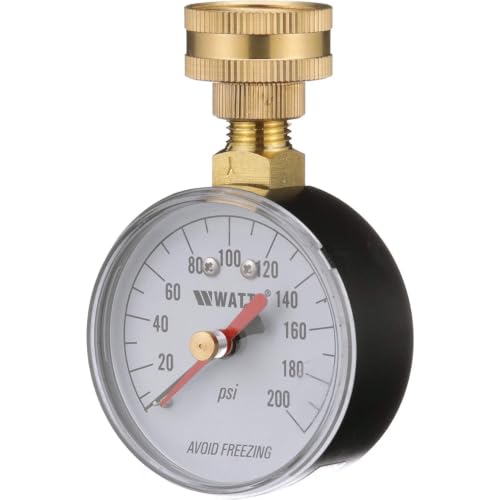
The Watts test gauge threads onto a 3/4 in. hose connection and reads 0–200 psi, which covers any house.
Low static pressure is a supply or regulator question. The how to increase water pressure guide walks through the pressure reducing valve, the main and the meter. If the supply itself is low, the booster pump guide is the next read. Delta notes that a pro can advise on pumps and boosters.
Four items cover the fixes above. Each was new and in stock on the day of the update. Prices come from Amazon with the time they were read.


Product prices and availability are accurate as of the date/time indicated and are subject to change. Any price and availability information displayed on Amazon.com at the time of purchase will apply to the purchase of this product.
| Part or tool | Key specs | Pick it if | Skip it if |
|---|---|---|---|
| Delta RP43621 | Gasket with built-in screen; Delta says it fits any Delta shower head | The screen in your head’s nut is missing, torn or packed solid. | Your head isn’t a Delta. Check its maker’s part for the inlet washer. |
| CLR 2X, 28 oz | Concentrated calcium, lime and rust remover | Vinegar didn’t clear the scale, or you have hard water. | Your head has a finish the label warns against. Use vinegar. |
| Oatey 31199 | 1/2 in. by 260 in. PTFE thread seal tape | You’re putting a head back on the arm and want a drip-free joint. | Your head seals with only a rubber washer on a hose fitting. |
| Watts test gauge | 0–200 psi, 3/4 in. hose thread, bourdon tube | Every tap is weak and you need a real pressure number. | Only one shower is weak. Fix the head or valve first. |
I’ve used each of these. The screen and the tape fix the head-side problems above without buying a new head. If you do end up replacing the head, keep the screen and tape on hand anyway; a new head still needs both.
| What people try | What actually happens |
|---|---|
| Drilling out or pulling the flow restrictor | Delta says it can void the warranty, and it hides a clog instead of clearing it. A head at its rating isn’t clogged. |
| Buying a booster pump for one weak shower | If the other taps are fine, house pressure isn’t the problem. Test with a bucket and fix the head or valve. |
| Replacing the head when only hot is weak | One side short points to the valve or stops. A new head won’t change it. |
| Throwing out the little screen in the nut | Delta says it’s often mistaken for a restrictor. Without it, grit goes straight into the nozzles. |
| Running the shower harder to clear it | Scale doesn’t flush out of a head. It needs a soak and a scrub. |
The choke is in the pipe behind the wall, or the valve was installed wrong. Delta lists improper valve installation as a rare cause.
A pressure reducing valve, a failing main or a booster pump is plumbing work.
Kohler says a misaligned mixing valve may need a pro to confirm.
The choke is in that shower. If hot and cold are both weak, clean the head and its screen. If only one side is weak, check the valve’s stops and cartridge.
Measure first: time how long it takes to fill a 1-gallon jug and divide 60 by the seconds. If it’s under the head’s rating, clean the head and screen. If it matches, a head with a higher rating is the fix.
A sudden drop usually means a stop got bumped, grit from plumbing work clogged the screen, or the cartridge failed. A clogged head fades slowly over months.
Each shower has its own head, screen and valve, so the problem is in one of those. Swap heads between the showers to see if the weak flow follows the head.
If only this shower’s hot side is weak, it’s the valve’s hot stop or the cartridge. If hot is weak at every tap, check the water heater’s valves and sediment.
Delta says removing it could void your warranty, and federal rules require it to be hard to remove. A head that tests at its rated flow isn’t clogged, so pick a higher-rated head instead.
I’m Isaac Daniels, a licensed journeyman plumber in Georgia (license #JP507711). I’ve used every part and tool listed here. The steps and limits come from Delta, Moen, Kohler, CLR, Rheem and A. O. Smith documents and the federal and EPA rules, read Oct 22–23, 2026.