For drain bladder vs drain snake, I start with the pipe, the opening and the blockage. A small cable suits accessible branch debris; a bladder needs verified hose access.
As an Amazon Associate I earn from qualifying purchases. How this site earns
Written by: Isaac Daniels, Licensed Journeyman Plumber (JP507711)
In my 7 years of experience, these are the products I'd install.
Drain King 501. Product photo from the Amazon listing.
The short answer
Use a cable snake for hair or soft debris in a suitable branch. Consider a Drain King 501 only for a verified 1–2-inch line with safe hose access and backflow protection. Several fixtures backing up? Stop using water and get the sewer checked.
For eligible 1–2-inch lines: Drain King 501Choose by fit and check the current Amazon offer.
Match the receiving pipe and safe access before buying.
Published diameter limits, not clearing scores. Drain King sizes: GT product catalog and Wal-Rich sheet 1821000. Power Spin 41408: RIDGID original Power-Spin manual, printed page 5; no lower diameter limit stated.
The three Drain King bladders, by size
Product photo from the Amazon listing.
New, in stock. Sold by a third-party seller.
$12.45 at Amazon · Price as of Nov 15, 2026, 12:25 PM UTC-05:00
Drain King 501 Unclogs Bathroom Sinks, Showers, and Swimming Pool Drains, 1 to 2 Inch
Match the receiving pipe and safe access before buying.
Pros
Published 1–2-inch pipe range
Water-powered operation
No rotating cable to feed
Cons
Requires suitable hose access and backflow protection
No toilet use or use with chemicals
Must sit completely inside the pipe
Model 5011–2-inch pipeCold water only40–80 psi in supplier sheet
The 501 is the smaller Drain King in this comparison. GT lists it for 1–2-inch lines, including bathroom sink, tub and shower applications. That range refers to the pipe where the bladder operates. A fixture name on the package does not establish that its visible drain opening is suitable.
Pick the 501 only after you can identify the receiving pipe and put the whole bladder inside it. Wal-Rich’s Drain-King instructions prohibit operation with the body partly outside the pipe. A crossbar, a short opening or an unknown fitting is a reason to resolve access first.
A hose supplies the water that expands the rubber body. The outlet then sends pulsing water into the line. This can move loosened material downstream; it does not give you a cable tip to bring a tangled wad back through the opening. Choose the method around the obstruction and the plumbing layout.
Water supply is part of the purchase decision. Wal-Rich’s sheet recommends 40–80 psi and specifies cold water. That recommendation does not prove the condition of your drain or authorize more pressure. Check the current package instructions and have a plumber assess questionable piping.
Before connecting the hose, have suitable backflow protection confirmed for this cleaning use. A threaded outdoor faucet alone is no proof. The 2021 International Plumbing Code has a separate provision for portable cleaning equipment. Local requirements and the actual connection determine what protection is appropriate.
The 501 is not a toilet tool, and the Wal-Rich instructions prohibit use where chemicals are present. If cleaner is trapped in the line, stop and identify it before anyone opens the plumbing. Tell the plumber what went in. Do not add another cleaner or try to push it through with hose water.
When you finish, shut the water off and follow the instructions for releasing pressure at the faucet connection before removal. Wait for deflation. If the body remains trapped or water appears at another fixture, stop and call a plumber rather than pulling harder or restarting the flow.
Product photo from the Amazon listing.
New, in stock. Sold by a third-party seller.
$15.88 at Amazon · Price as of Nov 15, 2026, 12:25 PM UTC-05:00
Drain King 186 Unclogs Bathroom Sinks, Showers, and Swimming Pool Drains, 1.5 to 3 Inch
Match the receiving pipe and safe access before buying.
Pros
Covers 1½–3-inch pipe in the GT catalog
Maker names kitchen and washing-machine drains
No powered cable drive
Cons
Larger range does not prove safe fixture access
Needs cold water and suitable backflow protection
Cannot diagnose a recurring blockage
Model 1861½–3-inch pipeWater-poweredFully supported insertion
The 186 covers 1½–3-inch pipe. GT’s catalog names kitchen sink, bathtub, shower and washing-machine drains as applications. The Amazon title in my offer check names bathroom sinks, showers and pool drains. Size is the useful agreement between the documents; the fixture lists are different.
Choose the 186 because the receiving pipe fits its range, not because the kitchen sink is blocked. A kitchen drain can include several fittings before the branch you want to clear. You need to establish where the bladder will sit and where the added water can go.
The overlap with the 501 is real. Both published ranges include 1½-inch pipe, and both include 2-inch pipe. That does not prove the two bodies fit the same access opening equally well. Follow the package directions for the exact unit rather than guessing from the broad diameter range.
The 186 uses the same water-driven approach as the smaller model. It has no cable length to measure your progress and no cutting head to inspect afterward. If the likely problem is hair close to a suitable branch opening, a correctly matched cable remains a reasonable first route.
For grease or soft buildup, the bladder route is conditional on a sound line and safe water handling. The technical instructions say pulsing water loosens and flushes a blockage. They do not give a universal clearing time or a guaranteed distance for your connected kitchen branch.
Water appearing in a second fixture is a stop signal. Shut off the supply rather than assuming a bigger body or longer run will help. My recommendation here is deliberately cautious: a plumber can establish the layout and obstruction before you put more water into a system that is already backing up.
Cold water, complete insertion and the chemical prohibition still apply to the 186. Before removal, turn the water off, follow the pressure-release instruction at the faucet coupling and wait for the bladder to deflate. Keep the procedure for this model separate from instructions for other brands of blow bag.
Product photo from the Amazon listing.
New, in stock. Sold by Amazon.com.
$27.99 at Amazon · Price as of Nov 15, 2026, 12:25 PM UTC-05:00
Drain King 750 Unclogs Main Drain & Sewer Line with Water Power, Plastic, 3 to 6 Inch
Match the receiving pipe and safe access before buying.
Pros
Published 3–6-inch range
GT lists main and outside sewer drain applications
Water-powered body with a hose connection
Cons
Sewer-backup symptoms need diagnosis first
Does not establish that roots or pipe damage are cleared
Needs verified access and supply protection
Model 7503–6-inch pipeCold waterNo toilet use
The 750 is listed for 3–6-inch pipe in GT’s catalog and the Wal-Rich technical sheet. GT names main drains, outside sewer drains, basement drains and outside deck drains. That makes it a size option for a verified larger line, rather than a larger version to force through a small fixture.
Do not buy the 750 as an automatic response to a sewer backup. Several fixtures backing up, sewage in a shower or water rising through a floor drain are warning signs. Stop using water and contact the sewer utility or a plumber according to your local process.
The 3–6-inch range tells you where the body is intended to operate. It does not tell you what caused the obstruction. It also does not show that old pipe is sound, that a cleanout can be opened safely or that pressure will be directed only toward the blockage.
GT’s catalog includes a narrower H34 model for 3–4-inch pipe. I kept the comparison to three sizes that together cover 1 to 6 inches. For either body, access and current instructions decide suitability. A wider advertised range is no evidence of better cleaning.
A small cable and the 750 are not direct main-line substitutes. The Power Spin manual warns against overrunning its cable into a larger drain. A sewer professional may need different machinery and inspection to identify the problem. The equipment choice follows that diagnosis.
If roots or repeated backups are the concern, ask what evidence supports the proposed fix. A return to normal drainage is useful, but it cannot by itself establish the pipe’s internal condition. RIDGID’s manual identifies camera inspection as a way to assess condition before cleaning.
The hose connection deserves the same backflow review as a smaller bladder. Keep the supply off until the setup is checked, use cold water under the applicable instructions and stop if water appears elsewhere. After shutoff, release pressure as directed and wait for deflation. A stuck body needs professional help.
A cable snake for small branches
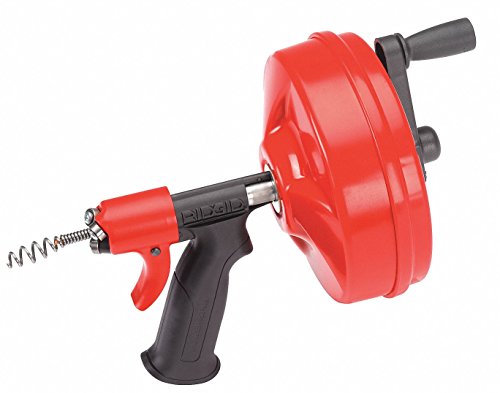
A cable works the clog from the opening, where a bladder floods it from inside the pipe. It’s a different kind of tool, so it isn’t scored against the three bladders.
Product photo from the Amazon listing.
New, in stock. Sold by a third-party seller.
$69.47 at Amazon · Price as of Nov 15, 2026, 12:25 PM UTC-05:00
The sink or tub branch, its opening and pipe condition fit the original Power-Spin manual. Hair or soft debris makes a small cable route worth considering.
Skip it if
You need a toilet auger, root-cutting equipment or a tool for a larger sewer line. Stop if the work area is wet or the cable binds.
On Amazon
Choose by pipe size
Sources: Wal-Rich Drain-King sheet 1821000; RIDGID original Power-Spin manual, English pages 5–9. Model-specific differences are explained below.
The RIDGID 41408 Power Spin is the cable example here. Its original manual covers sink, bathtub and shower branches up to 1½ inches, with a ¼-inch, 25-foot MAXCORE cable. The manual gives no lower pipe diameter. Do not borrow a capacity range from the newer POWER SPIN+.
My reason to consider this cable for likely branch hair or soft debris is control at a suitable opening. You can work through material and may retrieve some with the cable. That is an editorial choice between methods, not a measured claim that this tool clears every hair blockage.
AUTOFEED advances and retrieves the cable as you turn the drum. Hand operation is available when you do not want to attach a drill. For powered use, RIDGID specifies a battery drill and instructs you to select “less than 500 rpm.” Do not substitute a corded drill.
Does well
Watch for
Hand crank or battery-drill operation
Use battery drill below 500 rpm
AUTOFEED advances and retrieves cable
Not recommended for toilets
¼-inch × 25-foot MAXCORE cable
Do not feed into a larger drain
Sources: Wal-Rich Drain-King sheet 1821000; RIDGID original Power-Spin manual, English pages 5–9. Model-specific differences are explained below.
Before drill attachment, remove the crank and secure the chuck to the drum shaft. Keep the battery out during setup. After at least a foot of cable is inside the drain, insert the battery with dry hands and keep your finger off the switch. Support the tool within four inches of the opening.
For a tub, enter through the overflow after removing its plate and mechanism. At a sink, establish the appropriate stopper, trap or cleanout route. Wear safety glasses and leather work gloves, with barrier gloves underneath when needed. Stop for standing water, unidentified chemicals or damaged equipment.
When resistance appears, the manual says, “Do not force the cable.” Stop drum rotation if the cable sticks, and stop rotation before the tip leaves the drain. Never overrun it into a larger line. If the cable cannot be retrieved safely, call a plumber instead of adding drill speed.
A 25-foot cable is not a promise that the blockage is within reach or that the pipe is sound. Repeated backups or several affected fixtures need diagnosis. This model is documented for a small branch; a toilet or larger sewer needs equipment suited to that separate job.
Drain bladder and cable snake side by side
Decision
Drain bladder
Cable snake
Ahead
How it works
Body expands; pulsing water loosens and flushes material
Rotating cable works through material; some may come back
Depends on obstruction
Hair and soft debris
Water route requires safe supply and suitable access
My cable preference when its pipe and access limits fit
Cable for a suitable branch
Water connection
Hose and appropriate backflow protection needed
No hose connection to operate the hand crank
Cable for supply independence
Small-line example
501: 1–2 inches. Fully inside the pipe.
Power Spin 41408: up to 1½ inches; ¼-inch × 25-foot cable. Hand crank or battery drill below 500 rpm. Keep cable supported; no larger drains. Product reference
Pipe and opening decide
Branch-size alternative
186: 1½–3 inches. Water may appear elsewhere.
This small cable is not the counterpart for all of that range
Bladder dimensionally; setup still decides
Larger cleanout
750: 3–6 inches. Sewer diagnosis first.
Selected small cable is unsuitable for a larger sewer line
Professional equipment decision
Toilet blockage
Do not use these Drain King products
Power Spin is not recommended for toilets
Neither; use a toilet-specific route
Known chemicals
Wal-Rich’s Drain King instructions prohibit use
RIDGID requires product-specific chemical safety information
Stop and identify chemicals
Purchase route
Choose by pipe size
Choose by pipe size
Choose fit before purchase
Sources: Wal-Rich Drain-King sheet 1821000; RIDGID original Power-Spin manual, English pages 5–9. Model-specific differences are explained below.
The useful comparison is between two methods, followed by two exact tool matches. A bladder’s pipe range and a snake’s cable length answer different questions. Neither tells you whether an unknown obstruction can be cleared safely from the opening in front of you.
Start with the symptoms. One slow bathroom sink is a different decision from a tub filling when another fixture drains. In the second case, stop adding water and get the drain arrangement checked. The presence of a 3-inch cleanout does not settle that diagnosis.
Check the access before choosing the tool
Editorial layout sketch, not a measured pressure diagram. A branch can connect to other openings. Model access rules: original RIDGID Power-Spin manual, printed pages 7–9; complete bladder insertion: Wal-Rich sheet 1821000.
Situation
Pipe/access check
Cable route
Bladder route
Stop condition
One bathroom sink
Confirm receiving diameter and stopper or trap access
Power Spin within manual range
501 only if full insertion and supply checks pass
Chemicals, weak joints or unknown access
Bathtub
Identify overflow mechanism and branch diameter
Power Spin enters through overflow
Requires a separately verified suitable opening
Cannot establish correct entry
Kitchen branch
Confirm branch and any connected fixtures
Match exact cable to pipe
186 only within 1½–3-inch range and all setup limits
Water appears at another fixture
Larger cleanout
Confirm pipe condition, diameter and safe entry
This small cable is not a sewer recommendation
750 only after professional setup assessment
Sewage or suspected pipe damage
Toilet bowl
Use a toilet-specific route
Neither selected general cable nor bladder
Prohibited by Wal-Rich’s Drain King instructions
Overflow or uncertain obstruction
Several fixtures back up
Possible shared drain or sewer problem
Professional diagnosis
Do not add hose water
Stop fixture water use and call for help
Sources: Wal-Rich Drain-King sheet 1821000; RIDGID original Power-Spin manual, English pages 5–9. Model-specific differences are explained below.
Use the matrix from left to right. If you cannot complete the pipe and access check, you have not reached the tool decision. A sink strainer’s opening is not a pipe-size measurement, and a label that mentions showers does not explain your particular trap or access fitting.
For the Power Spin, RIDGID gives different access directions for sinks and tubs. At a sink, you may need to remove a stopper, trap or cleanout. At a bathtub, the manual calls for the overflow opening. That is why a blanket instruction to feed through any drain is poor advice.
For a bladder, the entire expanding body must be supported inside the pipe under Wal-Rich’s instructions. If a crossbar prevents that, stop and check the exact product’s access directions. Do not inflate the body across the edge of a drain opening to see whether it will seal.
What happens at the blockage
At the obstruction
Water bladder
Small cable
Contact
Water reaches the material after the body expands
Cable tip reaches material along its route
Action
Pulsing flow can loosen and move material
Rotation can break up soft debris or engage a wad
What you can observe
Discharge or unexpected water at another opening
Resistance, retrieval and material on the cable
What remains uncertain
Where all loosened material went
Whether the whole line is clear and sound
Sources: Wal-Rich Drain-King sheet 1821000; RIDGID original Power-Spin manual, English pages 5–9. Model-specific differences are explained below.
The phrase “a bladder pushes and a snake pulls” leaves out half the cable’s work. RIDGID describes working through a blockage, then flushing debris after flow returns. Some material may come out on the cable. Do not judge the whole attempt only by the size of the wad you retrieve.
A bladder also needs more explanation than “all pressure goes to the clog.” Connected branches give water other possible paths. Watch those openings as well as the pipe receiving the tool. Watch for water where it should not appear, and shut the supply off if that happens.
A hose bladder is not interchangeable with every service sold as hydro jetting. This comparison covers hose-powered Drain King bodies and one small cable. It does not assign the clearing reach, pressure or root-cutting ability of a professional machine to either household tool.
Match the body and cable to the receiving pipe
Model
Documented pipe range
Other dimension
What that does not prove
Drain King 501
1–2 inches
Bladder body must be fully inserted
That it fits through any sink or tub opening
Drain King 186
1½–3 inches
Overlap with 501 at 1½–2 inches
That the wider range clears more kinds of clog
Drain King 750
3–6 inches
For a verified larger-line setup
That a sewer backup is safe for DIY flushing
Power Spin 41408
Up to 1½ inches in original manual
¼-inch × 25-foot cable
25 feet of guaranteed effective clearing reach
Sources: Wal-Rich Drain-King sheet 1821000; RIDGID original Power-Spin manual, English pages 5–9. Model-specific differences are explained below.
Measure or positively identify the pipe where the tool will operate. Do not use the basin diameter, the overflow cover width or the length of hose you own as substitutes. If the receiving pipe is concealed and you cannot establish its size, have a plumber identify the access and tool route.
Diameter changes along the route matter to a cable. RIDGID says not to overrun the Power Spin into a larger drain because it can knot or suffer damage. The fact that some cable remains in the drum does not mean you should continue feeding it beyond the branch it suits.
Treat overlapping Drain King ranges as alternatives to check against current instructions. I do not select a winner for every overlap because the published pipe ranges do not establish body clearance at each fitting. A 2-inch pipe can lie inside two published ranges without either body being suitable for your access.
Where the listings and maker documents differ
Item
One source says
Other source says
My rule
Power Spin 41408 cable head
Amazon title: bulb drain auger
RIDGID 41408 catalog: straight auger
Do not promise a head shape from the listing title; use original Power-Spin manual limits
Wal-Rich lists rubber body and mixed component materials
Do not describe the whole tool as plastic
Drain King water pressure
Wal-Rich sheet: 40–80 psi recommended
Current package instructions govern the exact unit
Check actual supply pressure; do not improvise a higher limit
Sources: Wal-Rich Drain-King sheet 1821000; RIDGID original Power-Spin manual, English pages 5–9. Model-specific differences are explained below.
For Drain King 186, match the 1½–3-inch receiving pipe rather than relying on a fixture name in the listing. For the 750, the rubber body and mixed components matter more than the listing’s broad material label.
Check the water connection before using a bladder
A connection checklist, not an installation drawing. The 2021 IPC separates hose-connection provisions from portable-cleaning-equipment protection. A qualified plumber or backflow specialist must assess the actual setup and local requirements.
A bladder connects a water supply to equipment inside a drain. The threaded hose connection does not establish the protection needed against contamination. Before you buy a device or connect a hose, ask a qualified plumber or backflow specialist what the cleaning application requires.
The 2021 International Plumbing Code addresses hose connections in section 608.16.4.2 and portable cleaning equipment in section 608.17.8. Section 608.17.6 addresses high-hazard connections subject to backpressure. These are separate checks. Do not assume the hose-outlet rule answers every cleaning-equipment question.
I cite the 2021 edition as a dated reference because code numbering and adopted rules can change. This is not a statement that every jurisdiction currently uses that edition. Have the local water supplier or inspector confirm the applicable requirement and the installed protection before using a drain-cleaning connection.
Supply check
Why it changes the choice
If unresolved
Suitable protection for the actual cleaning connection
A visible faucet fitting does not prove the whole setup is suitable
Keep hose disconnected; ask a specialist
Current cold-water instructions
Wal-Rich prohibits hot water
Do not substitute hot water to tackle grease
Actual pressure and product directions
Wal-Rich recommends 40–80 psi; check the current package
Do not add a booster or improvise a limit
A reachable shutoff and controlled removal
You must stop supply and release pressure before removal
Do not start where safe shutoff is uncertain
Sources: Wal-Rich Drain-King sheet 1821000; RIDGID original Power-Spin manual, English pages 5–9. Model-specific differences are explained below.
Wal-Rich’s sheet lists “Recomended Water Pressure: 40 to 80 psi.” This is a supplier recommendation, not permission to increase pressure until a clog moves. If your pressure or current package directions do not fit, stop and get advice rather than adding pressure equipment to make the bladder work.
Cold water is a specific instruction here. Do not swap in a hot-water hose connection because the blockage may contain grease. With trapped chemicals, the Drain King prohibition ends the bladder option altogether. Identify the chemical and arrange safe help before opening the line.
If you need to understand an existing hose device, my vacuum breaker and anti-siphon valve comparison explains the device types. That background does not approve one for drain cleaning. Give the specialist the actual faucet, device, hose and cleaning-tool arrangement to assess.
Prepare the job and know the stop points
1
Rule out a wider backup
If several fixtures back up or sewage enters a tub or floor drain, stop water use. Contact your local sewer utility or a plumber; local call order and responsibility vary.
2
Identify any chemicals
Do not use these Drain King products where chemicals are present. For a cable, RIDGID says to get the chemical maker’s safety information. With unknown cleaner or exposure risk, pause work and call for help.
3
Check pipe and access
Confirm the receiving pipe size and condition. Follow the exact tool manual for the entry point. Do not open a cleanout that may release sewage unless you can manage it safely; call a plumber when uncertain.
4
Set up protection and a dry area
For the cable, RIDGID calls for safety glasses and leather gloves, with barrier gloves underneath when needed. Keep the machine and operator out of standing water. For a bladder, verify backflow protection and keep the water off during setup.
5
Inspect the tool
RIDGID says not to use damaged cable or a tool with defects. Check the bladder and its current instructions before connection. Stop if the tool is damaged, the fit is unclear or safe control is uncertain.
During the attempt
Stop action
Next decision
Water appears at another fixture
Turn off the bladder’s supply
Have the connected route assessed
Cable stops turning at a blockage
Stop drum rotation
Follow manual recovery steps; call a plumber if uncertain
Leak or loose connection appears
Stop work and supply flow
Have damaged plumbing repaired
Electrical equipment or work area is wet
Stay out of the water; stop powered work
Arrange qualified electrical and plumbing help
Bladder fails to deflate or remains trapped
Keep supply off; do not restart or yank it
Call a plumber for controlled retrieval
Sources: Wal-Rich Drain-King sheet 1821000; RIDGID original Power-Spin manual, English pages 5–9. Model-specific differences are explained below.
These checks come before either operating sequence. The tool is only one part of the job. A 1½-inch branch, trapped cleaner and a wet floor can each independently change what you should do. Passing the size check does not cancel a chemical or electrical stop point.
Keep bystanders away from the drain work. RIDGID’s setup instructions call for an area free of bystanders and distractions, and its hygiene section says to wash exposed skin after handling drain contents. Do not eat or smoke while handling contaminated equipment.
The bladder sequence in Wal-Rich’s instructions
1
Start with supply off
Confirm cold water, correct model and size, safe backflow protection and suitable access. Put on safety glasses: drain water can splash back at the opening or when the coupling is loosened. Read the directions packed with your unit. Never use it in a toilet, half in and half out of a pipe, or with chemicals.
2
Connect and insert completely
Attach the Drain King to the hose and place the entire body inside the receiving pipe as directed. Do not activate it half inside and half outside. If you cannot fully support it in the pipe, stop and arrange suitable access.
3
Apply cold water as directed
The sheet says to turn the cold water on slowly, up to full force. Watch the work area and connected fixtures. Shut it off if water appears elsewhere or a leak develops. Do not invent a fixed run time or increase pressure to overcome an unresponsive blockage.
4
Shut off and release pressure
Turn the water off. Follow the sheet’s direction to loosen the hose coupling at the faucet for pressure release, then wait for deflation before removal. Keep clear of discharge. If controlled pressure release or removal is uncertain, call a plumber.
This summarizes the Drain-King instruction sheet (Wal-Rich 1821000, which lists GT models 501, 186, H34 and 750). The directions packed with your unit come first. A sound pipe, suitable access and approved supply protection are prerequisites, not outcomes established by running the tool.
The cable sequence depends on the exact manual
1
Prepare the opening and PPE
Use safety glasses and leather work gloves as RIDGID directs. Keep barrier gloves underneath when needed. Establish dry footing and the correct sink access or bathtub overflow route. Stop for unknown chemicals or unsafe plumbing.
2
Choose hand or drill operation
For hand operation, check that the crank is firmly attached. For battery-drill operation, remove the crank before attaching the drill chuck securely to the drum shaft. Follow the drill’s instructions and keep its battery out during setup. Never use a corded drill.
3
Support the cable and place the tip
Keep Power Spin within four inches of the opening or provide the manual’s specified support arrangement. Insert at least a foot of cable before rotation. Do not leave a long unsupported cable span between the drum and drain.
4
Insert the battery with dry hands
After the cable is in the drain, confirm the drill’s low-speed setting is below 500 rpm. With dry hands, insert the battery. Keep your finger off the drill switch at this stage. RIDGID gives this order on printed manual pages 7–8.
5
Feed without force
Follow the manual’s drum and trigger directions. If the cable becomes stuck, stop turning the drum. Do not keep driving the drum against a stationary tip. Follow the recovery procedure, or call a plumber if you cannot retrieve it safely.
6
Keep the tip controlled during retrieval
Follow the manual’s retrieval direction. Stop rotation before the cable end leaves the drain. After use, remove the drill before maintenance and clean the cable, drum and AUTOFEED as instructed. Keep damaged cable out of service.
A cable’s retained end is not permission to feed until the drum is empty. RIDGID warns against overrunning this small cable into a larger drain. Stop at the tool’s application limit even if you have not reached the suspected blockage.
Likewise, resistance is not a signal to raise drill speed. The manual describes careful work through soft material without forcing the cable. If it cannot turn freely, stop. A different access point or different machine may be needed after diagnosis.
When to pick each route
One branch, likely hair or soft debris
Choose a suitable cable route when pipe size, access, condition and chemical checks pass. Power Spin 41408 is the example here; its original manual sets a 1½-inch maximum pipe size.
Verified line with safe water access
A correctly sized Drain King is an option only after full insertion, cold-water instructions and backflow protection are confirmed. The fixture name alone does not qualify the setup.
Several fixtures or sewage backing up
Stop using water. Do not add hose flow. Contact the sewer utility or a plumber according to your local process so the obstruction and responsibility can be established.
Toilet, chemicals or suspected damaged pipe
These are not ordinary bladder-versus-cable choices. Use a toilet-specific route for a toilet. Identify chemicals and have damaged or uncertain piping assessed before intervention.
If the same drain blocks again, record what happened rather than switching tools at random. Note which fixtures were involved, whether water appeared elsewhere and how soon the blockage returned. Those details help the plumber decide what to inspect. My recurring main-drain blockage guide covers that separate diagnosis.
For a toilet, go directly to the toilet auger guide. Neither the Wal-Rich Drain King instructions nor the Power Spin manual supports treating the toilet bowl as an ordinary branch opening. A toilet-specific tool is a separate application, not another name for the small cable compared here.
Questions about drain bladders and snakes
Is a plumbing snake better for hair clogs?
A suitable small cable is my first route for likely hair in an accessible branch. Power Spin 41408 is my cable example; choosing it for likely hair is an editorial judgment. Confirm the pipe and access first; its original manual covers branches up to 1½ inches, without stating a lower diameter limit.
A cable can break up material or retrieve some of it. Finding little on the tip does not prove it did nothing, and a return to flow does not establish the whole drain’s condition.
How does a drain bladder work?
Water expands the rubber body inside the pipe, then the outlet produces pulsing flow that can loosen and flush material. For these Drain King products, the entire body must be inside the pipe and Wal-Rich specifies cold water.
That mechanism does not establish a clearing distance or guarantee where water travels through connected branches. Stop if water appears at another fixture.
Can I use a drain bladder in a toilet?
No. The Wal-Rich Drain-King sheet prohibits toilet use. RIDGID also does not recommend Power Spin for toilets. Choose a toilet-specific route instead of feeding either general tool through the bowl.
Which Drain King size do I need?
The published ranges are 1–2 inches for 501, 1½–3 inches for 186 and 3–6 inches for 750. Match the receiving pipe and the exact product’s access instructions. An overlap between two ranges does not prove either body fits through your opening.
Does a drain bladder need backflow protection?
Have protection confirmed for the actual hose-cleaning connection before use. The 2021 IPC treats hose outlets and portable cleaning equipment separately. A threaded faucet or visible vacuum breaker alone does not settle the application. Ask a qualified plumber or backflow specialist and confirm local requirements.
Can a drain bladder damage pipes?
Do not assume a pressure-driven tool is suitable for damaged or unknown piping. Have the condition and setup assessed. RIDGID likewise warns that cleaning poorly maintained or defective drains can cause damage. Neither method provides a blanket guarantee for an old pipe.
Will either tool cut sewer roots?
Do not assign root-cutting ability to the selected small cable or assume a bladder removes roots. Power Spin 41408 is documented for sink, tub and shower branches up to 1½ inches. Suspected roots or repeated sewer backups need diagnosis and an appropriate professional equipment decision.
How long should I run a drain bladder?
Use the current instructions for the exact model. The Wal-Rich technical sheet does not establish one universal run time, so I do not give one. Shut off the water if it appears elsewhere, a leak develops or the setup cannot be controlled.
Can I use either tool after chemical drain cleaner?
The Wal-Rich Drain King instructions prohibit use where chemicals are present. RIDGID requires the chemical maker’s safety information before working around chemicals with its cable. With trapped or unknown cleaner, pause work, identify the product and tell the plumber what was added.
Is a 25-foot cable enough for my drain?
Twenty-five feet is the Power Spin cable length, not a promised clearing distance. The manual warns against feeding into a larger drain. Confirm the branch layout and application; if the blockage is beyond the tool’s suitable route, arrange diagnosis rather than adding force.
Why trust us and how I choose
Why trust us
Isaac Daniels, a licensed journeyman plumber in Georgia, owns PlumbingPicks and is responsible for this page. Product ranges and operating limits come from the GT catalog, the original RIDGID Power-Spin manual, and the named supplier sheet. The access choices are editorial judgments based on those limits.
How I pick
I compare pipe range, access, water connection and operating restrictions. The three Drain King sizes serve different pipes; the RIDGID cable is a different kind of tool. I checked all four exact Amazon listings for model identity, condition and availability on November 15, 2026.
I use the original Power-Spin manual for its operating limits. Current package instructions and unresolved specification conflicts need confirmation before buying or operating a tool.
Check
How it affects my recommendation
Pipe and access
The body or cable must suit the receiving line, not just the fixture label
Safety stop
Chemicals, sewage backup, damaged pipe or a wet powered-work area override the purchase choice
Supply
A bladder needs a safe hose-cleaning connection and suitable protection
Offers
I check exact branded models, new condition, stock and the named seller before linking an Amazon offer.
Scoring
No score: the bladders serve different pipe sizes and the cable is a different kind of tool
Sources: Wal-Rich Drain-King sheet 1821000; RIDGID original Power-Spin manual, English pages 5–9. Model-specific differences are explained below.
Sources
G.T. Water Products, Drain King product catalog, model table (501, 186, H34, 750 and application lists): gtwaterproducts.com/GTCatalog.pdf; model ranges and applications checked October 20, 2026.
Wal-Rich, Drain-King Drain Cleaners, specification sheet 1821000, page 1 (model ranges, components, recommended 40–80 psi, cold water, complete insertion, chemicals, toilet prohibition and shutoff/removal): wal-rich.com/wp-content/uploads/spec_sheets/1821000-Wal-Rich-Spec-Sheet.pdf, originally read October 20, 2026. Current GT package instructions govern the exact unit.
RIDGID, original Power-Spin operator’s manual 999-999-436.10 Rev. A (May 2012), printed English pages 5–9 (capacity, cable, battery-drill limits, access, PPE and operating sequence). Maker-authored copy hosted by the library network: coverimages.einetwork.net/manuals/b41541996.pdf; originally read October 20, 2026.
RIDGID, drain-cleaning catalog, Power Spin with AUTOFEED ordering table: model 41408, ¼-inch × 25-foot cable and maximum 1½-inch line size. Maker-hosted catalog at cdn2.ridgid.com, document key bdfd14df-070f-4309-a2d4-1c2183ae5321; originally read October 20, 2026.
International Code Council, 2021 International Plumbing Code, chapter 6, sections 608.7, 608.16.4.2, 608.17.6 and 608.17.8: codes.iccsafe.org. Edition-specific reference; local adoption must be checked.
City of Roseville, Call the City first, sewer-backup warning signs and stop-water guidance: roseville.ca.gov, originally read October 20, 2026. Local call order and responsibility vary.
Amazon product listings for every product named on this page, checked November 15, 2026.