
Watts LF8A
$81.69 at Amazon
Check it on AmazonPrice as of Oct 24, 2026, 5:30 AM EDT

The right device for each faucet and sprinkler line.
As an Amazon Associate I earn from qualifying purchases.
A vacuum breaker lets air in so dirty water can’t siphon back. An anti-siphon valve is a sprinkler valve with one on top. Use a Watts LF8A on a hose faucet. For sprinklers, use anti-siphon valves, or one PVB if it meets every limit below: height, heat, backpressure and spill.
A hose vacuum breaker, an in-line vacuum breaker, a sprinkler anti-siphon valve and a pressure vacuum breaker, each matched to the job its maker’s sheet describes.
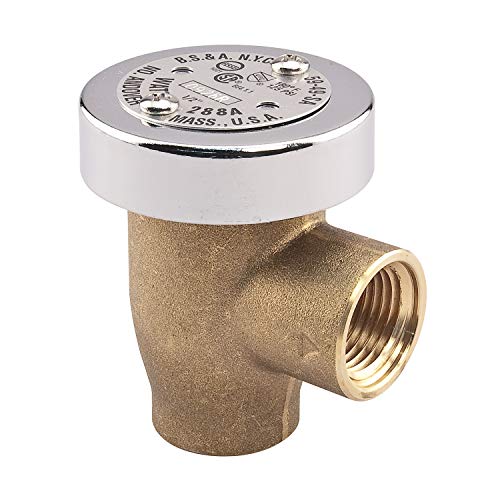


Product prices and availability are accurate as of the date/time indicated and are subject to change. Any price and availability information displayed on Amazon.com at the time of purchase will apply to the purchase of this product.
| Tool | Key specs | Pick it if | Skip it if |
|---|---|---|---|
| Watts LF8A | LF8A, 3/4 in. hose thread, ASSE 1011, 125 psi max, 180°F max, 4.0 oz | You need the screw-on vacuum breaker the code calls for on a hose bibb, sillcock, laundry tub or service sink faucet, and you want lead free brass. | The faucet is a frost-free wall hydrant (Watts says LFNF8), or the hose will stay pressurized behind a closed nozzle. |
| Watts LF288A | LF288A 3/4, 3/4 in. NPT, ASSE 1001, 125 psi max, 180°F max, 18 oz | One line feeds a single outlet that’s on only part of the day, and the device can sit at least 6 in. above the highest point of the downstream piping. | A valve or nozzle will hold pressure after it. A PVB fits only if its critical level clears all downstream piping and outlets by 12 in., water stays at or below 110°F, there’s no backpressure and a vent spill does no harm. Otherwise ask your inspector. |
| Rain Bird DASASVF075 | DASASVF075, 3/4 in., 15 to 150 psi, 0.2 to 22 GPM, Water to 110°F, 24 VAC | You’re adding or replacing an above-ground sprinkler zone valve and want backflow protection at the valve itself. | Your valves sit below grade, or you want one device for every zone. A PVB fits only if its critical level clears all downstream piping and outlets by 12 in., water stays at or below 110°F, there’s no backpressure and a vent spill does no harm. Otherwise ask your inspector. |
| Zurn Wilkins 34-720A | 34-720A, 3/4 in. NPT, ASSE 1020, 150 psi max, 110°F max, 3.8 lb with ball valves | You want one backflow device for several sprinkler zones, with ordinary in-ground zone valves after it. | You add fertilizer through the system (that needs an RP), backpressure could occur, or its critical level can’t sit 12 in. above all downstream piping and outlets. |
Every device here stops backsiphonage. What separates them is how high it must sit, whether it can stay under pressure, and what can be installed after it.
Read the chart by row. The two right-hand columns decide most jobs. An atmospheric vacuum breaker, in a line or on top of a sprinkler valve, can’t have a shutoff valve after it, and its outlet side can’t stay under pressure for more than 12 hours at a time.
On a sprinkler anti-siphon valve, the supply side stays pressurized all the time, and that’s normal. What Rain Bird rules out is constant pressure on both sides of the valve, which is what a second valve after it would cause.
The PVB is the one built for constant pressure. That’s why one PVB can feed a row of ordinary zone valves, where the water stays at 110°F or cooler, nothing creates backpressure and a vent spill does no harm. Each anti-siphon valve carries its own vacuum breaker.
Every figure comes from the makers’ sheets. Scroll sideways on a phone.
| Pick | Photo | Type | Standard | Where it goes | Height rule | Short pros / cons | Buy |
|---|---|---|---|---|---|---|---|
| Watts LF8A Hose faucets | | Hose VB | ASSE 1011 | On the faucet | Set by the faucet | Lead free, drains / No constant pressure | Check it on Amazon |
| Watts LF288A 3/4 in. AVB | | Pipe-applied AVB | ASSE 1001 | In a line | 6 in. above downstream piping | Hot water to 180°F / 12 hr max | Check it on Amazon |
| Rain Bird DASASVF075 One zone | 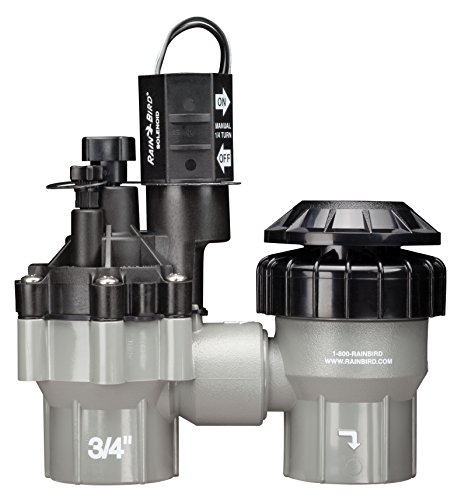 | Anti-siphon valve | AVB built in | Each zone, above ground | 6 in. above highest head and pipe | Valve and VB in one / No valves after | Check it on Amazon |
| Zurn Wilkins 34-720A Whole system | | PVB | ASSE 1020 | Once, before all zones | Critical level 12 in. above all downstream piping and outlets | Constant pressure OK / Vents water | Check it on Amazon |
Green marks a strength and amber marks a limit. VB: vacuum breaker. AVB: atmospheric vacuum breaker. PVB: pressure vacuum breaker.
Stores mix these words. The code names devices by standard number, so that’s the column to shop by.
| What you’ll see it called | What it is | Standard (IPC Table 608.1) | Protects against |
|---|---|---|---|
| Hose bibb vacuum breaker, hose connection vacuum breaker | Screws onto a faucet’s hose thread | ASSE 1011 | Backsiphonage; the code allows low head backpressure, but Watts says no backpressure for the LF8A |
| Anti-siphon vacuum breaker, atmospheric vacuum breaker (AVB) | Plumbed into a line, open to air | ASSE 1001 | Backsiphonage only |
| Anti-siphon valve, anti-siphon sprinkler valve | A zone valve with an AVB on top | IAPMO and ASSE listing approved, per Rain Bird; no standard number given | Backsiphonage only |
| Pressure vacuum breaker (PVB) | Spring-loaded check plus air inlet, with test cocks | ASSE 1020 | Backsiphonage only |
| Spill-resistant vacuum breaker | A PVB-type assembly listed as spill-resistant | ASSE 1056 | Backsiphonage only |
| Hose connection backflow preventer | A hose-thread device also rated for backpressure | ASSE 1052 | Backpressure and backsiphonage |
| Vacuum breaker wall hydrant, frost-resistant, automatic-draining | A freeze-resistant hydrant built with its own breaker; not every frost-free hydrant is one | ASSE 1019 | Low head backpressure, backsiphonage |
| Double check, RP (reduced pressure) | Testable assemblies for a whole system | ASSE 1015, ASSE 1013 | Backpressure and backsiphonage |
| Check valve | A one-way valve | Not listed | Not approved as a backflow device |
From the 2024 International Plumbing Code, Table 608.1, read Oct 20, 2026. Many rows also list ASME or CSA standards, and IPC 608.14.6 accepts several of them for hose-connection devices. We show the ASSE number for each type.
“Anti-siphon” describes the job, not a separate part. Watts’ own spec text for its LF8 hose fitting calls it a “hose connection type anti-siphon vacuum breaker.” Both words, one device.
The one place the term means something different is irrigation. There, an “anti-siphon valve” is the electric zone valve itself, with an atmospheric vacuum breaker cast into its top.
Watts defines backsiphonage as a reversal of normal flow caused by a vacuum or partial vacuum in the supply piping. Every device on this page answers it the same way: it lets air in.
| What happens | Without a vacuum breaker | With one |
|---|---|---|
| Supply pressure drops | The pipe can pull a vacuum or partial vacuum | The device is ready to vent |
| A hose end sits in a bucket, pool or sprayer | Dirty water can be pulled back up the hose | Its vent opens to air |
| Air enters behind the water | Nothing breaks the siphon | The siphon breaks and backflow stops |
| Pressure returns | Whatever came back is now in the house pipes | The vent closes and clean flow resumes |
That’s also why height matters. The code measures each device from its critical level and sets a minimum height for each type, above the downstream piping, the highest outlet or the fixture’s flood level rim. The next section has the numbers.
It’s also why these devices sometimes spit water. A vent that can open to air can let water out, which is why the makers warn against installing them where spillage causes damage.
Each rule names its own reference point: all downstream piping, the highest head, or a fixture’s flood level rim. Measure from the one your device’s rule names.
On a flat yard, 6 in. above the ground is easy. On a slope, it’s the highest head or pipe in that zone that counts, and Rain Bird’s sheet says so.
A valve at the bottom of a hill may need a tall riser, or a PVB at the top if its critical level clears all downstream piping and outlets by 12 in., the water is 110°F or cooler, there’s no backpressure, and a spill can’t cause damage.
Hose connection vacuum breakers get no inch figure in IPC 608.16.4.2. They screw onto the faucet, so the faucet’s height is the height.
IPC 608.16.4.2 covers sill cocks, hose bibbs, wall hydrants and any other opening with a hose connection.
| Situation | What the 2024 IPC says | What to fit |
|---|---|---|
| Outdoor hose bibb or sillcock | Protect with an atmospheric or pressure vacuum breaker, or a permanently attached hose connection vacuum breaker | Watts LF8A |
| Laundry tub or mop sink with hose thread | Same rule: “other openings with a hose connection” | Watts LF8A, or the chrome LF8AC |
| Water heater or boiler drain valve | Exception 1: exempt when it’s only for draining the tank | Nothing required |
| Washing machine supply valves | Exception 2: exempt when the machine has its own protection | Check the washer |
| Frost-free wall hydrant | Covered by the same rule; some are built as ASSE 1019 vacuum breaker hydrants | Check the hydrant; Watts says LFNF8 for hydrants |
| Georgia homes (2026 code) | Table 403.1 amendment: at least two exterior hose bibbs, one on the side or rear, for homes three stories or less | A breaker on each |
From 2024 IPC 608.16.4.2 and Georgia DCA’s 2026 IPC amendments, read Oct 20, 2026. Your local code and inspector have the final say.
Notice what isn’t in the rule: a plain check valve. The code lists vacuum breakers by type, and the hose rule names three acceptable ones. A check valve sold as a “hose backflow preventer” without a listing to one of the hose-connection standards in IPC 608.14.6, such as ASSE 1011 or 1052, isn’t one of them.
If your faucet already has a breaker built in, you don’t need a second. Check the faucet maker’s sheet for the device and its standard.
IPC 608.17.5 lets a lawn system use an atmospheric vacuum breaker, a PVB or an RP. Georgia’s 2026 version adds the double check assembly.
| Setup | How it works | Good fit | Watch for |
|---|---|---|---|
| Anti-siphon valve on every zone | Each valve carries its own AVB | Small yards, valves above ground | 6 in. above the highest head and pipe; no valves after |
| One PVB, then zone valves | One assembly protects every zone | Valve boxes below grade, many zones | Critical level 12 in. above all downstream piping and outlets; 110°F max, no backpressure, vents water |
| Double check assembly | Two check valves in one testable assembly | Allowed for lawn irrigation in Georgia since Jan 1, 2026 | Not for chemical feed; check your local rule |
| Reduced pressure (RP) assembly | Checks with a relief vent between them | Required when chemicals are added | Allowed under continuous pressure |
From IPC 608.17.5 and 608.14.2 (2024) and Georgia DCA’s 2026 amendment to 608.17.5, read Oct 20, 2026. Your water utility may also set backflow rules for irrigation; ask yours.
With anti-siphon valves, every valve has to clear the highest head and pipe in its zone. The PVB setup needs one taller device and lets the zone valves sit anywhere after it.
That PVB setup still needs water at 110°F or cooler, nothing that creates backpressure and a spot where a vent spill does no harm.
Fertilizer changes everything. IPC 608.17.5 says that when chemicals go into the system, the supply needs an RP. Neither an anti-siphon valve nor a PVB is enough. Our backflow preventer guide covers RP assemblies.
Each of these comes straight from a maker’s warning or the code.
A shutoff or zone valve after an AVB holds it under pressure. IPC 608.17.5, Watts and Rain Bird all forbid it. Rain Bird warns the valve could fail or burst.
A closed nozzle keeps the hose breaker pressurized. Watts says ASSE 1011 rules out continuous pressure. Close the faucet instead.
An anti-siphon valve 6 in. above its own grass but below a head up the slope isn’t protecting that zone. Measure to the highest head or pipe in the zone.
PVBs can vent water. Zurn and IPC 608.14.5 say not to install one where spillage could cause damage. Zurn’s sheet shows an indoor setup with a drain.
A plain check valve isn’t on IPC Table 608.1. It can’t replace a listed vacuum breaker or assembly.
Watts says not to put its standard LF8 models on frost-free hydrants and to use its LFNF8 instead. Check what your hydrant already has.
IPC 608.15.2 says backflow preventers can’t sit where they’ll freeze unless they can be removed with unions or are protected by heat or insulation.
| Device | Maker’s freeze advice |
|---|---|
| Watts LF8A, LF8B, LF8FR | Drain by pulling the knurled stem tip at the outlet after removing the hose |
| Watts LFNF8 | Made for wall and yard hydrants; allows manual draining for freezing conditions |
| Rain Bird anti-siphon valve | Shut down and drain the system in winter |
| Zurn Wilkins 720A PVB | Install with an adequate drain; Zurn’s listing notes winterization protection |
A breaker on an indoor sink in a heated room stays above freezing, so it doesn’t need draining. In an unheated garage or crawl space, treat it like an outdoor one. Outside, drain the breaker after the hose comes off, as Watts describes, and protect the faucet too.
For the faucet itself, see our guides to winterizing outdoor faucets and outdoor faucet covers.
Both stop water going the wrong way. Only one is a listed backflow device for a hose or sprinkler supply.
| Vacuum breaker | Plain check valve | |
|---|---|---|
| How it stops backflow | Opens a vent so air breaks the siphon | A flap or spring closes |
| On IPC Table 608.1 | Yes, by type and ASSE number | No |
| Accepted on a hose bibb | Yes, under 608.16.4.2 | No |
| Accepted for lawn irrigation | AVB or PVB, under 608.17.5 | No |
| Where it’s the right part | Hose bibbs, sinks, sprinklers | Sump pump discharge, well pumps, equipment |
Check valves are the right part for jobs like a sump pump discharge. For drinking water protection, though, the code wants a device built and tested to a backflow standard. Our swing vs spring check valve guide covers the check valve side.
Answer in order. Each yes lists the conditions that device needs. If one fails, keep reading.
| Question | If yes | If no |
|---|---|---|
| Will fertilizer or other chemicals be injected into the water? | An RP assembly, per IPC 608.17.5 | Keep going |
| Could backpressure occur, from a pump, a boiler or a tank? | A testable assembly rated for backpressure: a double check for a low hazard or an RP for a high hazard, per IPC Table 608.1. Your inspector sets the hazard. | Keep going |
| Is it a faucet with a hose thread? | A hose connection vacuum breaker like the Watts LF8A. On a frost-free hydrant, check the hydrant first. | Keep going |
| Is it one sprinkler zone, with the valve above ground and 6 in. over the highest head and the water in its pipe? | An anti-siphon valve like the Rain Bird DASASVF075, with no valve after it | Keep going |
| Is it a sprinkler system with valves below grade or many zones, where one device’s critical level can sit 12 in. above all downstream piping and outlets? | A PVB like the 34-720A, with plain zone valves after it, if water is 110°F or cooler, there’s no backpressure and spills do no damage | Keep going |
| Is it one line to a fixture, with nothing shut after it, under 12 hours of pressure at a time, and 6 in. of room above the downstream piping? | A pipe-applied AVB like the Watts LF288A | A PVB if it meets row 5’s conditions; if not, ask your inspector which testable assembly fits |
When two answers fit, take the device with fewer limits.
Where a PVB’s critical level can sit 12 in. above all downstream piping and outlets, the water stays at 110°F or cooler, nothing can create backpressure, and a spill from its vent does no damage, one PVB plus ordinary zone valves can replace a row of anti-siphon valves: the PVB handles backflow and the zone valves still switch the zones.
And when your inspector or water utility names a device, that wins.
For a faucet, yes. Watts calls its LF8 hose fitting an anti-siphon vacuum breaker. For sprinklers, an anti-siphon valve is a zone valve with an atmospheric vacuum breaker built on top, so it has the vacuum breaker’s limits: 6 in. above the highest head and the water in its pipe, and no valves after it.
Under the 2024 IPC, yes. Section 608.16.4.2 says hose bibbs and sill cocks must have an atmospheric or pressure vacuum breaker, or a permanently attached hose connection vacuum breaker. Some faucets and hydrants have one built in; check the maker’s sheet.
Yes, it’s one type, listed in IPC Table 608.1 with double checks and RP assemblies. Most stop backsiphonage only, though the code lets hose connection types handle low head backpressure. Watts says no backpressure for its LF8A, so check the maker’s sheet. Double checks and RPs stop backpressure too.
An anti-siphon valve protects against backsiphonage and has to sit 6 in. above the highest head and pipe it serves, with no valves after it. Testable assemblies like a PVB, double check or RP can sit under constant pressure, and the double check and RP also stop backpressure.
You need backflow protection. IPC 608.17.5 allows an atmospheric vacuum breaker (which is what an anti-siphon valve has), a PVB or an RP. Georgia’s 2026 code also allows a double check. If you add chemicals, it has to be an RP.
No. IPC Table 608.1 lists hose connection vacuum breakers in 1/2, 3/4 and 1 in. sizes. Rain Bird’s ASVF comes in 3/4 and 1 in., and Watts makes the LF288A from 1/4 to 3 in. Match the pipe size.
No. A plain check valve isn’t on IPC Table 608.1, so it isn’t an approved device for a hose bibb or an irrigation supply. Use a listed vacuum breaker or assembly.
Not after an atmospheric type. IPC 608.17.5, Watts and Rain Bird all say no valves downstream. A PVB is built for valves after it.
No. IPC 608.16.4.2 exception 1 exempts water heater and boiler drain valves with hose threads that are only for draining the tank.
Its critical level has to be at least 12 in. above all downstream piping and outlets, per IPC 608.14.5. Zurn’s 720A sheet says at least 12 in. above the highest downstream piping or outlet.
Isaac Daniels, a licensed journeyman plumber in Georgia (license #JP507711), owns PlumbingPicks and is responsible for this page. Every rule here comes from the 2024 International Plumbing Code, Georgia’s 2026 amendments and the makers’ own sheets, named below.