
Korky BEEHIVE Max
$15.98 at Amazon
Check it on AmazonPrice as of Oct 24, 2026, 5:30 AM EDT

Eight tools for the clogs, drips and swaps most homes see.
As an Amazon Associate I earn from qualifying purchases.
Own a plunger, adjustable wrench, basin wrench, tongue-and-groove pliers, thread tape, putty, a small drain auger and a pipe repair clamp. Call a pro for gas, a main line or a burst pipe.
One tool per common job. I’ve used every tool on this list, and each one is a real brand whose maker documents match the listing.



Product prices and availability are accurate as of the date/time indicated and are subject to change. Any price and availability information displayed on Amazon.com at the time of purchase will apply to the purchase of this product.
| Tool | Key specs | Pick it if | Skip it if |
|---|---|---|---|
| Korky BEEHIVE Max | Beehive head of non-marking rubber; telescoping handle on this listing; made in USA | Your toilet clogs now and then, old or high-efficiency. | The clog is in a sink. Use a cup plunger or the auger. |
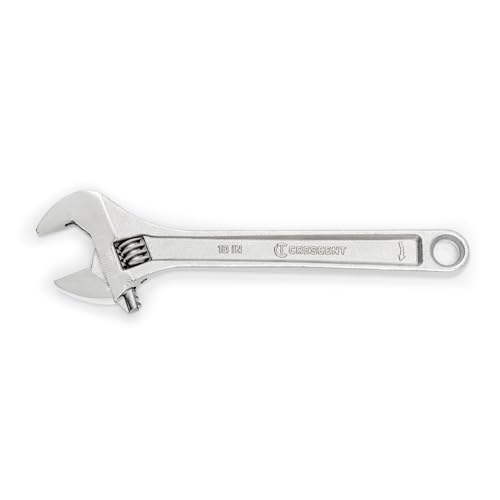
| Crescent AC210BK | 10 in.; opens 0 to 1-5/16 in.; hex jaw; SAE and metric scale | You tighten supply nuts, hose fittings and compression nuts. | You’re turning round pipe. Use the pliers or a pipe wrench. |
| RIDGID 1017 basin wrench | Shank 10 to 17 in.; 3/8 to 1-1/4 in. capacity; head locks up to 90° | You’ll replace a kitchen or bath faucet. | Your faucet uses a quick-connect nut you turn by hand. |
| Channellock 430 | 10 in.; 2 in. jaw capacity; 1.18 lb; made in USA | You loosen trap slip nuts, drain nuts and stuck fittings. | The finish matters. Wrap the jaws or use a strap wrench. |
| Oatey 31199 thread tape | 1/2 in. × 260 in.; 3 mil; meets Mil spec A-A-58092 | You reseal a shower arm, hose bibb or threaded valve. | The joint is a compression fitting. Tape doesn’t belong there. |
| Oatey 31177 putty | 9 oz tub; stays soft; soap-and-water cleanup | You reset a basket strainer, pop-up drain or faucet base. | The part is ABS or an ABS-backed tub. Oatey says use silicone. |
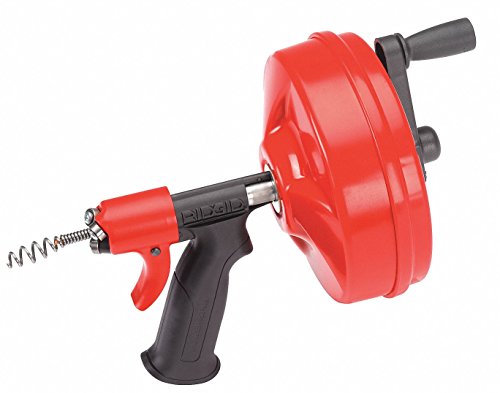
| RIDGID 41408 Power-Spin | 1/4 in. × 25 ft MAXCORE cable; lines to 1-1/2 in.; drill up to 500 rpm | Hair or soap clogs a sink, tub or shower drain. | The toilet is clogged. RIDGID’s manual says it isn’t for toilets. |
| B&K 160-603 clamp | 1/2 in.; type 304 stainless; neoprene gasket; for Sch 40 pipe | You have 1/2 in. galvanized, PVC or CPVC Sch 40 pipe. | Your pipe is copper tube. It needs a clamp sized for copper. |
Two listing notes before you order. The RIDGID auger’s Amazon text calls it a toilet auger, but RIDGID’s own manual says the Power-Spin is not recommended for toilets; for those, use the plunger or a closet auger. And the B&K clamp is sized for 1/2 in. pipe (0.840 in. outside), which is much fatter than 1/2 in. copper tube (0.625 in. outside), so check what your pipe is first.
Pick the job. The finder names the tools from this kit and the point where a pro should take over.
The finder stops where homeowner work stops. Anything that involves gas, the main sewer line, a shut-off valve that won’t close or water inside a wall is past the scope of this kit, and those are the jobs where a small mistake costs the most.
Korky says toilet outlets changed from round to oblong, and plain cup plungers can’t seal on them.
| Spec (Korky BEEHIVE Max) | Value |
|---|---|
| Head | Beehive shape, non-marking rubber, per Korky |
| Fits | Old and new high-efficiency toilets; Kohler, TOTO, American Standard, Mansfield and others, per Korky |
| Handle | T-handle; this listing’s handle telescopes for storage |
| Made in | USA, per Korky |
| Warranty | Korky lists no warranty for its plungers |
A flange or beehive plunger seals in the outlet at the bottom of the bowl. Push slowly the first time to push air out, then work it with short, firm strokes. If the bowl is nearly full, wait for it to drain down before plunging so you don’t splash over the rim.
The listing photo also shows why the shape matters: a flat cup sits on top of an oblong outlet, while the beehive tip drops into it. Our best toilet plunger guide compares Korky against OXO and Clorox models.
An adjustable wrench grips the two flat sides of a nut. That’s every supply line nut under a sink or toilet, every compression nut on a shut-off and most hose fittings. Crescent lists the AC210BK at 10 in. long with a jaw that opens to 1-5/16 in., a hex-jaw design to cut slipping and a scale in both inch and metric sizes.
Snug the jaw fully onto the nut before you pull, and pull toward the fixed jaw. A loose jaw rounds brass nuts fast. On a chrome supply nut, a wrap of tape on the jaws saves the finish. For round pipe, the right tool is tongue-and-groove pliers or a pipe wrench; monkey wrench vs pipe wrench explains the difference.
| Spec (RIDGID 1017) | Value |
|---|---|
| Shank | Telescopes from 10 to 17 in., per the listing |
| Capacity | 3/8 to 1-1/4 in. (10 to 32 mm) |
| Jaws | Spring-loaded forged alloy steel for one-hand ratcheting |
| Head | Tension plug holds it at any angle up to 90° |
Faucet mounting nuts sit up behind the sink bowl where no other wrench fits. The basin wrench’s jaw hooks the nut from below, and you turn the long shank from the open space under the cabinet. Flip the head over to switch between loosening and tightening.
Many newer faucets use plastic wing nuts or a single mounting nut you can turn by hand, so check the faucet’s instructions first. Older faucets with corroded brass nuts are where a basin wrench earns its spot. Our how to install a faucet guide walks the whole job.
| Spec (Channellock 430) | Value |
|---|---|
| Length | 10.0 in. |
| Jaw capacity | 2 in. |
| Weight | 1.18 lb |
| Teeth | 90° laser-hardened, per Channellock |
| Joint | PERMALOCK fastener instead of a nut and bolt |
| Made in | USA, from high-carbon U.S. steel |
Trap slip nuts are usually plastic or thin chrome. The 430 opens to 2 in., so measure a nut across its widest point if you’re not sure it fits; the long handles give you more turning force on a nut that’s been stuck for years. Ease off once it turns: plastic slip nuts crack if you squeeze too hard, and they’re only meant to be hand-tight plus a little.
A 12 in. model reaches bigger nuts but is harder to fit under a vanity. For a homeowner, 10 in. is the size that fits most cabinets. See channel locks vs pipe wrench for when each one fits.
Tape seals threads that hold pressure. Putty beds a drain or faucet flange. They don’t swap.
| Use | Thread tape | Plumber’s putty |
|---|---|---|
| Shower arm, hose bibb, threaded valve | Yes | No |
| Under a basket strainer or pop-up flange | No | Yes, on compatible materials |
| Compression fitting | No | No |
| Toilet base | No | No, per Oatey |
| ABS drain parts or ABS-backed tub | Not used there | No, per Oatey; use 100% silicone |
| Granite, marble or quartz | Not used there | Stain-free putty only, per Oatey |
Wrap thread tape clockwise as you face the pipe end, so tightening the fitting smooths it on instead of peeling it off. Oatey lists its 31199 tape at 1/2 in. by 260 in., 3 mils thick and compliant with Mil spec A-A-58092. Three or four wraps is the usual practice on a shower arm.
Oatey’s putty guide says putty is for non-pressurized flanges only, never threads or pressure connections, and not for ABS. Roll a rope about 1/2 in. thick, ring the flange, tighten until snug and wipe off what squeezes out.
The 31177 listing calls the putty non-staining, while Oatey’s guide says its regular putty may stain stone and points to its Stain-Free putty, so on stone check the tub label. More detail: Teflon tape vs pipe dope vs putty and plumber’s putty vs silicone.
A plunger moves water; an auger reaches the hair and soap that build up in the pipe.
| Spec (RIDGID 41408) | Value |
|---|---|
| Cable | 1/4 in. × 25 ft MAXCORE, kept in the drum |
| Lines | Sink, tub and shower drains up to 1-1/2 in. |
| Drive | Hand crank, or a cordless drill at up to 500 rpm |
| Feed | AUTOFEED trigger advances and retracts the cable |
| Not for | Toilets, per RIDGID’s manual |
RIDGID says to pull a sink’s pop-up stopper and lift rod; on a tub, go in through the overflow, since the tub drain can damage the cable.
Hold the drum within 4 in. of the drain so the cable can’t whip.
Use the trigger and a low drill speed. Don’t force the cable.
Retract the cable, run hot water, and flush the cable and drum after use.
RIDGID calls for leather work gloves and safety glasses.
A drum auger keeps the dirty cable inside the drum, which is the main reason I’d pick one over a loose hand snake for a house. If the clog keeps coming back or more than one fixture is slow, the problem is farther down the line; how to unclog a drain covers when to switch tools.
| Pipe | Nominal 1/2 in. outside diameter | Clamp to buy |
|---|---|---|
| Steel or galvanized (Sch 40) | 0.840 in. | 1/2 in. IPS clamp, like the B&K 160-603 |
| PVC or CPVC Sch 40 | 0.840 in. | 1/2 in. IPS clamp |
| Copper tube (Type L or M) | 0.625 in. | A clamp marked for 1/2 in. copper (CTS) |
| PEX | 0.625 in. | Cut out and use a push or crimp fitting |
The listing describes the B&K clamp as type 304 stainless with a neoprene gasket and rolled edges, for leaking Sch 40 water pipe, including galvanized, PVC, CPVC and ABS. Center the gasket on the leak, then tighten the bolts evenly. It’s a way to get water back on tonight, not a permanent repair.
Because pipe and tube with the same name have different outside sizes, a clamp that fits one won’t seal the other. Measure around the pipe with a string: about 2.6 in. is 1/2 in. pipe, about 2.0 in. is 1/2 in. copper. Our best pipe repair clamp guide compares clamp types, and pinhole leaks in copper covers why they happen.
The best tool in an emergency is knowing which valve to close.
Small valves under each sink and behind the toilet. Close these for a faucet, supply line or fill valve job.
Where the water line enters the house, often in a basement, garage or crawlspace. Close it for a burst pipe or any pipe repair.
The valve on the cold line above the heater. Close it before working on the heater.
An old valve that won’t close or starts to drip at the stem is a sign to call a plumber before it fails while you’re working.
Turn each valve once a year so it doesn’t seize. If your main is a gate valve with a round handle, close it slowly; they can stick halfway. Our how to shut off your water main guide shows the common valve types.
| Add | For | Our guide |
|---|---|---|
| Pipe wrench | Galvanized pipe, stuck unions, water heater nipples | Pipe wrenches |
| Tubing cutter | Cutting copper square for a push fitting | Pipe cutters |
| Closet auger | Toilet clogs a plunger won’t move | Toilet auger vs drain snake |
| Silicone sealant | Tubs, showers and ABS-backed fixtures | Silicone sealant |
| Braided supply lines | Replacing old rubber toilet and faucet lines | Washing machine hoses |
Buy these when a job calls for one, not before. The eight-tool kit handles the common small problems; the add-ons handle the next tier of repairs. If you start doing remodel work, professional plumbing tools covers the bigger machines.
Store everything together near the main shut-off, so nobody hunts for a wrench during a leak.
Oatey says to close the lid fully and return only clean excess; dried putty can’t be revived.
Flush and dry the cable and drum after each use so the cable doesn’t rust inside the drum.
A small bucket catches the trap water; a towel saves the cabinet floor.
Tape a note inside the bin lid with where the main and the heater valves are.
A flashlight or headlamp belongs in the bin too. Most under-sink work happens in the dark, and the basin wrench is easier when you can see the nut.
A toilet plunger, an adjustable wrench, a basin wrench, tongue-and-groove pliers, thread tape, plumber’s putty, a small drain auger and a repair clamp sized to your pipe.
The basin wrench. Faucet nuts sit behind the sink bowl where no other wrench fits.
Not the RIDGID Power-Spin. Its manual says it isn’t recommended for toilets. Use a plunger or a closet auger.
Not at first. Add one if your house has galvanized pipe or you’ll work on a water heater’s threaded fittings.
No. Tape seals threads under pressure. Putty beds drain and faucet flanges that aren’t under pressure.
Only if it’s sized for copper tube. A 1/2 in. pipe clamp fits 0.840 in. pipe, and 1/2 in. copper is 0.625 in.
A 10 in. pair like the Channellock 430 opens to 2 in. and fits under most vanities.
For gas, a main sewer clog, a shut-off that won’t close, water inside a wall or a burst pipe.
I’m Isaac Daniels, a licensed journeyman plumber in Georgia (license #JP507711). I’ve used every tool on this list. Specs come from Korky, Crescent, Channellock, RIDGID and Oatey documents and from the Amazon listings read through Amazon’s API on Oct 23, 2026.