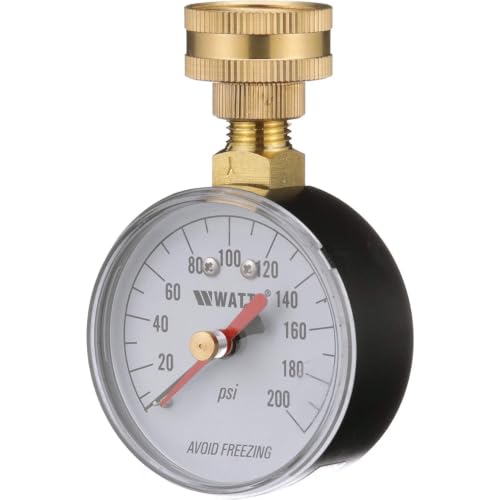
Watts test gauge
Best for checking pressure first
Check the Watts gauge on AmazonSpecs and when to skip it
Name the sound, learn whether it’s normal, and fix the ones that aren’t. Popping, banging, hissing, screeching or ticking? Match your water heater’s sound to its cause, how urgent it is, and the fix, from Rheem and Lennox guidance.

As an Amazon Associate I earn from qualifying purchases. Disclosure.
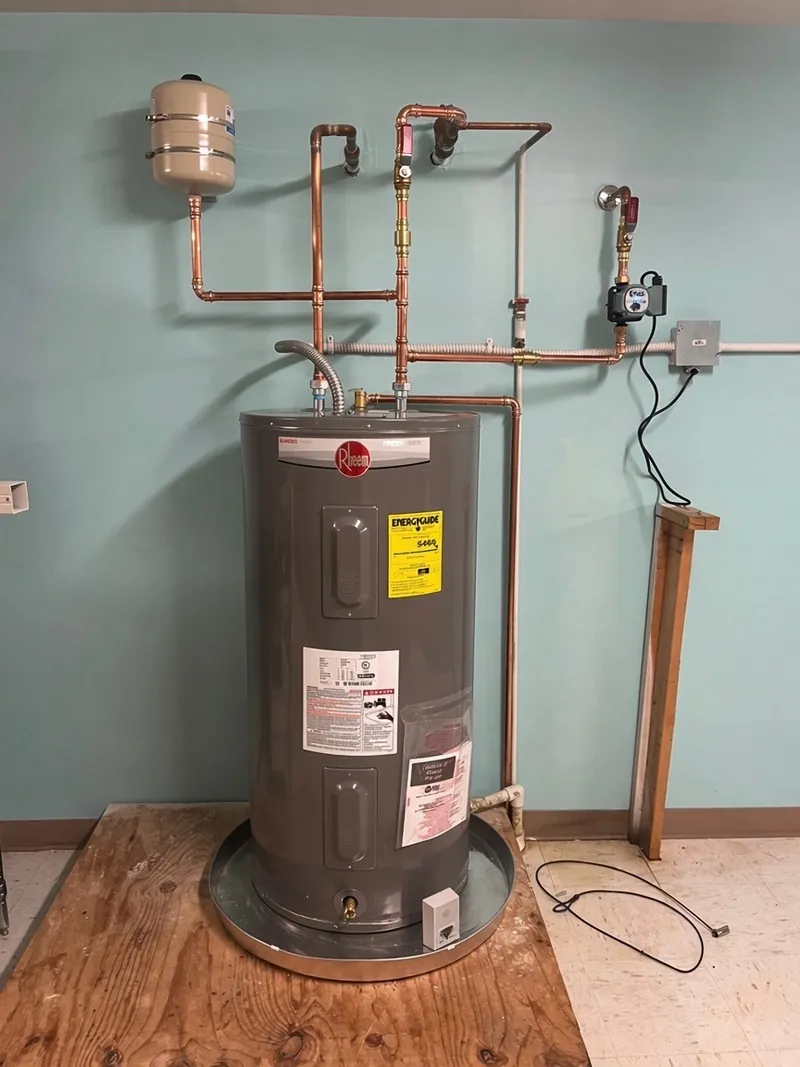
Popping or rumbling is sediment: flush the tank. Banging when a faucet shuts is water hammer. Hissing or sizzling can mean a leak: turn it off. Gas smell? Leave and call the gas company.
Lennox says this could be a gas leak. Turn off the gas supply if it’s safe to reach, leave and call for help from outside.
Rheem says to turn off power or gas, stop using the heater and schedule an inspection right away.
Lennox lists it among sounds that can mean dangerous pressure or a failing part. Shut off power and water and call a pro.
Most water heater sounds aren’t emergencies. Rheem’s guide says a water heater making noise is normal and expected, because it heats, cools and cycles through the day. Quiet, brief sounds at regular intervals are generally nothing to worry about. The three above are the exceptions.
Pick the sound, when you hear it and your heater type. The finder gives the likely cause and what to do.
| Sound | Usually means | Normal? | Source |
|---|---|---|---|
| Ticking or clicking | Heat traps or pipes expanding as temperatures change | Yes | Rheem, Lennox |
| Humming (electric) | Heating elements running | Yes | Rheem |
| Gurgling | Water moving after heavy use | Yes | Rheem |
| Soft ignition sound (gas) | Burner lighting | Yes | Rheem |
| Popping or rumbling | Sediment on the tank bottom | Needs maintenance | Rheem, Lennox |
| Banging or knocking | Water hammer, loose element, thermal expansion | No | Rheem, Lennox |
| Screeching or whistling | Partly closed valve, T&P issue, minerals, pressure | No | Rheem, Lennox |
| Hissing or sizzling | Leak onto a hot burner or element, or gas near the valve | No: turn it off | Rheem, Lennox |
Rheem’s line between normal and not is simple: quiet, brief sounds at regular intervals are part of normal operation. Sounds that are loud, repeated, high-pitched or come with water or a gas smell are the ones to act on.
Lennox adds a test that saves a lot of guessing. Turn on a hot water tap and listen. If the noise gets louder or changes, it’s likely the pipes. If it stays the same whether water is running or not, the problem is probably inside the tank.
Each sound, what it usually means, the fix in the order to try it, and whether to turn the heater off.
| Sound | Usually means | Do this first | Then | Shut it down? |
|---|---|---|---|---|
| Popping or rumbling | Sediment on the tank bottom (Rheem, Lennox) | Flush the tank | If the drain clogs or the noise is back within weeks, a pro can do a more thorough flush | No, unless the warning signs below come with it |
| Hissing, sizzling, crackling, or a tea-kettle sound | An active leak or failing part: water on a hot burner, or a leaking element gasket (Rheem) | Turn off the power or gas and stop using it | Schedule an inspection right away | Yes |
| Hissing at the gas valve with a gas smell | A possible gas leak (Lennox) | Leave and call for help from outside | Turn off the gas supply only if it’s safe to reach | Yes, and leave the house |
| Ticking, clicking or creaking | Heat traps or pipes expanding as temperatures change (Rheem); creaking while it heats can be thermal expansion (Lennox) | Nothing, for light ticking | Check for thermal expansion if pressure climbs; secure loose pipes | No |
| Humming (electric) | Heating elements running (Rheem) | Nothing | Knocking from inside instead points to a loose element (Lennox) | No |
| Screeching or whistling | A partly closed valve, a relief valve issue, minerals or high pressure (Rheem, Lennox) | Open the inlet and outlet valves fully | Check pressure, then replace worn parts | Yes, if it keeps going after those steps |
| Banging when a faucet shuts | Water hammer (Rheem) | Measure house pressure | Lower it if high, secure pipes, add arresters | No |
| Banging while it heats | Thermal expansion (Lennox) | Read the gauge again overnight | An expansion tank on the cold line | No |
| Loud, continuous banging | Dangerous pressure or a failing part (Lennox) | Shut off power and water | Call a pro | Yes |
Some people call the sediment sound kettling. Rheem files a sound like a tea kettle with hissing and crackling as a possible leak, so if the tank sounds like a kettle and you also hear sizzling or see water, go by the hissing row.
A rumbling tank with other failure signs is a stop-and-call case. If the rumbling keeps going after a flush and comes with water under the tank, hissing or sizzling, or a heater 8 to 12 years old or more, turn off the power or gas and call a plumber. Rheem lists each of those as a warning sign, and for hissing or a leak it says to turn the heater off and schedule an inspection right away. A relief valve that keeps opening belongs with them: Lennox says frequent activation means the system needs a checkup.
The most common water heater noise, and the one you can fix yourself.
Lennox explains the sound: minerals settle at the bottom of the tank, water heating underneath gets trapped, and as it turns to steam it forces its way up through the sediment. Hard water makes it louder and more frequent. Rheem’s FAQ calls sediment the most common cause of popping or rumbling, and says flushing stops the noise in many cases.
It isn’t an emergency, but it costs you. Lennox says the sediment acts like a blanket between the heat source and the water, so the heater works harder, uses more energy and wears out sooner.
Electric: switch off the breaker. Gas: turn the control to off or pilot, per A. O. Smith’s steps.
Lennox says to let the unit cool for several hours. Hot water from the drain can scald.
A. O. Smith closes the incoming cold water before draining.
Run a garden hose from the drain valve at the bottom to a floor drain or outside.
Open the drain valve and let it run until the water runs clear. Opening a hot tap upstairs helps it drain.
Close the drain, open the cold supply, run a hot tap until water flows steadily, then turn the power or gas back on.
Refilling before power matters on an electric heater: an element that switches on in an empty tank can burn out. Rheem says annual flushing is one of the most effective forms of maintenance, and Rheem’s own checklist suggests draining several gallons if the tank hasn’t been flushed in over a year.
If the drain clogs with sediment or the noise is back within weeks, Rheem says a professional has tools for a more thorough flush. The how to flush a water heater guide has the full procedure.
Rheem says banging, rumbling or knocking around a water heater often points to the plumbing, not the heater. Water hammer happens when flowing water suddenly stops or changes direction and the pipes shake or bang. Rheem lists three triggers: a valve or faucet closing suddenly, excessively high water pressure, and loose or unsecured pipes.
Washing machines are a usual culprit: Sioux Chief notes their fill valves close fast. Lennox notes you’ll often hear it right after you turn off a faucet.
Thread a gauge onto a hose bib and read it with nothing running. Delta cites 80 psi as the 2021 IRC maximum.
A pressure reducing valve sets house pressure. Adjusting or replacing it is a plumbing job.
Rheem’s third fix: strap pipes that move when the water stops.
Rheem’s first fix is a water hammer arrester at the valve that bangs, often the washer.
The Watts test gauge threads onto a 3/4 in. hose connection and reads 0–200 psi. For a washer, the Sioux Chief 660-HB two-pack threads onto the hot and cold valves behind it; Sioux Chief rates it ASSE 1010 size AA with a 304 stainless chamber. The water hammer arrestor guide covers the other mounting types.
Read the gauge twice: once with nothing running, and again overnight or after the heater finishes a cycle. A reading that climbs well above the daytime number while nobody uses water is a sign of thermal expansion, covered next.
Water grows as it heats. In a home with a check valve or pressure reducing valve at the main, that extra water has nowhere to go, so pressure climbs every time the heater runs. Lennox lists thermal expansion among the causes of banging.
An expansion tank gives that water somewhere to go. The Amtrol Therm-X-Trol ST-5 is 2.0 gal with a 3/4 in. male connection, rated 150 psi and 200°F, and Amtrol’s sizing chart lists it for 40 and 50-gallon heaters at 40, 60 or 80 psi on the 140°F chart. Its precharge is set to match house pressure before it goes in. The expansion tank guide covers sizing and install.
A relief valve that drips after each heating cycle is a common sign of the same problem. Lennox says frequent relief valve activation means the system needs a checkup.
Banging or creaking while the heater runs, pressure that climbs overnight, a relief valve that drips after each cycle, and a check valve or PRV at the main.
A thermal expansion tank on the cold line, precharged to match house pressure, sized from the maker’s chart for your heater and pressure.
Amtrol’s chart sizes the tank from heater gallons, supply pressure and thermostat setting, and the ST-5 covers the common 40 and 50-gallon tanks up to 80 psi on its 140°F chart. Amtrol gives the ST-5 a seven-year limited warranty and says to check the tank yearly.
Lennox says loose heating elements can vibrate against the tank walls while they run, more often in electric heaters. Sediment piled around the lower element can do something similar. Both need the power off and the tank drained before anyone touches an element.
A. O. Smith’s element test is simple once the power is off and the wires are disconnected: a good element reads 5 to 25 ohms. Outside that range, replace it. A. O. Smith also says the lower element does most of the work and usually wears out first, and that in hard water a limed element should be replaced rather than descaled.
The element replacement guide walks through testing and swapping one. If you’re not comfortable working near 240 V, this is a call for a pro.
A new heater making a ticking or clicking sound is one of the most common questions online. Rheem’s answer covers it: ticking is often the heat traps or the pipes expanding as temperatures change. Lennox adds that light crackling or ticking is metal expanding and contracting as it heats and cools, and usually isn’t a problem.
New installs also bring new piping that hasn’t settled into its straps. If the ticking follows the pipes rather than the tank, Lennox’s hot-tap test will show it, and securing loose pipes is the same fix Rheem gives for banging.
Light ticking as it heats and cools, a hum from electric elements, the burner lighting on gas, and gurgling after the first long showers.
Hissing or sizzling, water under the tank, a relief valve that discharges, or banging. Call the installer before the warranty paperwork goes in a drawer.
On a new electric heater, A. O. Smith warns about one install mistake that ruins an element before you hear anything: powering it before the tank is full. A dry element burns out, and A. O. Smith says that damage isn’t covered. Its refill step is to open a hot faucet and let water run for at least three minutes before turning on the power.
A. O. Smith also says to set both thermostats on an electric heater to the same temperature, and that a new tank can take up to two hours to heat. A heater that hums for a long time after the first fill is often just catching up.
Rheem says yes, a hissing, sizzling or dripping water heater can be dangerous. If it sounds like a tea kettle, it may mean an active leak or a failing part. Rheem lists three causes: water dripping onto a hot burner on gas models, a leaking element gasket on electric models, and condensation hitting heated parts.
Rheem’s steps are to turn off the power or gas, stop using the heater and schedule a professional inspection right away. Lennox draws a sharper line for gas: hissing near the gas valve or burner with a gas smell could be a gas leak, a serious hazard. Turn off the gas supply and call immediately.
If you find water under the tank, the leaking from the bottom guide helps you trace it.
| Sound | Gas heater | Electric heater |
|---|---|---|
| Soft whoosh when it starts | Normal burner ignition (Rheem) | Not applicable |
| Steady hum | Check where it comes from | Normal: elements on (Rheem) |
| Sizzling | Water dripping onto the hot burner (Rheem) | Leaking element gasket (Rheem) |
| Hissing at the gas valve | Possible gas leak with a gas smell (Lennox) | Not applicable |
| Knocking while heating | Loose internal parts (Lennox) | Loose element against the tank (Lennox) |
Lennox says occasional hissing from the temperature and pressure relief valve is the safety system doing its job, though frequent activation means a checkup is due. Look for mineral deposits or water stains around the discharge pipe; Lennox says those are signs it’s been opening often.
A. O. Smith explains why it matters: if the tank over-pressurizes, the relief valve opens and releases the pressure, and if the valve doesn’t work, the tank can over-pressurize. Its maintenance check is to lift the lever and let it open and close a few times to make sure water discharges, following the instructions on the valve’s tag.
On an electric heater, a relief valve that hisses because the water is far too hot points somewhere specific, and it’s worth reading the manual for your own model.
A. O. Smith’s troubleshooting lists a shorted heating element as a likely cause of water that’s too hot or a discharging relief valve, and says to leave the power off until it’s fixed. More rarely, A. O. Smith says, it’s a thermostat that isn’t working or doesn’t fit snugly against the tank.
That’s a reason never to cap or plug a relief line that keeps running: the valve is reporting a real fault.
Lennox also points out that relief valves can sit quietly while no longer protecting you, and suggests replacing safety parts before they fail. The T&P valve replacement guide covers sizes.
Rheem’s first step. A partly closed inlet or outlet valve squeals as water squeezes through.
Rheem’s second step. High pressure pushes water harder through every tight spot.
Rheem’s third. A faulty T&P valve or a mineral-clogged fitting won’t fix itself.
Rheem’s own checklist for low pressure or no hot water says to turn every shutoff valve fully counterclockwise, which fixes a half-closed valve that squeals too.
Lennox says these sounds often start quiet and get louder as minerals build up in valves and connections, especially with hard water. Rheem adds that persistent high-pitched sounds usually won’t resolve on their own, so have the heater inspected if they continue after those steps.
Use Lennox’s tap test before you buy anything: open a hot tap and listen. A sound that changes with the water is in the pipes. A sound that stays the same is in the tank.
Lennox also suggests checking the temperature setting, saying most makers recommend 125°F. A heater set hotter builds more pressure and lays down minerals faster, and lowering an overly high setting can quiet some noises.
Check the inlet and outlet connections while you’re there. Lennox says to look for loose fittings, rust or mineral buildup and tighten loose ones carefully without overdoing it.
| Task | How often | Why | Source |
|---|---|---|---|
| Flush the tank | Once a year | Removes the sediment that pops and rumbles | Rheem, Lennox |
| Test the relief valve | Per the valve’s tag | Confirms it opens and closes | A. O. Smith, Lennox |
| Check the temperature setting | When it’s noisy | Most makers recommend 125°F; A. O. Smith’s relight steps use 120°F | Lennox, A. O. Smith |
| Look at fittings and valves | With each flush | Loose, rusty or mineral-crusted fittings whistle and drip | Lennox |
| Replace worn parts early | As they age | Anode rods, elements and valves have predictable lifespans | Lennox |
| Professional inspection | At 8–12+ years, or after a failed fix | Rheem’s age and warning signs | Rheem |
Hard water speeds everything up. Lennox says popping is louder and more frequent where water is hard, and whistling gets worse as minerals build in valves. If you’re flushing several times a year, a softener upstream of the heater is worth a look; the water softener guide covers sizing.
Lennox lists the anode rod among parts to replace before they fail. The anode rod guide explains which rod fits your tank and when to check it.
Four parts cover the fixes above. Each was new and in stock on Amazon on Nov 11, 2026. Prices come from Amazon with the time they were read.
Best for checking pressure first
Check the Watts gauge on AmazonSpecs and when to skip it

Best for banging when the washer stops
Check the 660-HB on AmazonSpecs and when to skip it

Best for a toilet that bangs when it fills
Check the 660-TK on AmazonSpecs and when to skip it

| Part | Key specs | Pick it if | Skip it if |
|---|---|---|---|
| Watts test gauge | 0–200 psi, 3/4 in. hose thread | You hear banging or screeching and don’t know your pressure. | You already know it’s sediment popping. Flush first. |
| Sioux Chief 660-HB | Hose-thread arrester, ASSE 1010 size AA, rated 250°F and 250 psig, two-pack | Banging starts when the washer’s valves shut. | The bang comes from a toilet. The 660-TK fits there. |
| Sioux Chief 660-TK | Toilet fill valve arrester, 7/8 in. ballcock threads, ASSE 1010 AA, 304 stainless chamber | A toilet bangs when it finishes filling. | The bang comes from the washer. Use the 660-HB. |
| Amtrol ST-5 | 2.0 gal, 3/4 in. male, 150 psi, 200°F, seven-year limited warranty | Pressure climbs while the heater runs, or the relief valve drips after each cycle. | There’s no check valve or PRV at the main. Expansion has somewhere to go. |
I’ve used each of these. Start with the gauge: it tells you whether the others are needed.
Noise that continues after a flush, loud repeated banging or rumbling, persistent screeching, hissing or sizzling, visible leaks, or a unit 8–12+ years old.
Ticking as it heats and cools, humming from electric elements, gurgling after heavy use, the soft whoosh of a gas burner lighting.
Rheem says that if problems persist even after maintenance, it could mean aging parts or that it’s time to consider replacement. Lennox frames it the same way: a pro can assess the heater’s overall condition and whether repairs still make financial sense. The best water heater guide compares replacements.
| What people think | What the makers say |
|---|---|
| Any noise means it’s about to fail | Rheem: many sounds are normal operation; quiet, brief, regular sounds are nothing to worry about. |
| Popping is dangerous | Lennox: popping isn’t immediately dangerous, but it costs energy and shortens the heater’s life. |
| Banging is the heater | Rheem: banging usually points to the plumbing, often water hammer. |
| Relief valve hissing means it’s broken | Lennox: occasional hissing is the safety system working; frequent hissing needs a checkup. |
| Turn it up to stop the noise | Lennox: a lower, 125°F setting can reduce pressure and mineral buildup. |
Usually not. Rheem says ticking, humming and gurgling are normal. Act on hissing or sizzling, loud repeated banging, persistent screeching, or any noise with leaks or a gas smell.
Sediment. Minerals settle on the tank bottom and water heating beneath them turns to steam and pops through. Flushing the tank usually stops it.
Rumbling from sediment isn’t immediately dangerous, Lennox says, but it makes the heater work harder, so flush it. Rumbling that stays after a flush, or comes with a leak, hissing or a heater 8 to 12+ years old, is a reason to turn it off and call a pro.
Rheem’s warning signs are noise that continues after flushing, loud repeated banging, persistent screeching, hissing, visible leaks, and an age of 8 to 12 years or more.
No. Rheem says water heaters naturally make operating sounds as they heat, cool and cycle. Quiet, brief sounds at regular intervals are normal.
Check for a hot water leak or a dripping relief valve, which make the heater keep reheating. Lennox suggests the hot-tap test to tell whether the sound is in the pipes or the tank.
Rheem says yes for hissing, sizzling or persistent screeching: turn off the power or gas and contact a professional. Popping and ticking don’t need it shut off.
Rheem says high-pitched sounds often mean restricted water flow or pressure problems: a partly closed valve, a faulty relief valve, minerals or high pressure.
Rheem and Lennox both recommend flushing once a year. In hard water you may need it more often; if popping returns within weeks, have a pro check the tank.
That’s water hammer. Rheem’s fixes are a water hammer arrester, lower house pressure and securing loose pipes.
I’m Isaac Daniels, a licensed journeyman plumber in Georgia. In my 7 years of experience, these are the products I’d install. The causes and fixes come from Rheem’s and Lennox’s noise guides and A. O. Smith’s maintenance steps. I re-read the Rheem and Lennox guides on Nov 11, 2026.